Caspar Jacobsz Philips
Caspar Jacobsz Philips stands as an authoritative figure in the mid-18th century Dutch Republic, known primarily for his contributions as an engraver and his meticulous work as an architectural historian. Active during a period stretching from 1751 to 1766, Philips operated with a disciplined focus, producing a concentrated series of graphic works that deftly documented both civic infrastructure and academic study. His surviving output, consisting of at least seven identified prints, anchors his significance in the visual culture of the era and is centrally held in major collections, notably the Rijksmuseum.
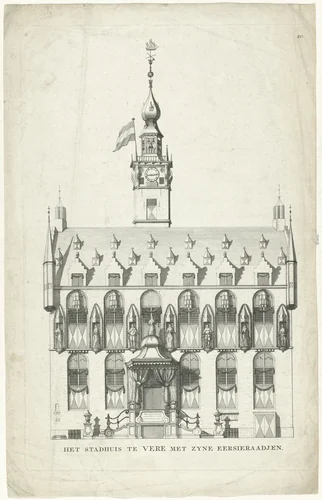
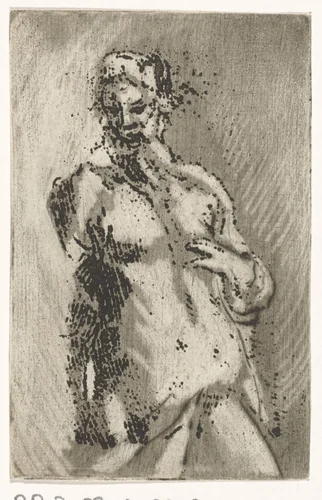
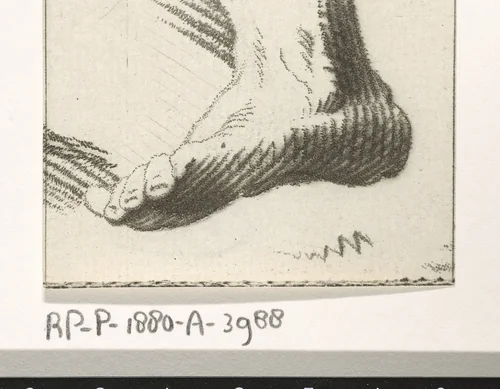
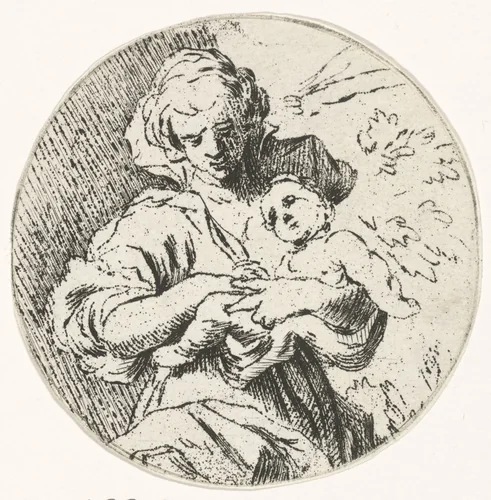
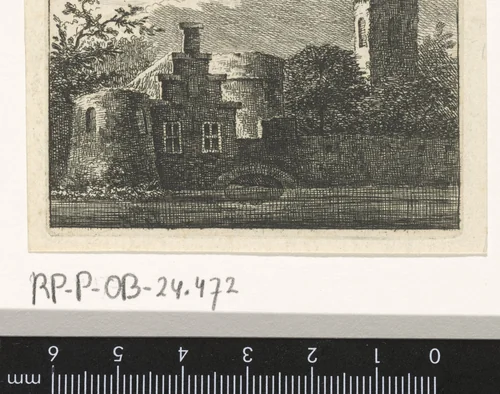
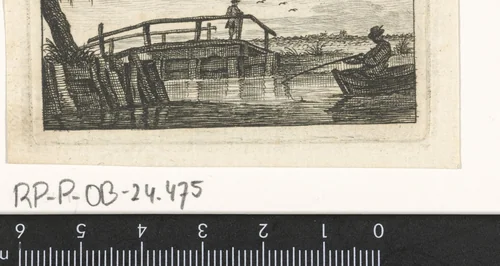
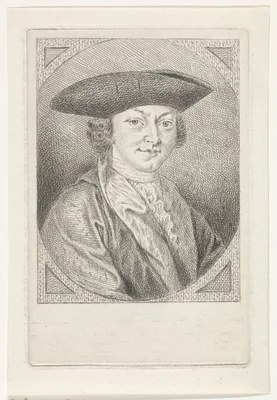
Philips’s oeuvre reveals a versatile practitioner committed to precision and clarity. His subject matter varies considerably, demonstrating an ability to pivot from complex urban structures to foundational human anatomy. This duality is evident in the contrast between his detailed civic records and his figure studies. The 1751 rendering, Versierde stadhuis (The Decorated Town Hall), is a prime example of his architectural command, utilizing sharp perspective to capture the grandeur and ceremonial purpose of a public space. Concurrently, academic pieces such as Torso van naakte man and Voet (Foot), alongside the intimate study Vrouw met kind in de armen, suggest his prints may have served a dual purpose, acting both as independent artworks and as necessary reference material for students of drafting and medicine.
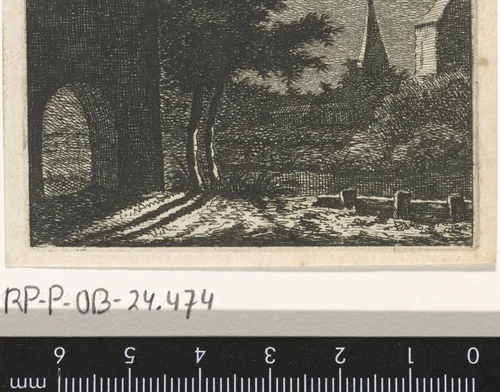
As an architectural historian, Philips was invaluable not merely for duplication but for synthesis. His work offers crucial insight into the functional and aesthetic environment of the Republic in the years following the peak of the Golden Age. This commitment to documentation extended even to the subtle complexities of artificial lighting and atmosphere, evidenced by the evocative Dorpsgezicht bij nacht (Village View at Night), which captures the quiet drama of rural life under cover of darkness.
What distinguishes Philips is his measured approach: he treated every subject, whether a monumental facade or a simple anatomical detail, with the same detached respect for line and form. He was an artist who preferred accurate documentation over expressive invention, offering a stabilizing counterpoint to the more emotionally charged painters working contemporaneously. The enduring technical clarity of Caspar Jacobsz Philips prints ensures their ongoing historical value. Today, thanks to the accessibility of his work, much of which has entered the public domain, art historians and enthusiasts alike can easily access downloadable artwork derived from his masterful engravings, cementing his place as an essential visual chronicler of the Dutch Enlightenment.
Source: Wikipedia · CC BY-SA 4.0