Carrie Mae Weems
Carrie Mae Weems stands as a pivotal figure in contemporary American art, distinguished by a multidisciplinary practice that spans photography, installation video, text, digital imagery, and fabric. She is best known for her groundbreaking photographic work, which transformed the dialogue around portraiture and socio-political narrative in the late 20th and early 21st centuries.
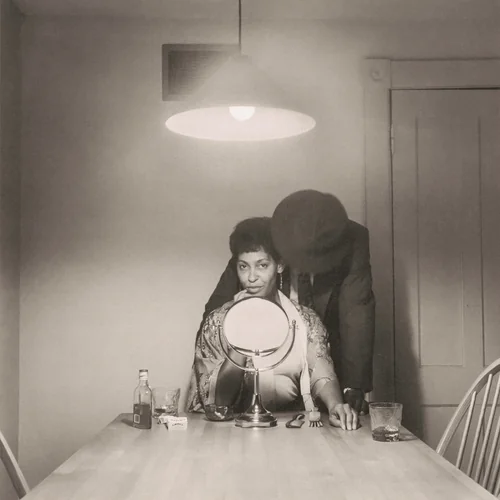
Weems achieved significant prominence following the debut of her early 1990s photographic project, the Kitchen Table Series. This seminal portfolio used sequential, staged images to create a fictionalized, yet deeply resonant, narrative centered on a woman’s domestic life, her relationships, and her negotiations of power and self-definition. By combining intimate visuals with accompanying text, Weems established a formal methodology that critically examined race, gender, and class through the lens of everyday experience. The early editions of these Carrie Mae Weems prints remain foundational examples of narrative photography.
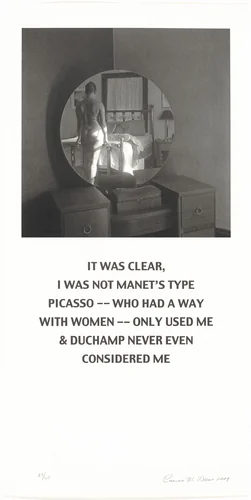
Her ongoing artistic inquiry is focused rigorously on serious issues facing African Americans, including racism, sexism, contemporary politics, and the complex construction of personal and collective identity. This engagement with history is often manifested through challenging established artistic canons. Projects such as Not Manet's Type and After Manet assert Black female subjectivity directly into the history of Western painting, employing a keen wit that elevates critique into high intellectual theater.
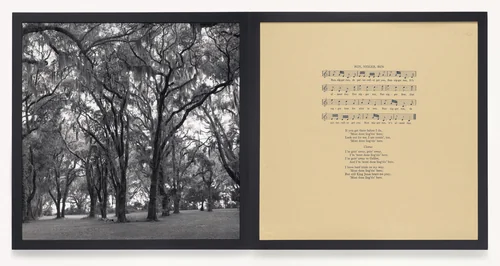
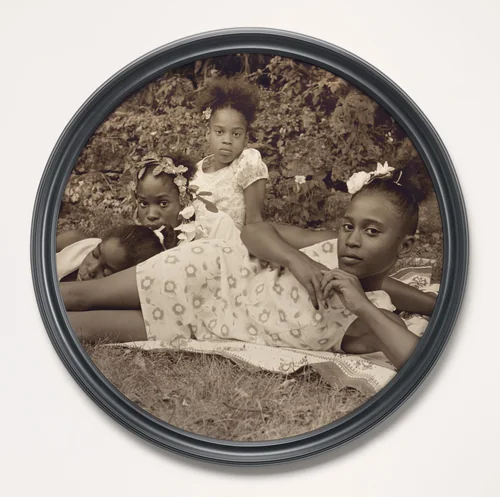
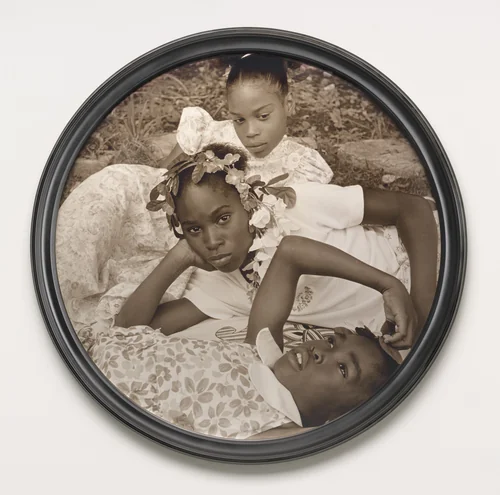
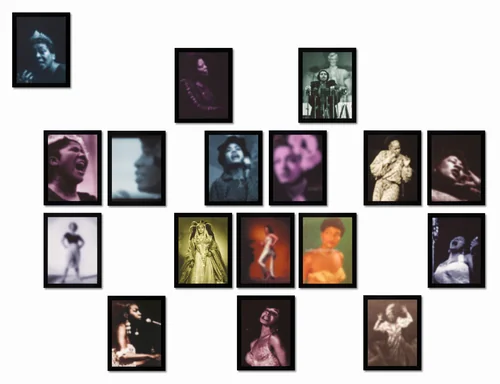
While rooted in the visual arts, Weems consistently utilizes installation and performance strategies to broaden the scope of her practice, integrating audio and digital images alongside static works like Run, Nigger, Run and May Flowers. Her contributions have been recognized with numerous accolades and her work is held in major international collections, including the National Gallery of Art. The rigorous, museum-quality nature of her installations ensures her place among the most influential conceptual artists of the era. Her innovative approach to documentation ensures that her works remain highly sought after by collectors and institutions, with selected high-quality prints occasionally made available as downloadable artwork for educational use.
Source: Wikipedia · CC BY-SA 4.0