Caroline Watson
Caroline Watson (c. 1761-1814) was an English stipple engraver whose career spanned a critical period in the visual interpretation of the British literary canon. Active primarily between 1784 and 1809, Watson excelled in the highly delicate and painstaking stipple technique, using meticulously placed dots and flicks to create tonality and subtle gradation, a contrast to the harsher lines of traditional copperplate methods. Her expertise allowed her to translate oil paintings into high-quality prints that retained the expressive softness of the original works, cementing her place among the leading reproductive engravers of the era.
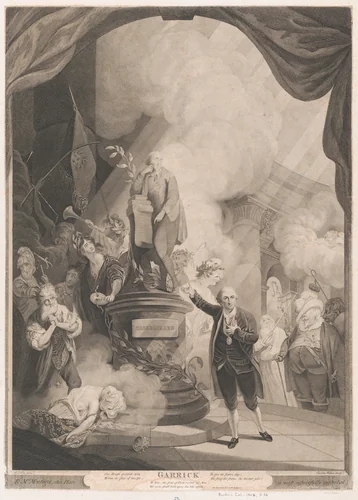
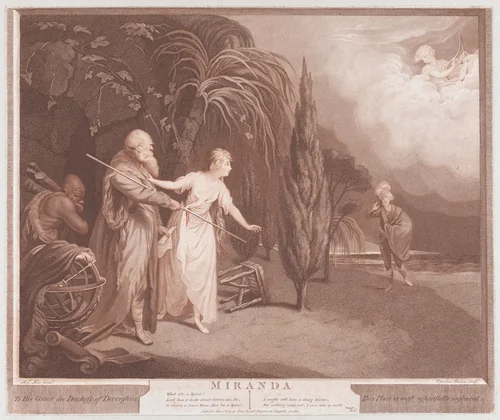
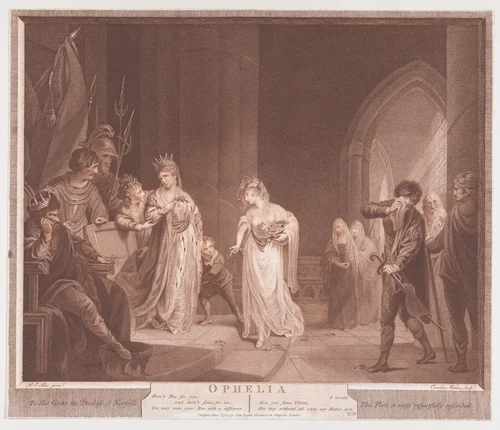
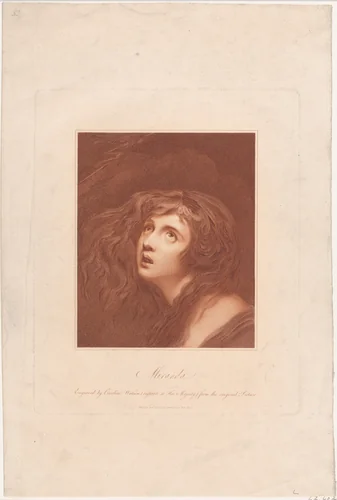
Watson specialized in both refined portraiture and dramatic scenes drawn from theater and poetry. Her catalog confirms a deep engagement with subjects that defined English cultural identity at the turn of the nineteenth century. Notable among her achievements is the work Garrick Speaking the Jubilee Ode, capturing the essence of the celebrated actor David Garrick’s dramatic tribute to Shakespeare. Watson further interpreted the Bard through moving individual character studies, including Ophelia (Shakespeare, Hamlet, Act 4, Scene 5) and Miranda (Shakespeare, The Tempest, Act 1, Scene 2). In an era saturated by dramatic painting, Watson’s prints provided the wider public with definitive visual representations of these powerful, often tragic, female roles. She was, in effect, a crucial architect in establishing the visual memory of these iconic figures.
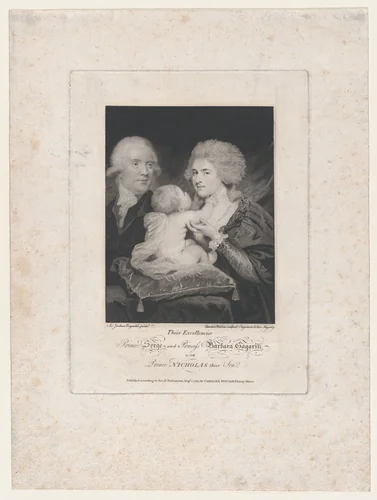
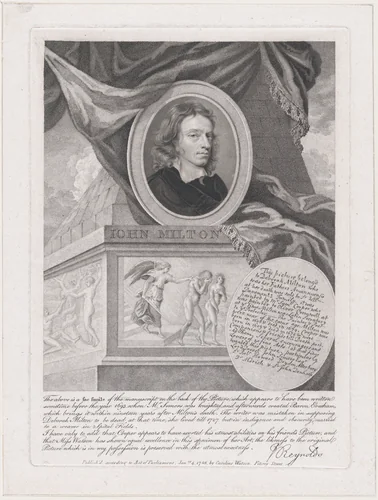
The breadth of her skill extended beyond theatrical subjects, encompassing intellectual figures, such as her rendering of John Milton, and aristocratic commissions, exemplified by the complex group portrait Prince Serge and Princess Barbara Gagarin with Prince Nicholas Their Son. This diversity underscores the commercial appeal and technical competence required of professional engravers supplying both the literary market and the wealthy collector base.
While the medium of stipple engraving is inherently quiet and unassuming, Watson’s output possesses a rare vitality. Her meticulous work ensured that scenes born in the heat of theatrical performance or rendered in oil on canvas could be widely distributed, influencing generations of subsequent illustrators. Today, the enduring museum-quality of her prints is recognized globally, with holdings in major institutions like the Metropolitan Museum of Art. Many of her significant works are now accessible as downloadable artwork through the status of the public domain, allowing scholars and collectors worldwide to appreciate the precision that defined her significant, if understated, contribution to Georgian art.