Carol Summers
Carol Summers (1929–2016) was a pioneering American printmaker whose primary contribution lies in the inventive refinement of the woodcut medium during the mid-twentieth century. Active notably between 1956 and 1976, Summers elevated the woodcut from a typically stark, black-and-white medium into a vibrant platform for expressive color and texture. Her method involved deep engagement with the physical characteristics of the block and the subtle diffusion of ink, resulting in works that often appear atmospheric or ethereal, blurring the conceptual line between graphic art and painting.
Summers eschewed the typical rigidity associated with traditional woodblock printing. Rather than relying on heavy, opaque inks, she developed a complex technique involving multiple overlays of transparent color, frequently applying highly diluted pigments to achieve a luminous, almost staining effect. This unusual approach, which demanded both meticulous planning and serendipitous execution, allowed her to achieve surprising depth and motion, especially in works exploring celestial or geographic themes. It is this intensive process that defines the museum-quality of the unique prints she created.
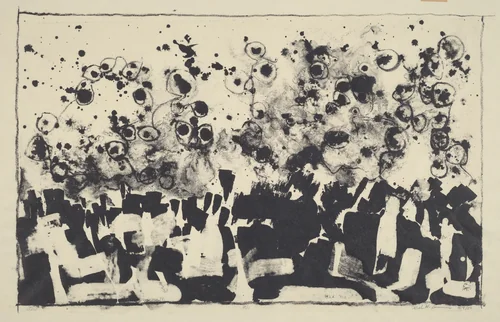
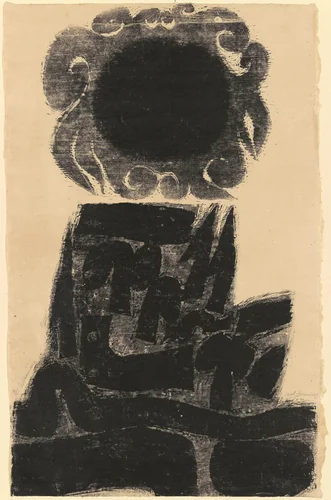
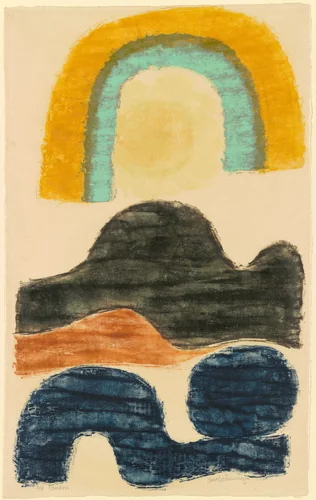
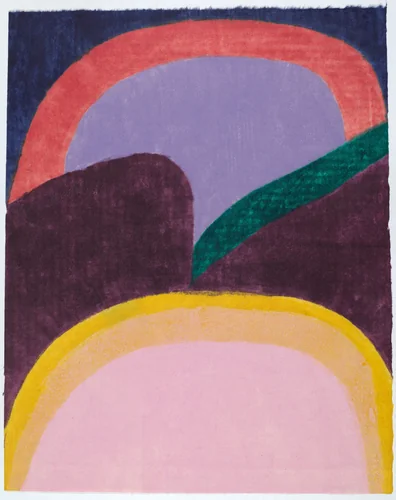
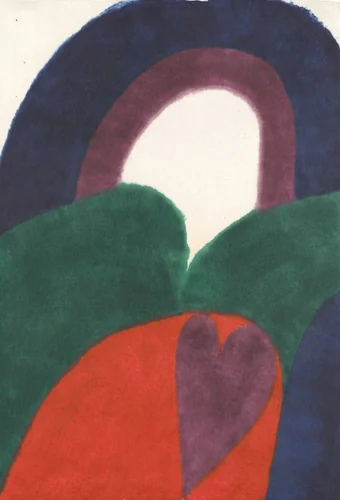
While the production process was intensely manual and often involved monumental printing apparatus or vigorous hand-rubbing, the resultant compositions feel expansive and almost weightless. Her known body of work, though relatively concise in the context of her two-decade peak, speaks to a consistent focus on resonant, elemental themes, as seen in the contemplative space of Gethsemane and the cosmic energy of Stars. Consider her print Rainbow, which manages to be both structurally deliberate and profoundly joyous—a high-quality print that embodies her signature use of diffuse color fields.
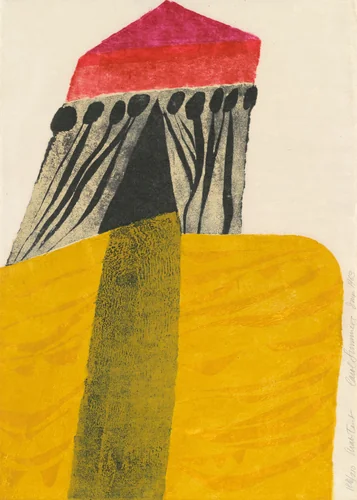
Summers’s mastery of color in the medium earned her significant institutional recognition. Examples of her major works, including Arab Tent and Lanscraft, are held in esteemed American collections, such as the National Gallery of Art. Today, researchers and collectors seeking to study this output benefit from the increasing availability of Carol Summers prints, many of which now reside in the public domain or in institutional archives providing downloadable artwork for study.
Source: Wikipedia · CC BY-SA 4.0