Carlo Pellegrini
Carlo Pellegrini (1839-1889), known universally by his powerful pseudonym Ape, established the definitive visual language for satirical portraiture in Victorian London. An Italian émigré working in Britain, Pellegrini was the foundational artist for the influential weekly journal Vanity Fair, where his keen eye and sharp wit transformed the often-staid world of political and social commentary into a highly consumable art form.
Operating chiefly through the demanding medium of chromolithography, Pellegrini’s technique relied upon an extraordinary economy of line and a decisive, often acidic color palette. He excelled at distilling the essence of leading figures, capturing the defining physical tics and personality quirks of politicians, royalty, and cultural personalities alike. This innovation effectively defined the public image of figures across society, demonstrating the potent relationship between mass media and modern identity construction.
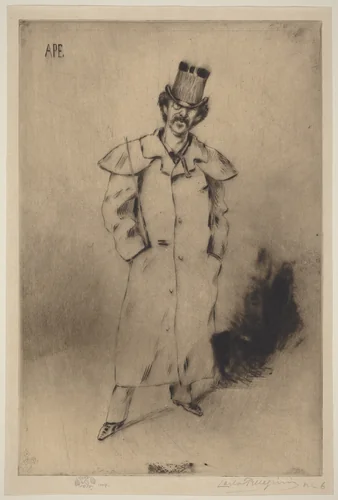
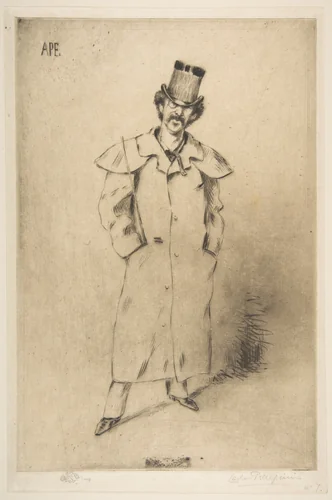
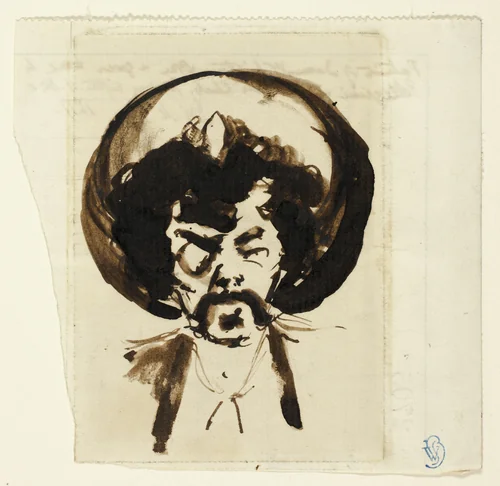
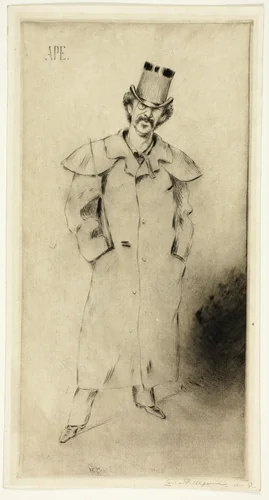
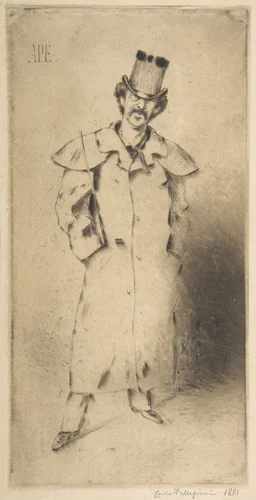
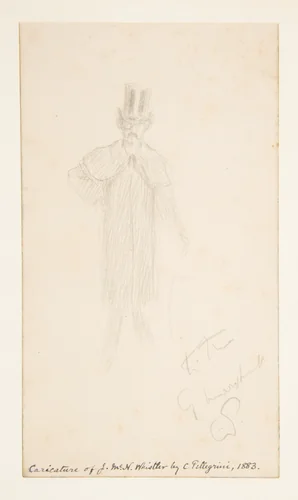
Pellegrini’s lasting artistic and historical impact is particularly visible in his treatment of the contemporary art world. His insightful and recurring studies of James McNeill Whistler, captured in numerous drawings and resulting high-quality prints, distilled the artist’s legendary dandyism into a few deft strokes. It is perhaps an understatement to observe that Pellegrini’s caricatures were often more enduring in the public imagination than the subjects they lampooned, proving that a well-executed satire possesses real permanence.
While originating in journalism, Pellegrini’s contributions to graphic art maintain significant institutional value. Original preparatory drawings and collectible Carlo Pellegrini prints reside in prestigious archives worldwide, including the Metropolitan Museum of Art, the National Gallery of Art, and the Art Institute of Chicago. The robustness of this collection confirms his mastery of simplification and portraiture. Today, many of these seminal works, highly sought after as museum-quality illustrations, have entered the public domain, making the sharp social commentary and masterful line work of Ape accessible as downloadable artwork for scholarly study and general appreciation.
Source: Wikipedia · CC BY-SA 4.0