Carlo Labruzzi
Carlo Labruzzi (1748-1817) was an Italian painter who defined a crucial moment in the history of landscape drawing. Born in Rome, Labruzzi specialized in the veduta, or "view" painting, bridging the topographical accuracy of earlier eighteenth-century masters with the emerging Romantic sensibility that prized ruins and atmospheric drama. Though the database lists him as active between 1765 and 1791, his works extended well into the new century, demonstrating a consistent dedication to chronicling the Roman Campagna and its ancient monuments.
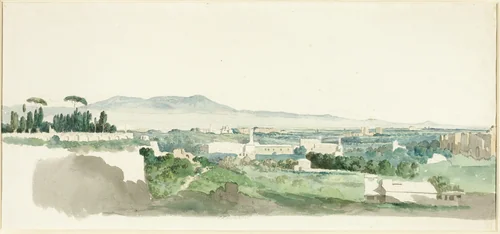
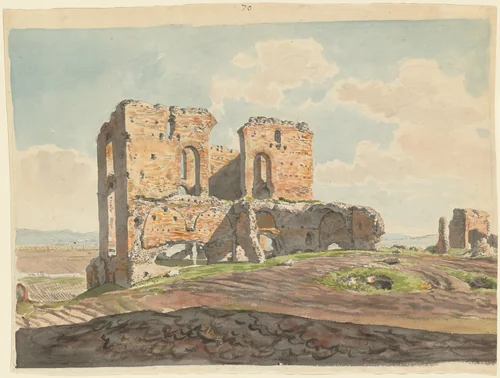
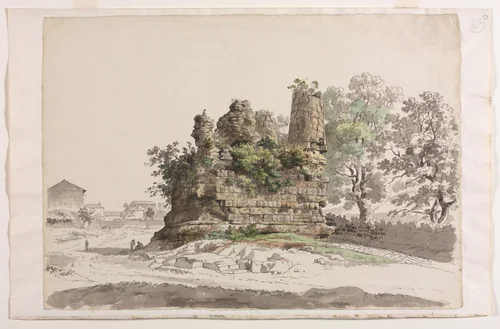
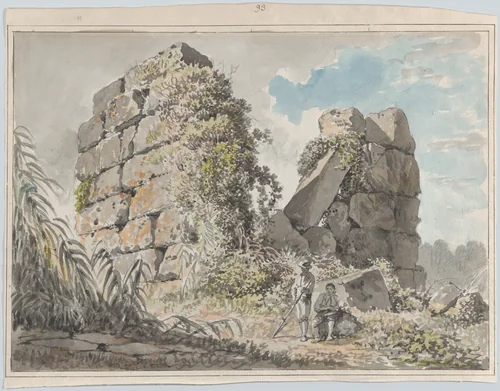
Labruzzi’s output often focused on the historically rich environment surrounding Rome, providing a visual record for Grand Tourists and cognoscenti alike. His keen observational skills are evident in pieces such as A View from the Palatine Hill, Rome, the Alban Hills in the Distance and the detailed rendering of The Great Villa of the Quintilii on the Appian Way. These compositions are characterized by their clarity, meticulous architectural drawing, and subtle use of light and shadow, capturing the melancholy grandeur inherent in the monumental remnants of the past. The precision employed ensured that his works provided near museum-quality records of sites that were already experiencing the effects of erosion and excavation.
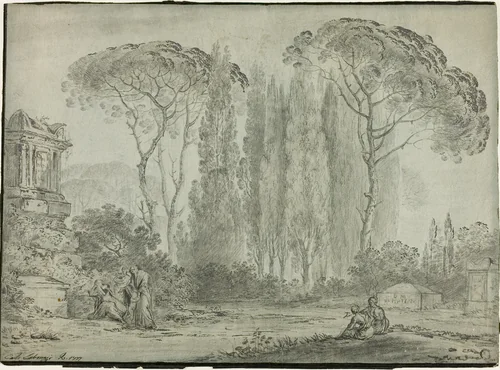
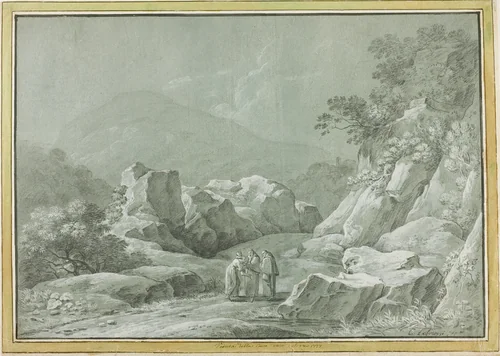
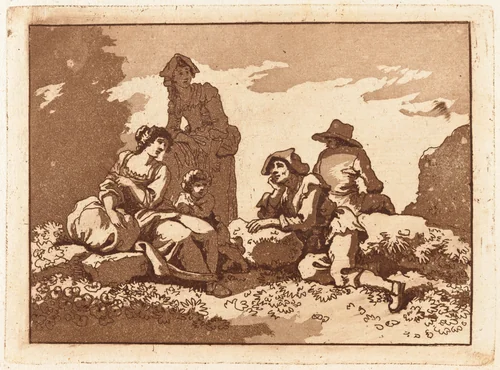
A selection of his known works, including a print and several drawings, reside in major international collections, notably the Metropolitan Museum of Art, the Art Institute of Chicago, and the National Gallery of Art. Labruzzi’s artistic interests extended beyond pure topography; he sometimes infused his scenes with narrative, as seen in the slightly peculiar Two Monks giving Water to a Woman and Child in the Wilderness. This blending of precise landscape with unexpected religious or genre elements reveals a sophisticated approach that moves past simple documentation. Interestingly, while celebrated for his detailed rendering of structures, his figures often possess a certain charming stiffness, suggesting that the human drama was always secondary to the majesty of the Roman landscape.
Today, those interested in his neoclassical vision can find high-quality prints of his work through various public domain collections, ensuring that his sensitive interpretations of the Roman environment remain widely accessible. His contribution lay not just in documenting the visible world but in interpreting the quiet dignity of a decaying empire, solidifying his place among the premier vedutisti of his era.
Source: Wikipedia · CC BY-SA 4.0