Carlo Innocenzo Carloni
Carlo Innocenzo Carloni (1686-1775) was a highly accomplished Italian painter and engraver whose professional trajectory demonstrates the permeable borders of the European art world in the late Baroque and Rococo eras. Though born and initially trained in Italy, Carloni became one of the most significant proponents of Italianate decorative painting throughout Central Europe, establishing a decisive presence in Germany where he executed numerous influential frescoes and altarpieces.
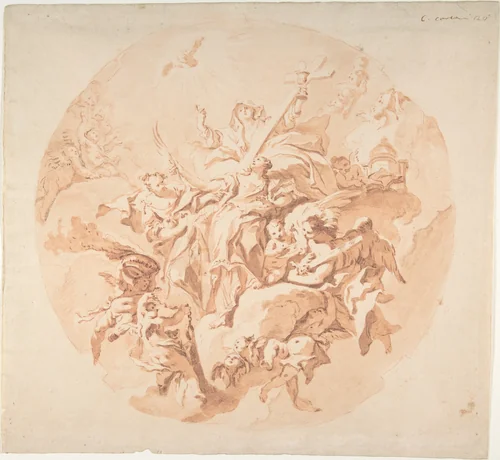
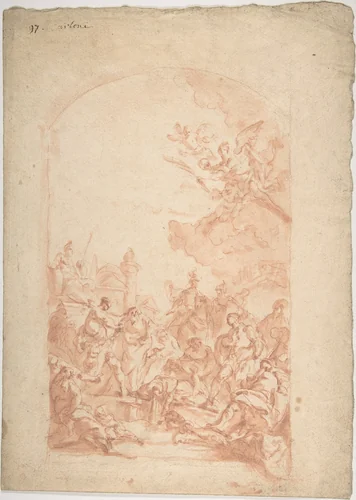
Carloni’s artistic practice was characterized by meticulous draughtsmanship and a flair for dramatic, kinetic compositions, attributes that made his work immensely desirable for large-scale commissions. While his most famous paintings remain tethered to the palace ceilings and ecclesiastical structures they adorn, his prolific output of engravings and drawings allows modern audiences a direct examination of his technical vocabulary.
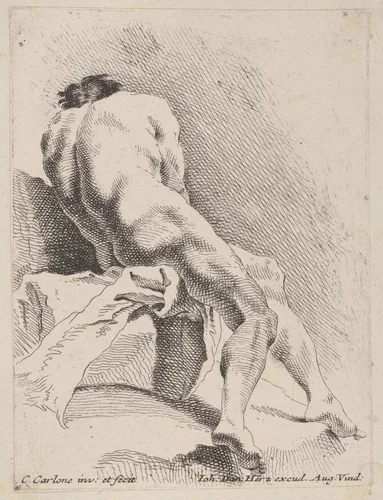
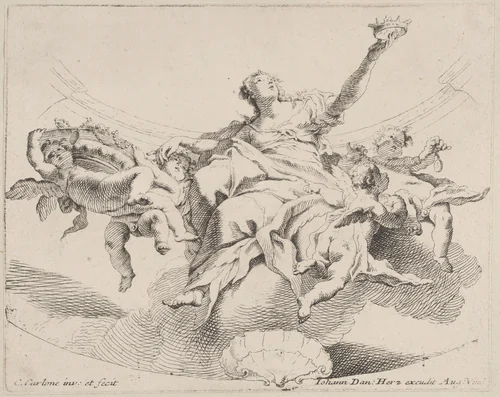
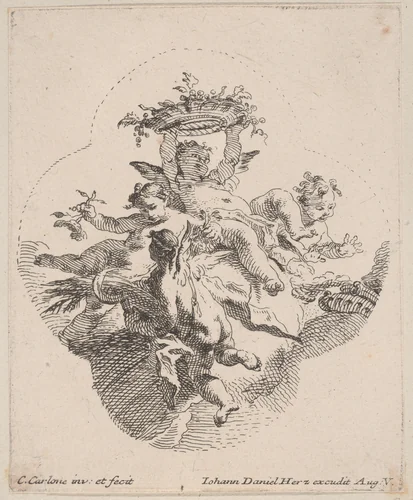
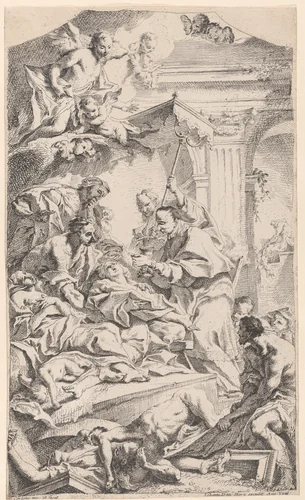
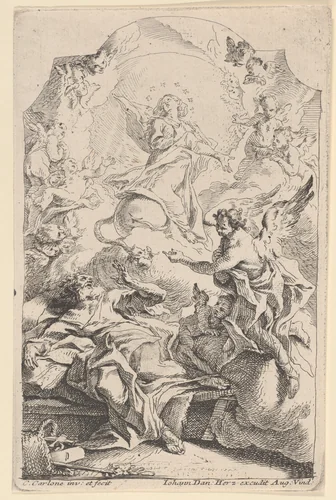
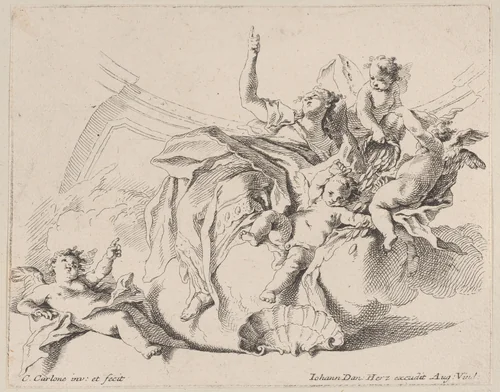
Examples of his graphic skill, six of which are held in institutional collections such as the Metropolitan Museum of Art, range from sacred narratives to rigorous preparatory work. Prints focused on theological intensity, such as Saint Lucy in Glory or the striking action captured in The Decapitation of a Male Saint, highlight his mastery of light and shadow in conveying profound emotional drama. Conversely, his allegorical studies, including Power, represented by a woman seated on clouds holding a crown and surrounded by putti, reveal the lightness and decorative élan required for large-scale ceiling works. Even in his most airy, ornamental pieces, however, Carloni’s training is undeniable: the existence of works like the detailed Academic Study, seen from the back reminds us that his exuberant style was always underpinned by a rigorous, disciplined understanding of the human figure, a discipline he never abandoned.
These Carlo Innocenzo Carloni prints were crucial mechanisms for the movement of style, functioning as transportable blueprints for decorative schemes across the continent. His influence thus stretched far beyond his immediate physical presence. Thanks to the efforts of major institutions, many of Carloni's key works are now designated as public domain, providing researchers and enthusiasts access to high-quality prints and downloadable artwork that continue to affirm his status as a pivotal trans-alpine master.
Source: Wikipedia · CC BY-SA 4.0