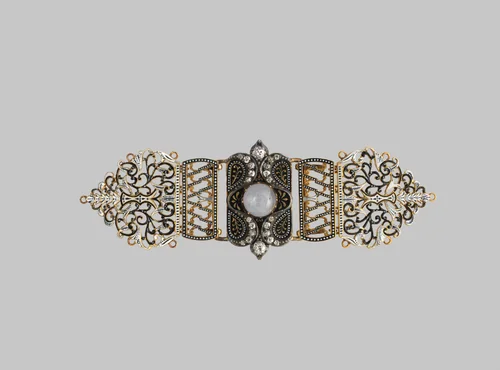
Carlo Giuliano
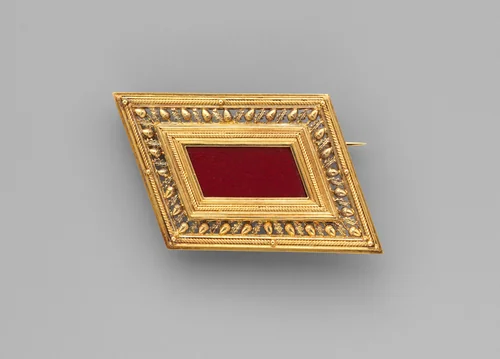
Carlo Giuliano (1831-1895) emerged as one of the nineteenth century’s preeminent goldsmiths, operating a highly influential jewelry house in London from 1860. His career is distinguished by a meticulous adherence to historical precedent, elevating the standards of archaeological and historical revival jewelry during the Victorian era.
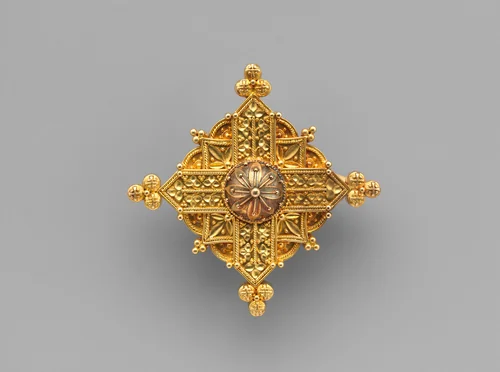
Giuliano began his training in Naples under the direction of Alessandro Castellani, a pivotal figure in the rediscovery of Etruscan and Roman motifs. This foundational relationship facilitated Giuliano’s move to London around 1860, where he was initially stationed to establish a satellite branch for the prestigious Casa Castellani. This early exposure instilled a deep appreciation for classical techniques, particularly the use of intricate granulation and enameling.
Upon departing Castellani’s employ in the early 1860s, Giuliano quickly cemented his position within the elite stratum of the British jewelry trade. He spent a decade refining his commercial and technical skills while working for several leading London firms, including Robert Phillips, Harry Emanuel, Hunt & Roskell, and Hancocks & Co. It is a remarkable testament to his integrated talent that Giuliano transitioned so swiftly from an imported artisan to a recognized master capable of holding his own against these established British houses.
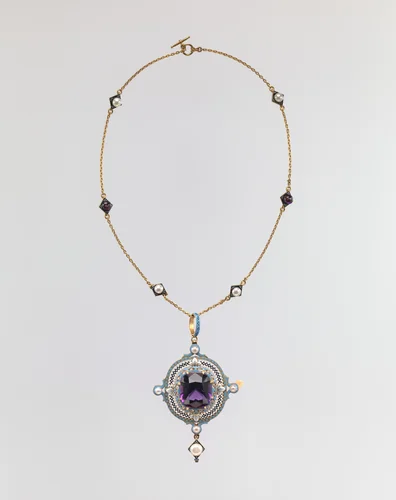
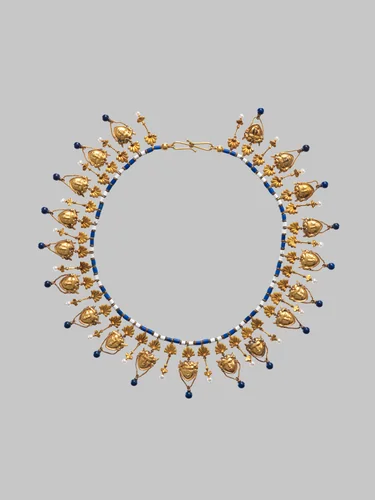
By 1875, Giuliano had amassed the reputation and client base necessary to launch his independent retail venture at 115 Piccadilly. His mature work focused intensely on the Renaissance Revival style, a fusion of high-quality craftsmanship with elaborate historical motifs. Pieces such as the Renaissance revival pendant on chain and the ambitious Necklace with Satyr's-head pendants exemplify his ability to translate sculptural ornamentation into wearable art.
Giuliano’s firm became synonymous with museum-quality work, blending the elegance of the Italian tradition with the demanding precision of the London market. His pieces, frequently incorporating intricate enamel and filigree, remain highly sought after by collectors and are represented in major international collections, including the Metropolitan Museum of Art. For scholars researching his stylistic innovations, several examples of Carlo Giuliano prints and related documentation are now preserved and made available through public domain archives.
Source: Wikipedia · CC BY-SA 4.0