Carlo Crivelli
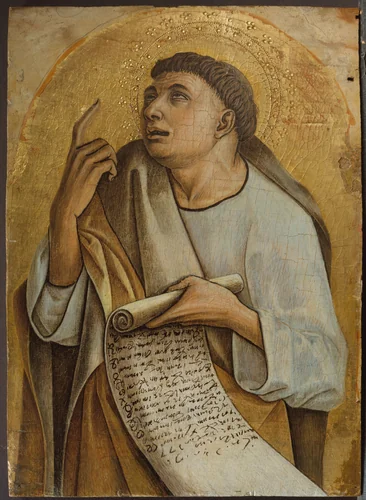
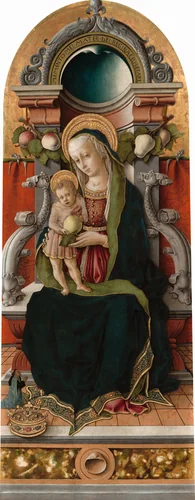
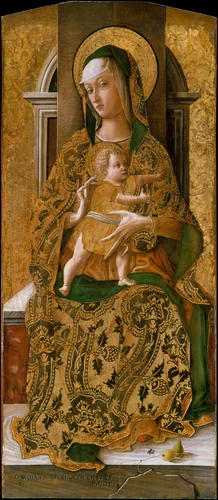
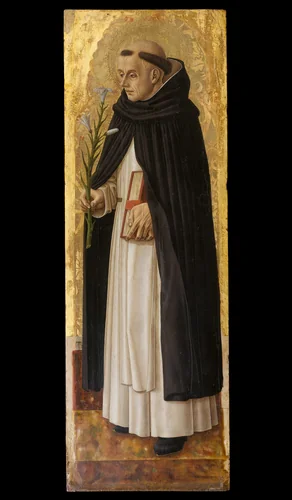
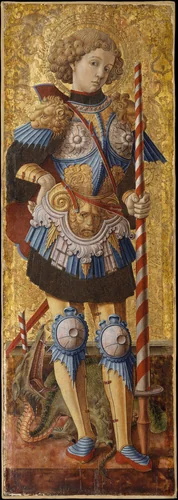
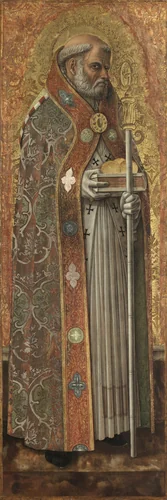
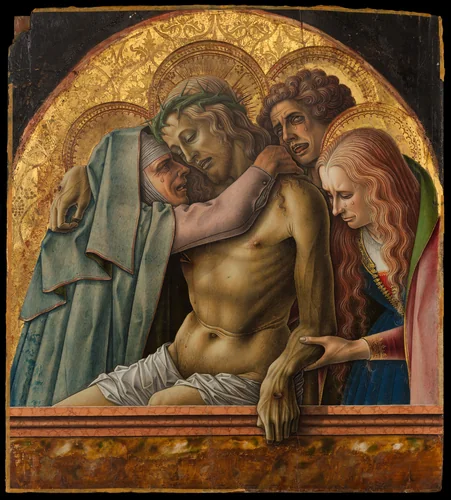
Carlo Crivelli (active 1468-1490) occupies a fascinating, somewhat defiant space within the narrative of the Italian Renaissance. While training during the quattrocento, he maintained an enduring commitment to the decorative sensibilities and sharp, linear qualities of the Late Gothic style, creating an oeuvre that consciously resisted the tide of naturalism then sweeping northern Italy.
Crivelli’s formative years were spent in the Veneto, where he encountered a vigorous synthesis of tradition and innovation. Crucially, he absorbed the precise draughtsmanship of the Vivarini workshop and the powerful, classically influenced linearity of both Francesco Squarcione and Andrea Mantegna. These influences established the foundation for his meticulous and highly refined application of tempera paint.
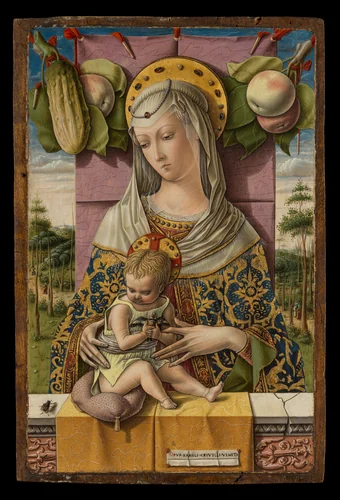
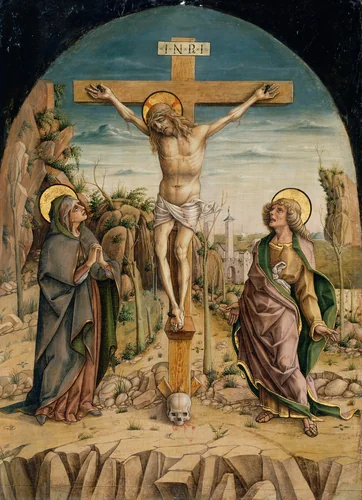
A critical turning point in his career occurred when he left the Veneto sometime before 1458, relocating permanently to the March of Ancona. This professional isolation allowed him to develop a singular, highly expressive style that became his signature. Unlike his Venetian contemporary Giovanni Bellini, who pursued atmospheric softness and the emerging technology of oil painting, Crivelli embraced tempera's ability to render hyper-detailed surfaces, defining a personal aesthetic marked by intricate detail, vivid color, and lavish gold work.
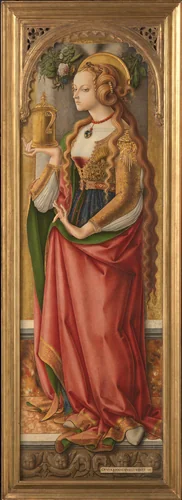
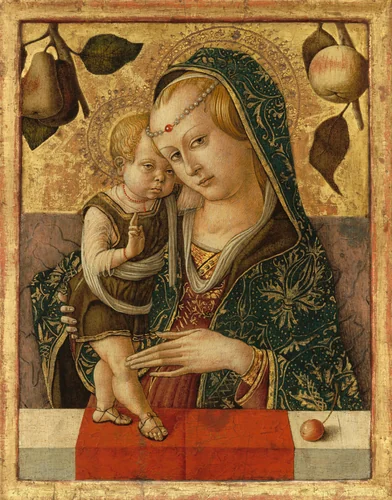
His polyptychs and devotional panels, including Madonna and Child Enthroned with Donor and Saint George, are renowned for their visual richness. Crivelli often employed sophisticated trompe l'oeil techniques, framing sacred figures with impossible garlands, exotic birds, and meticulously rendered fruit. This devotion to ornamentation suggests that Crivelli was never happier than when painting a perfectly detailed lemon or a fantastically arranged decorative element. His work is essentially a celebration of surface texture and artisanal excellence.
Today, major panels of Carlo Crivelli paintings are held in prestigious international collections, including the Art Institute of Chicago and the National Gallery of Art. Due to the history of these works, many of Crivelli’s definitive outputs are now in the public domain, making high-quality prints and downloadable artwork widely accessible for scholarship and public enjoyment.