Carlo Cesio
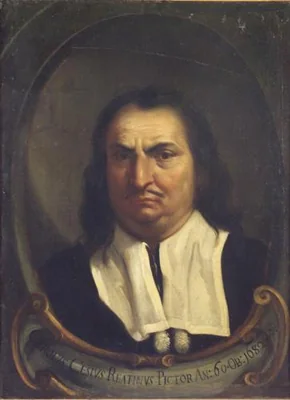
Carlo Cesio (or Carlo Cesi) was a defining figure in the Roman school of the seventeenth century, active from 1636 to 1680. Operating during the height of the Italian Baroque, Cesio’s practice spanned painting and, crucially, sophisticated reproductive engraving. While biographical records often place him foremost as a painter, his enduring and most measurable legacy lies within his distinctive graphic output, which effectively translated the monumental visual rhetoric of the Roman altarpiece into accessible, transportable forms.
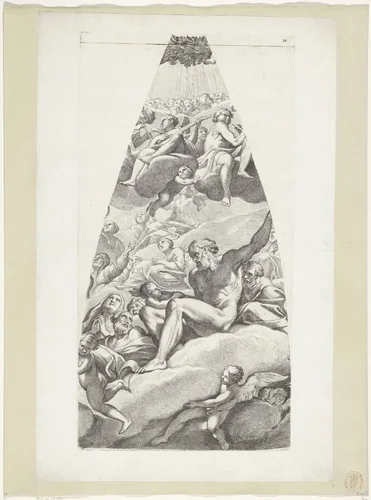
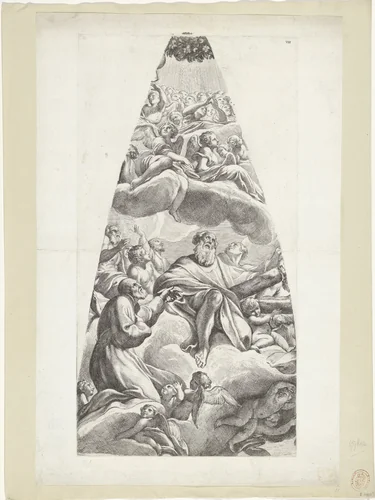
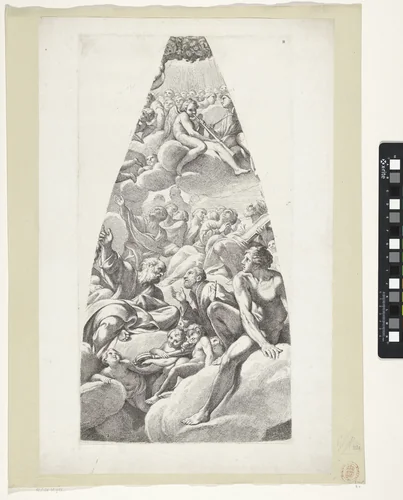
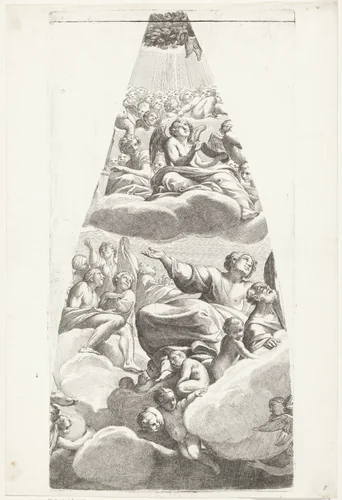
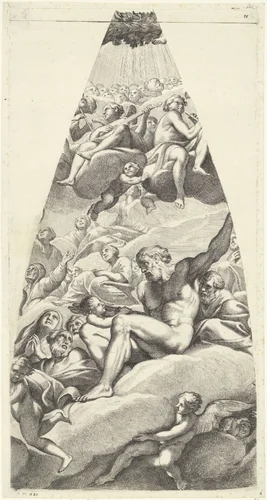
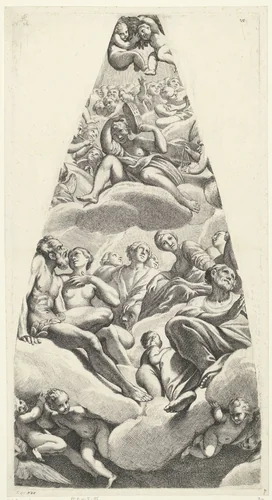
Cesio mastered the complex technical demands of engraving, allowing him to render ecstatic religious visions with meticulous detail. His prints often address themes of celestial glory and saintly elevation, characteristic of post-Tridentine devotional art. Compositions such as Abraham en Isaak met heiligen gezeten op een wolk and De heilige Andreas Avellinus en een geknielde heilige gezeten op een wolk exemplify his commitment to dramatic figural arrangements, where clouds and light are meticulously articulated to convey divine presence and movement. These compositions required exceptional skill to maintain clarity and hierarchy across a complex field of figures and supernatural elements.
The function of such sheets was manifold: they served as portable devotional aids, facilitated artistic instruction across Europe, and provided income through the commercial print market. This commercial viability meant that highly accomplished sheets, such as these Carlo Cesio prints, often entered vast institutional holdings.
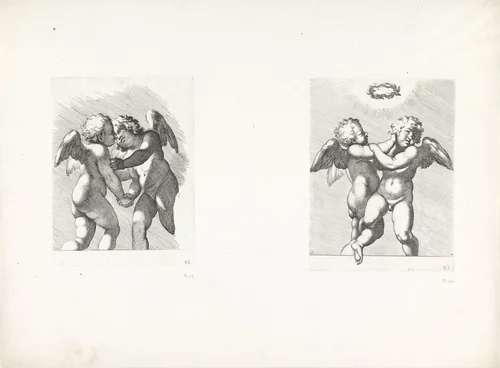
A fascinating, understated observation within Cesio’s graphic oeuvre is the tension between his solemn religious subjects and his lighter mythological studies. While the bulk of his work focused on saints and biblical narratives, works like Twee putti op het punt elkaar te omhelzen / Twee vechtende putti reveal a keen artistic interest in playful, classical imagery. These studies showcase his ability to capture natural movement and emotion, providing a brief, almost humorous, departure from the pervasive devotional earnestness of the Roman Baroque.
Today, Cesio’s prints are held in major public collections, including the Rijksmuseum. Their availability as high-quality prints demonstrates their continued scholarly and aesthetic relevance. The inclusion of these complex and original devotional etchings in the public domain ensures that this master’s technical contributions to seventeenth-century graphic art remain fully accessible for study and appreciation.
Source: Wikipedia · CC BY-SA 4.0