Carlo Carrà
Carlo Carrà was a fundamental figure in the development of Italian modernism, recognized internationally as a leading pioneer of the dynamic Futurist movement that defined early twentieth-century Italian innovation. Active professionally from 1910, Carrà was instrumental in translating the movement’s theoretical pronouncements on speed, technology, and sensory simultaneity into visual form.
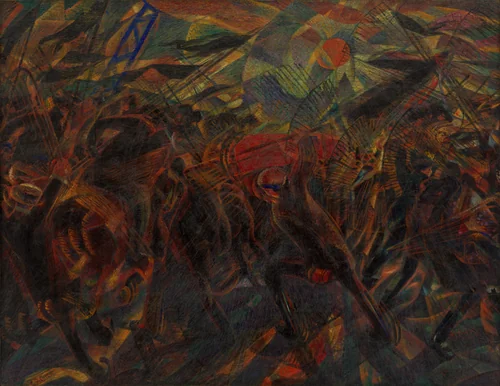
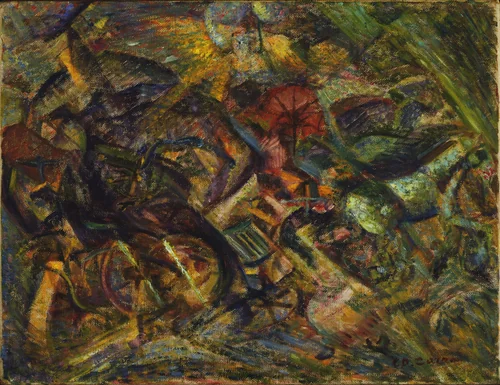
His initial contributions were characterized by a raw, often explosive energy, designed to capture the sensory overload of the industrialized city. Paintings such as Jolts of a Cab attempt to render multiple visual and acoustic perspectives simultaneously, fracturing the composition to convey motion and noise. His monumental masterpiece, Funeral of the Anarchist Galli, created around 1911, stands as one of the movement's most potent statements, demonstrating a chaotic synthesis of political fervor and fragmented visual energy that pushes the boundaries of representation.
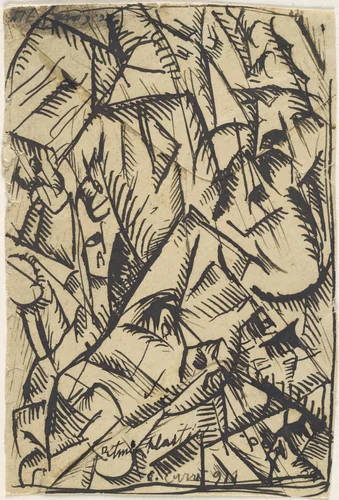
Carrà’s work evolved significantly during his active period, demonstrating an intellectual flexibility often overlooked in the rush of early Futurism. By the mid-1910s, he began refining the movement's frenetic energy into more analytical and geometrically pure structures, visible in works like Ritmi Plastici. This evolving aesthetic demonstrated an increasing interest in structural solidity and classicism, subtly foreshadowing the eventual pan-European ‘Return to Order’ that dominated post-war artistic discourse.
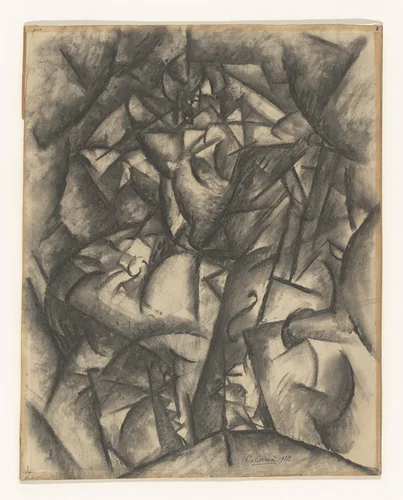
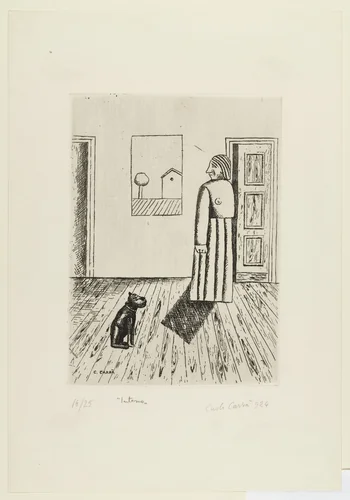
Unlike some contemporaries who focused solely on aggressive destruction of past forms, Carrà was deeply invested in articulating the theory behind the visual revolution. In addition to his substantial output of Carlo Carrà paintings and Carlo Carrà prints, he authored several crucial books dissecting the aesthetics and philosophy of modernism. He maintained a long and influential career as an educator, teaching for many years in Milan, cementing his legacy through both pigment and pedagogy. His pioneering works, including Concert Cafe and the later Interior, are foundational documents of the period, held in major international collections such as the Museum of Modern Art. Scholars and students worldwide study his commitment to innovation, and today, many of his historical images are available as downloadable artwork, making high-quality prints accessible through the public domain.
Source: Wikipedia · CC BY-SA 4.0