Carlo Bianconi
Carlo Bianconi (active 1700-1732) was a versatile Italian practitioner whose career spanned painting, architecture, and, most significantly for his lasting legacy, the creation of decorative engravings. Active during the early decades of the eighteenth century, Bianconi operated during the transitional phase from the density of high Baroque splendor toward the burgeoning Rocaille style, fulfilling a critical role as a disseminator of complex, reproducible ornamentation.
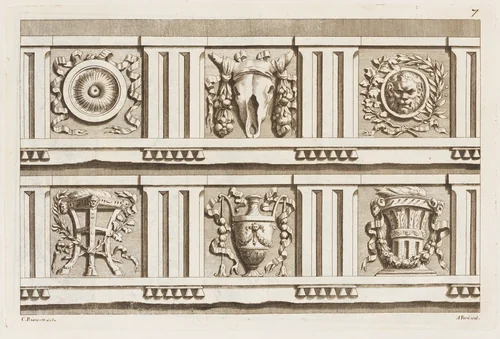
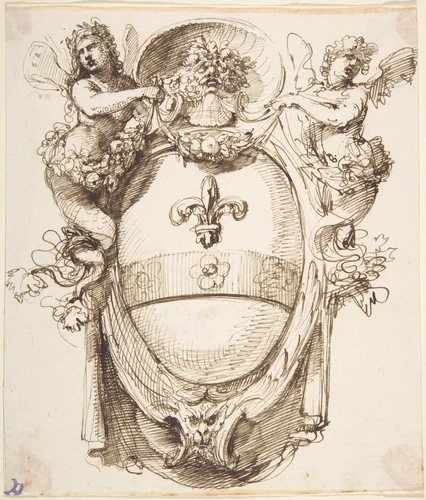
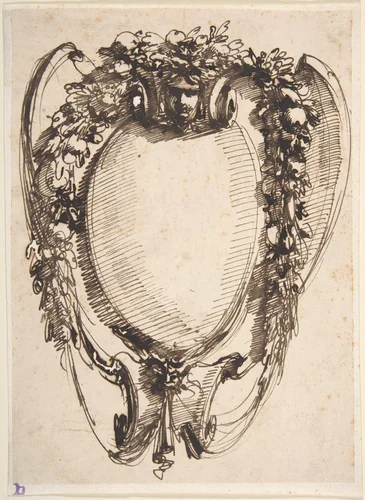
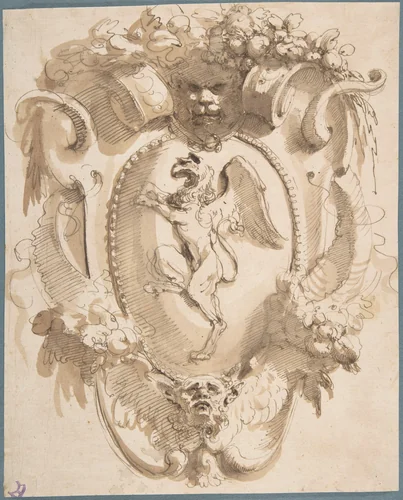
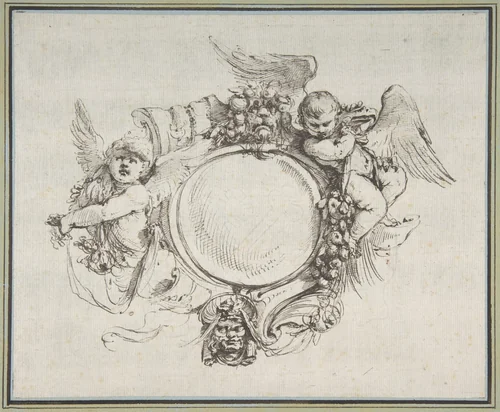
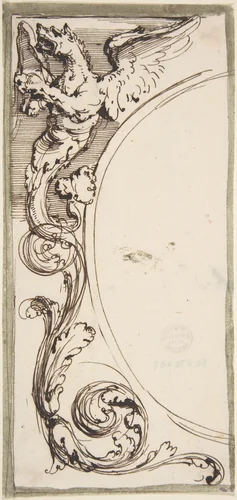
His reputation rests heavily upon his extensive output of designs, particularly those compiled in the influential pattern book, Esemplare di Alcuni ornati, per la gioventù amante del Disegno. Published circa 1727, this volume functioned as an essential resource for aspiring artisans and architects seeking sophisticated decorative motifs, establishing Bianconi as a key figure in the transfer of Italian design concepts across Europe. The surviving original drawings, now held in major institutions like the Metropolitan Museum of Art, demonstrate an acute affinity for meticulously executed fantasy pieces designed to enclose text or crests.
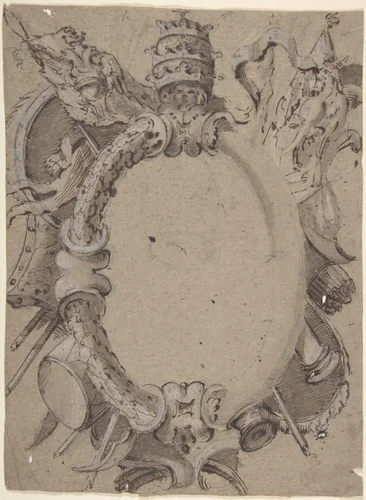
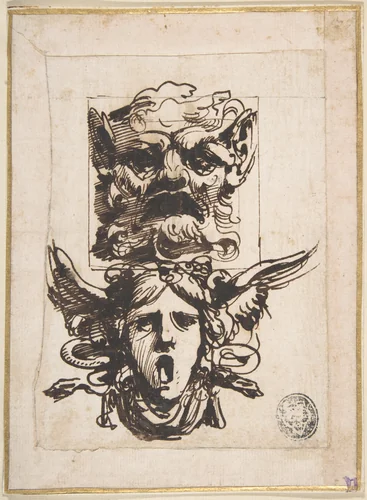
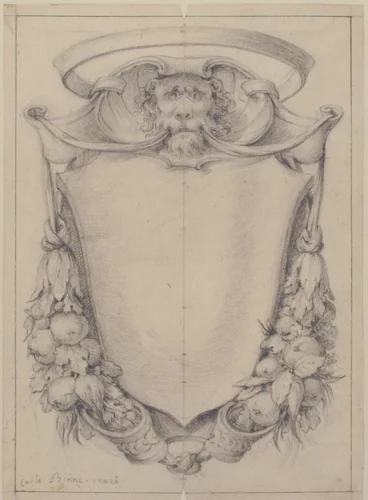
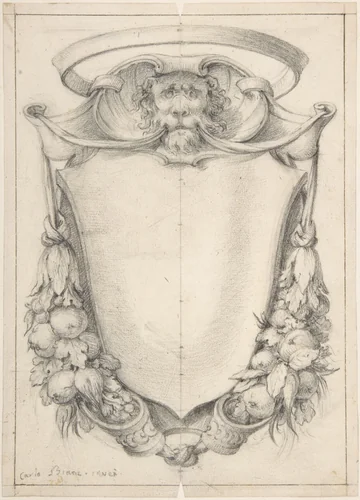
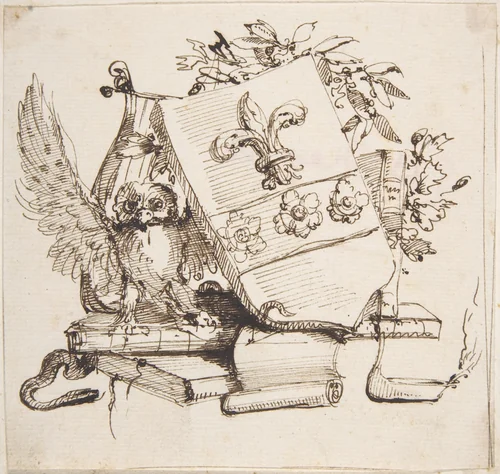
Bianconi delighted in blending the martial with the mythical, often employing a vocabulary of dense, controlled lines that characterize the period’s taste. His ornamental studies frequently incorporate militaristic elements, such as drums and banners, juxtaposed with classical chimeras and mythological figures. Designs like the Design for a Cartouche Surmounted by a Lion's Head in Scrollwork Suspending Swags of Fruit and Leaves emphasize theatrical arrangements, where organic forms struggle against geometric precision. Similarly, the Design for Two Masks Shaped as Satyr and a Winged Medusa Head showcases his particular knack for transforming functional, applied design into high-drama sculptural elements. There is a clear element of structural play in how Bianconi treats these often-serious classical subjects, twisting their forms into exuberant scrolls.
His concentrated output, though numerically small in terms of surviving original drawings, is highly valued for its technical refinement. Bianconi’s commitment to providing detailed, reproducible sources underscored the crucial need for high-quality prints within the eighteenth-century design economy. Today, much of his material is naturally in the public domain, ensuring that these refined examples of early 18th-century Italian ornamentation remain widely accessible as downloadable artwork for scholars and contemporary designers.
Source: Wikipedia · CC BY-SA 4.0