Carlo Antonio Porporati
Carlo Antonio Porporati (active 1755-1784) was an influential Italian artist recognized for his rigorous work as an engraver and, secondarily, as a painter. Active across three crucial decades of the mid-eighteenth century, his legacy is characterized by high-quality prints that translated complex mythological, literary, and Biblical narratives into widely distributed and reproducible formats. His mastery of the burin ensured his works were studied across Europe, securing him a lasting position in institutional collections, including the Metropolitan Museum of Art.
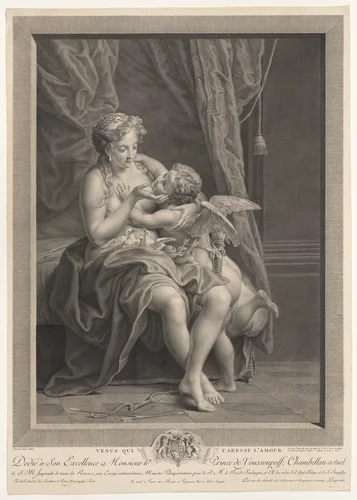
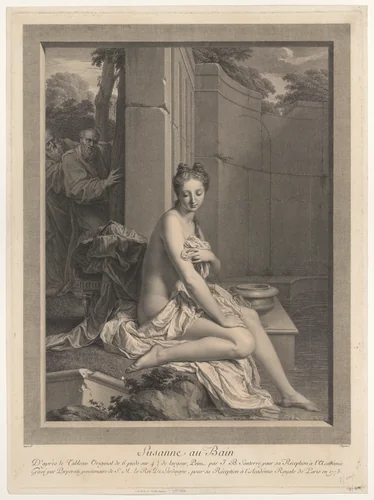
Porporati’s extant body of work demonstrates a strong adherence to the dramatic and often moralizing subjects popular during the Enlightenment. He specialized in capturing moments of high tension and psychological complexity, moving seamlessly between devotional and secular themes. Among his most technically refined impressions are the classical representations, such as Venus caressing Cupid, which balances intimacy with refined linear detail, and the visually charged Susanna at the bath, the elders peering behind her at left. These plates required immense skill in rendering light and shadow without the aid of color, emphasizing the engraver’s command over line weight and texture.
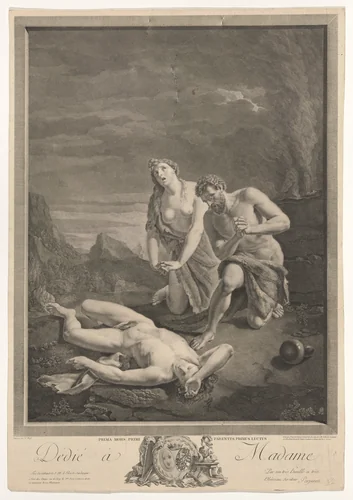
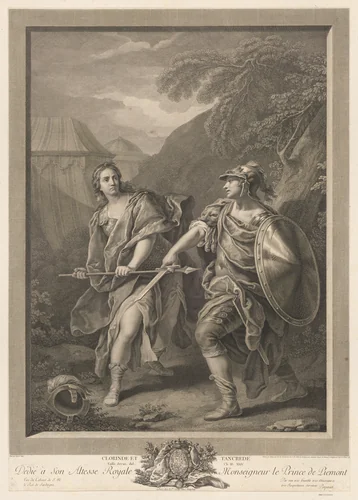
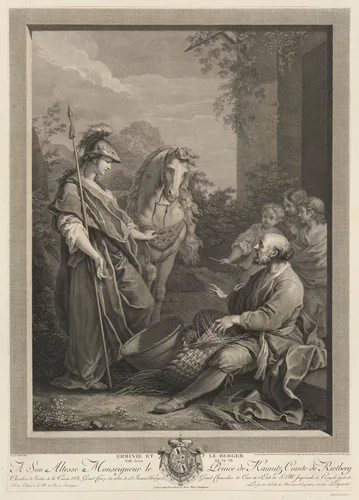
The artist was particularly adept at illustrating episodes from the epic poem Gerusalemme Liberata (Jerusalem Delivered) by Torquato Tasso, which offered scope for action and romance. His plates, such as Clorinda attacking Tancred with a spear, Tancred blocking her with his sword, and Erminie, wearing a helmet and standing with a horse at left, and the shepherd, who weaves a basket at right, distill the chaotic grandeur of the poem into sharp, highly readable compositions. These Carlo Antonio Porporati prints served as essential references for later painters and art students throughout the period.
It is perhaps a slight irony of art history that an artist who spent so much effort illustrating chivalric battle and romantic melodrama is now best appreciated for the technical refinement of his etched line, rather than the heroism of his subjects. Today, the enduring precision that defines these compositions ensures their continuing relevance, and many of these important historical works are in the public domain, making them widely accessible as downloadable artwork for modern scholarly study.
Source: Wikipedia · CC BY-SA 4.0