Carlo
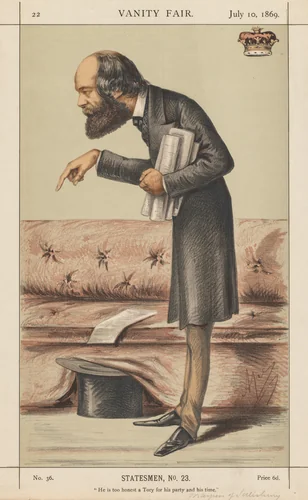
Carlo, an enigmatic figure in the history of Victorian periodical art, contributed a concise, yet impactful, series of satirical portraits to the celebrated British journal Vanity Fair between 1869 and 1875. While his full identity remains elusive to contemporary scholarship, his body of work, totaling just eight known prints, offers a fascinating glimpse into the political and social elite of the period. The inclusion of his work in esteemed institutional holdings, such as the Cleveland Museum of Art, underscores the historical and artistic significance of these often-overlooked illustrations.
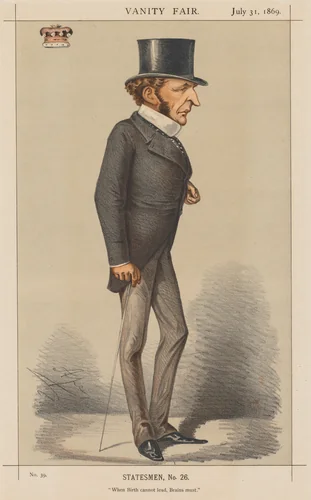
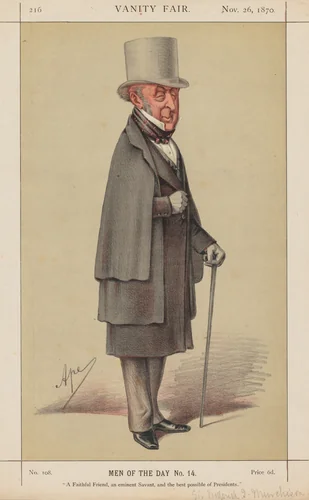
During the latter half of the nineteenth century, Vanity Fair perfected the art of the political caricature, combining sharp observation with the technical precision of chromolithography. Carlo’s specific contribution focused primarily on the "Statesmen" and "Men of the Day" series. Works like Vanity Fair: Statesman No. 26 "When Birth cannot lead, Brains must" exemplify the biting wit that characterized the magazine’s captions. These subtle social critiques often transcended mere likeness, providing visual summaries of complex political careers, such as the laudatory profile of a colleague in Vanity Fair: Men of the Day No. 14 "A Faithful Friend, an eminent Savant, and the best possible of Presidents".
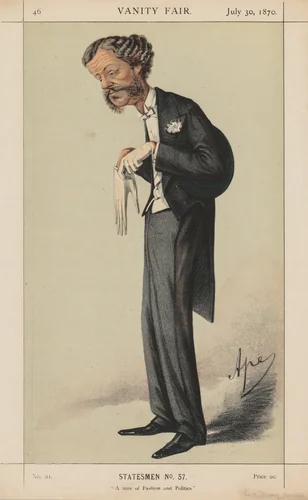
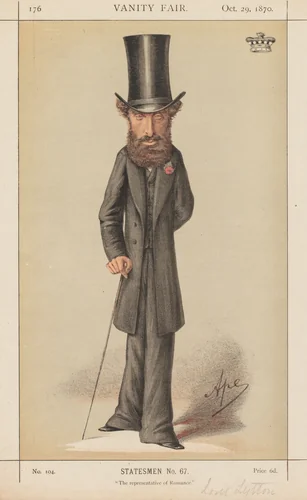
Carlo’s relatively brief output, restricted to a six-year window, suggests he may have been a temporary contributor rather than a core staff member, yet the quality of his lithographic transfer is consistently high. His subjects were drawn from the highest echelons of power and fashion, including Vanity Fair: Statesman, No. 57 "A man of Fashion and Politics" and the romanticized Vanity Fair: Statesmen No. 67 "The representative of Romance". The irony inherent in this collection is compelling: while the figures he documented wielded vast, enduring influence, the visual recorder, Carlo, remains a fleeting presence in the historical record, known only by this handful of high-quality prints.
Due to their nature as mass-produced illustrations for a popular journal, many of these images now reside in the public domain. This allows institutions and researchers access to museum-quality scans, ensuring that Carlo’s contribution to the history of satirical portraiture continues to be available as royalty-free downloadable artwork for modern study. Though the details surrounding the artist named Carlo are sparse, the enduring presence of his sophisticated caricatures confirms his brief but important role in the golden age of visual commentary.
Source: Wikipedia · CC BY-SA 4.0