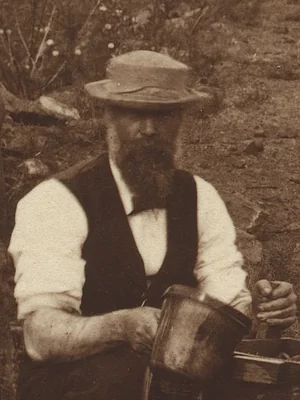
Carleton E. Watkins
Carleton E. Watkins stands as the preeminent American landscape photographer of the 19th century, fundamentally shaping public perception of the monumental scale of the West. Born in New York in 1829, his move to California marked the true beginning of his artistic career. He quickly transitioned from mercantile work to mastering the nascent craft of large-format photography, which would ultimately define his professional legacy.
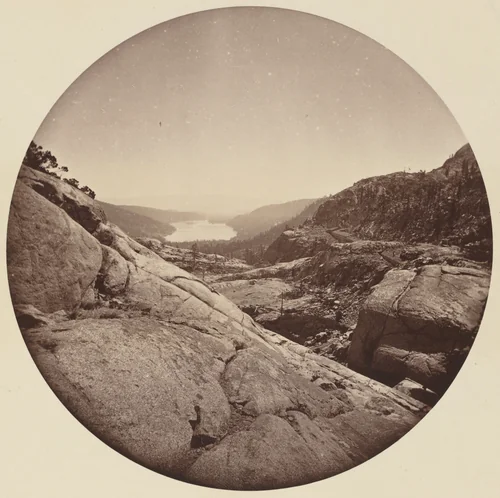
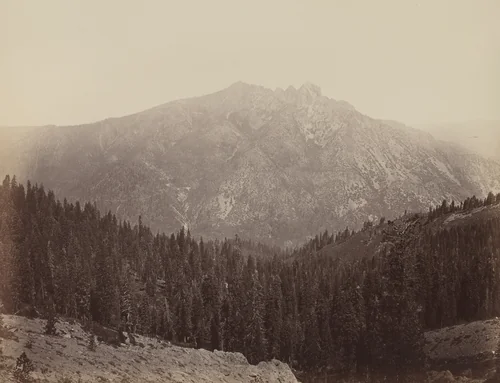
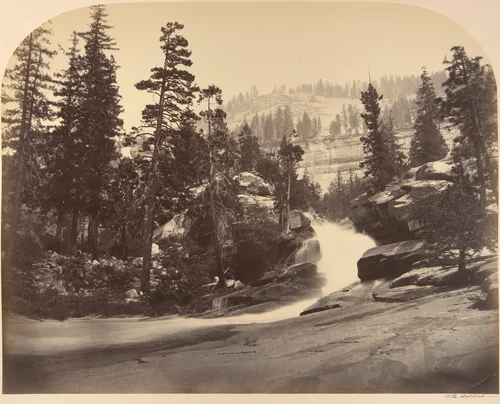
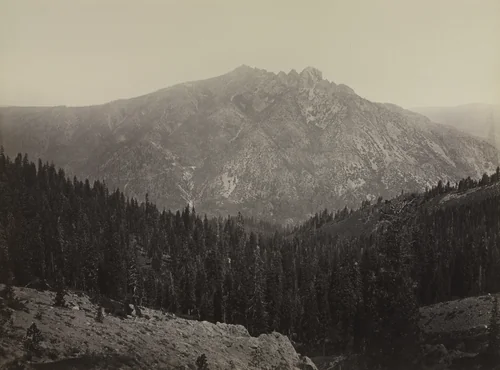
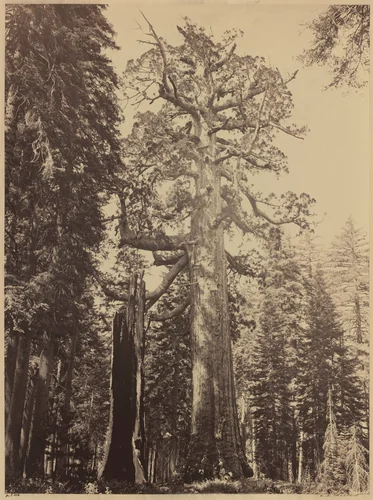
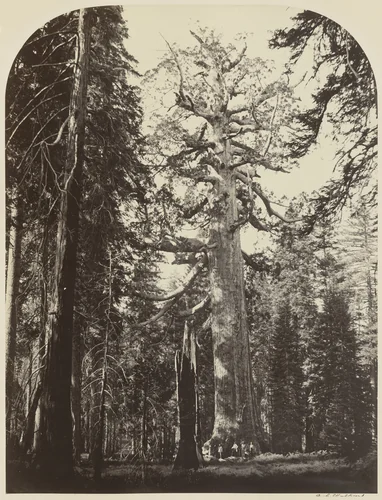
Watkins was renowned for his technical prowess, particularly his utilization of the mammoth plate process. This demanding technique required the artist to haul massive cameras, heavy glass plates, and portable chemical darkrooms across rugged terrain, yet it yielded negatives of exceptional size and resolution. This commitment to detail resulted in images of compelling, museum-quality scale. His systematic documentation of the Sierra Nevada, encompassing areas like Donner Lake, California and Downeville Butte, transformed these remote regions into tangible national icons.
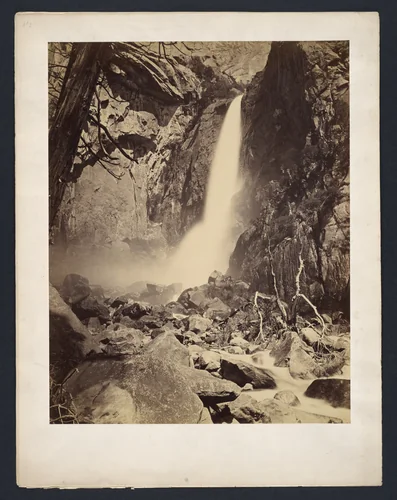
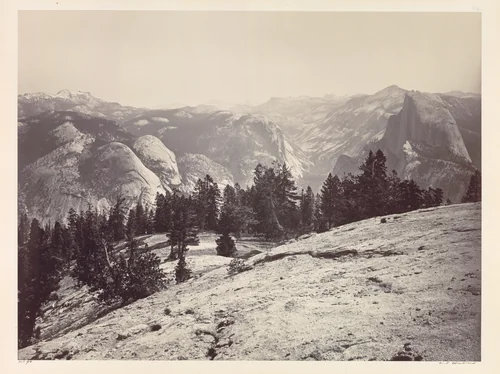
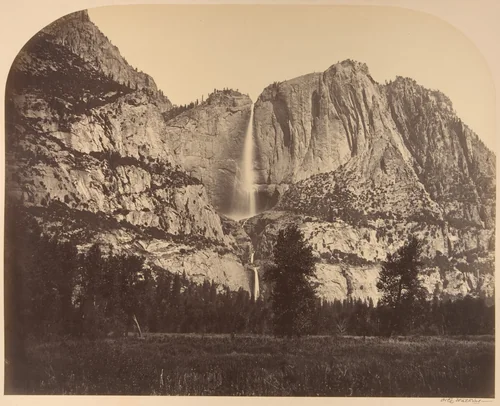
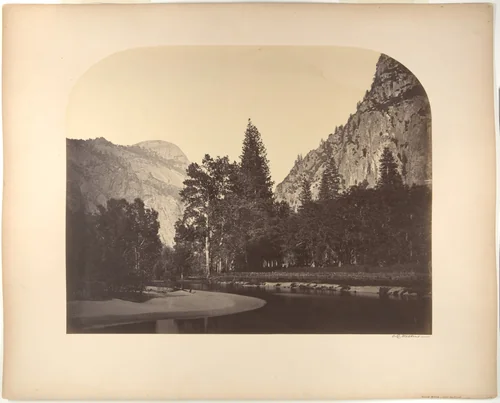
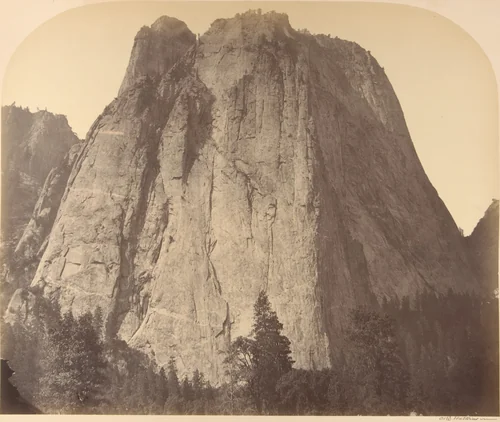
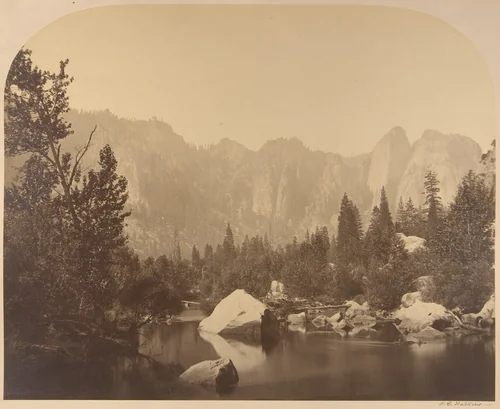
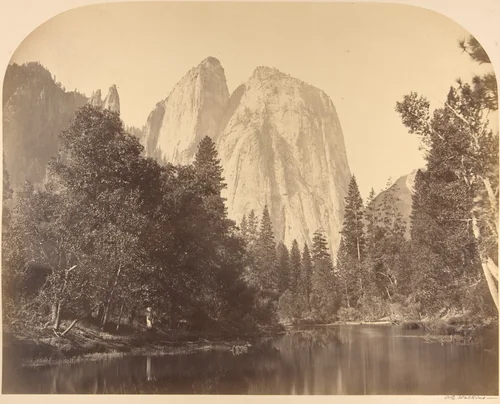
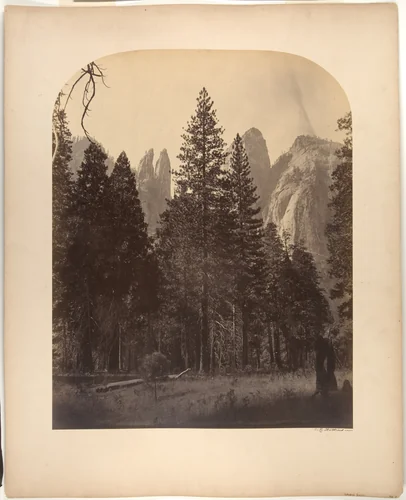
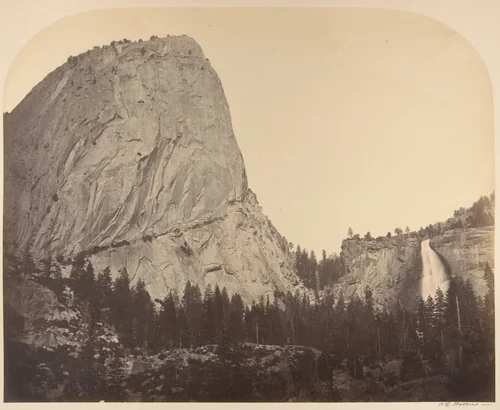
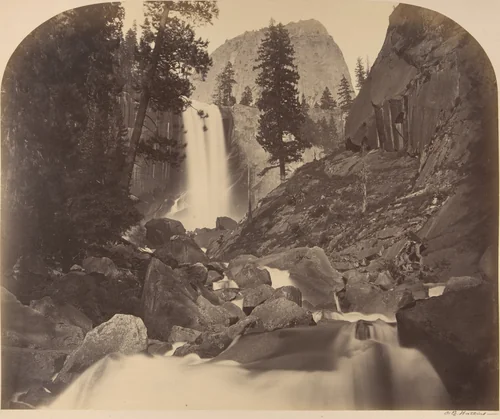
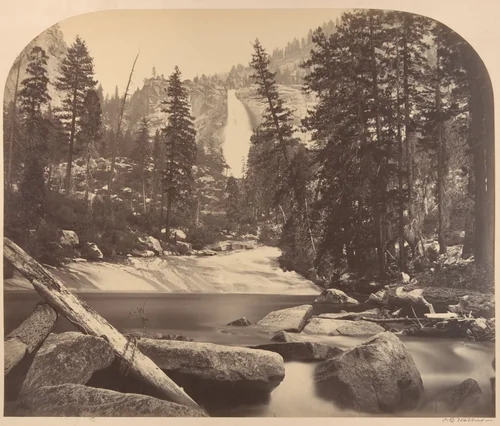
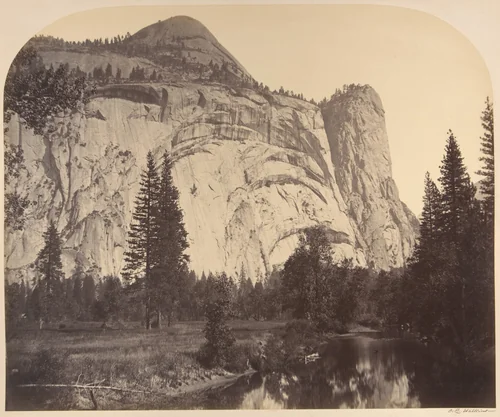
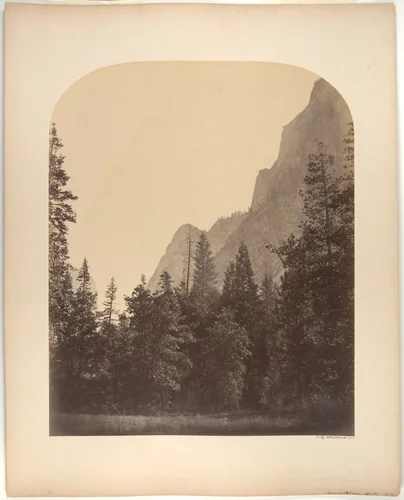
His most celebrated work focuses on the Yosemite Valley, a subject he approached with both artistic vision and scientific exactitude. Works such as Lower Yosemite Falls, The Domes, from the Sentinel Domes, Yosemite, and the precisely documented 2637 Ft. Yosemite Fall, Front View, illustrate his dedication to recording scenic grandeur. Watkins approached landscape with a unique combination of reverence and objective distance, a quality that perhaps explains why, despite the incredible labor involved in hauling his equipment, his compositions never appear hurried or strained.
Crucially, Watkins’s photographs transcended mere aesthetic appeal; they were instruments of American conservation. When circulated among influential figures and presented to the United States Congress, they served as undeniable visual evidence supporting the preservation of Yosemite. This exhibition directly contributed to the landmark 1864 decision that protected the valley, marking a major early victory for the conservation movement. Today, researchers and collectors continue to value the precision documented in Carleton E. Watkins prints. Many of his significant works, now in the public domain, are accessible as high-quality prints and downloadable artwork through major institutional collections worldwide, including the Metropolitan Museum of Art and the Museum of Modern Art.
Source: Wikipedia · CC BY-SA 4.0