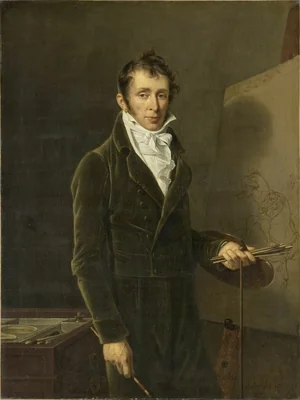
Carle Vernet
Antoine Charles Horace Vernet, known professionally as Carle Vernet, occupied a crucial, transitional position within French art, forming the essential middle generation of one of the nation’s great painting families. Born the youngest child of the celebrated marine master Claude-Joseph Vernet, he would later become the father of the esteemed history painter Horace Vernet. This inherited talent allowed him to traverse the profound stylistic shifts accompanying the French Revolutionary and Napoleonic eras, specializing not in grand allegory, but in documenting contemporary life, military actions, and, most distinctively, the dynamic aesthetics of the horse.
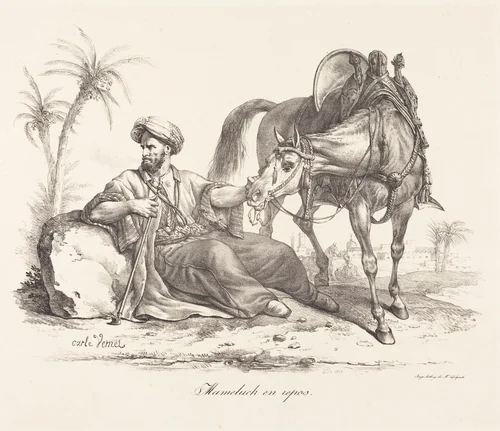
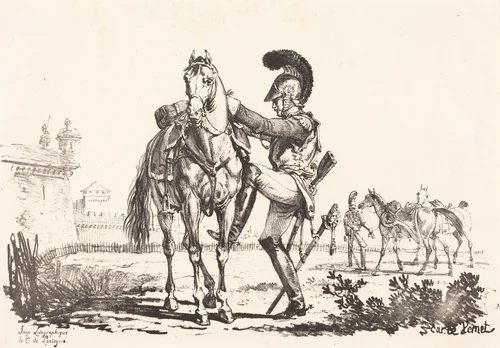
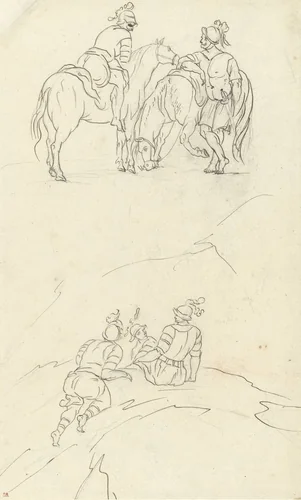
Vernet's artistic approach was characterized by an acute observational skill and an emphasis on immediate, energetic rendering. While his father perfected the atmospheric maritime scene, Carle Vernet excelled at recording motion, often utilizing drawing and printmaking to capture fleeting moments of action. His output showcases a focused application of skill to both the mundane and the military. Works such as Carabinier Mounting a Horse and the highly descriptive A Mameluck Resting reveal his meticulous attention to uniform, tack, and equine anatomy.
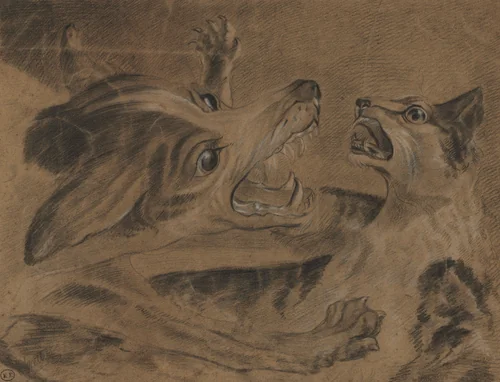
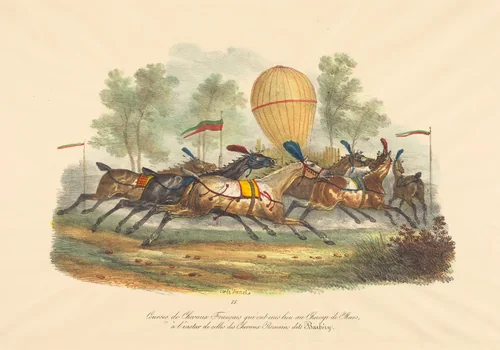
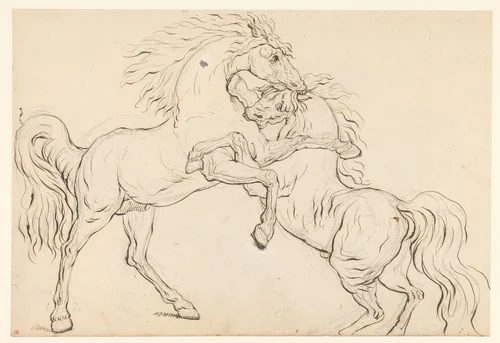
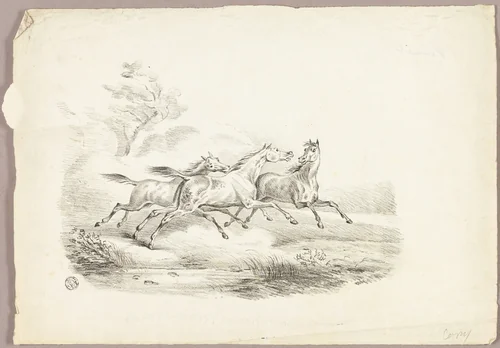
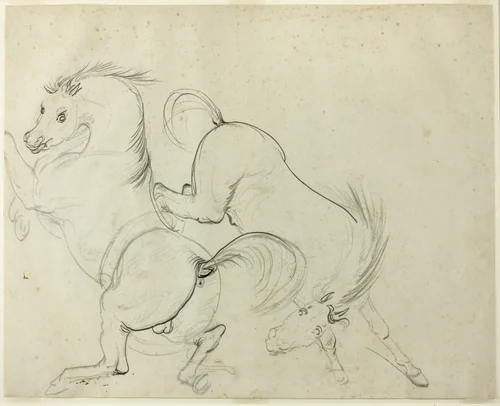
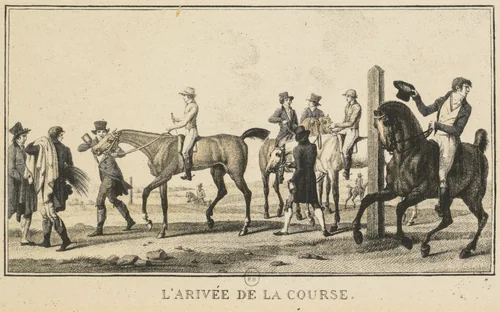
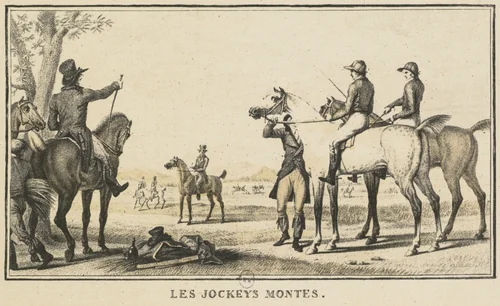
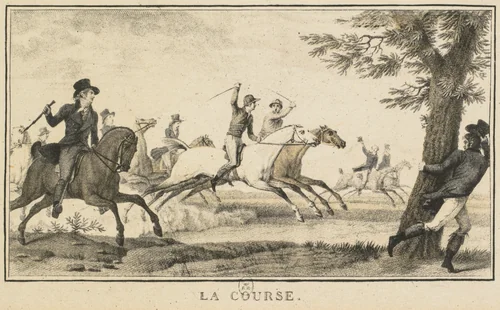
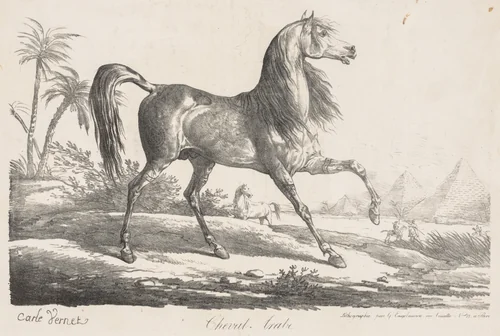
He possessed a particular, sometimes witty, affinity for the animalier genre, capturing raw intensity in compositions like Fighting Animals, alongside the documentary precision required for commissioned studies such as French Race Horses. Unlike many of his contemporaries who focused solely on the heroic sweep of Napoleonic campaigns, Vernet often concentrated on the operational details—the grit and precision of the cavalry machine—rendering his output quasi-documentary.
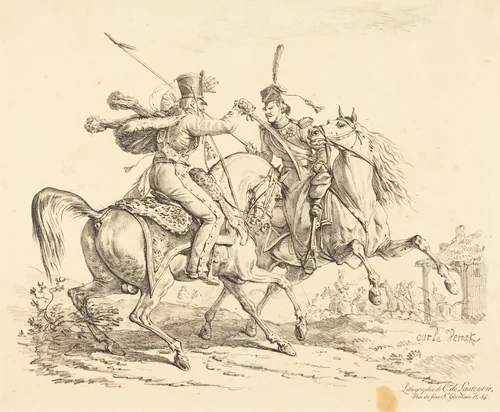
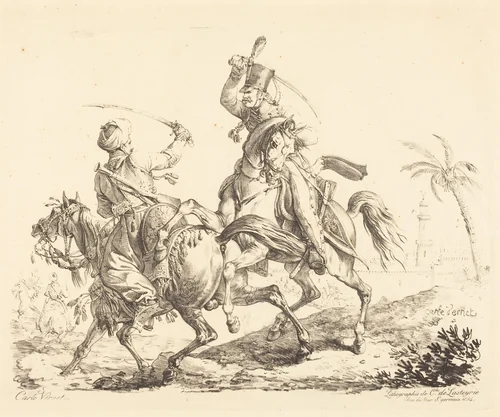
His works, including rapid sketches like Hussard Striking a Cosack, became invaluable visual records of early 19th-century French culture and military life. Today, a wealth of Carle Vernet prints and studies survive, providing accessible insight into this period. These items are highly sought after by collectors and institutions, including the Art Institute of Chicago and the Rijksmuseum. His status as a master draftsman is confirmed by the continuous demand for museum-quality reproductions, with many of his finest pieces available today as high-quality prints and royalty-free images, ensuring his detailed record of the equestrian world remains widely accessible.
Source: Wikipedia · CC BY-SA 4.0