Carle van Loo
Carle van Loo (1705-1765) was the dominant figure of the successful Van Loo dynasty, a family of painters of Dutch origin who became essential to the structure of 18th-century French art. As the son of Louis-Abraham van Loo and the younger brother of Jean-Baptiste van Loo, Carle absorbed the inherited traditions of Baroque painting while successfully navigating the burgeoning aesthetic complexities of the Parisian Rococo era. His subsequent mastery of multiple genres elevated him to the highest echelons of European artistic society.
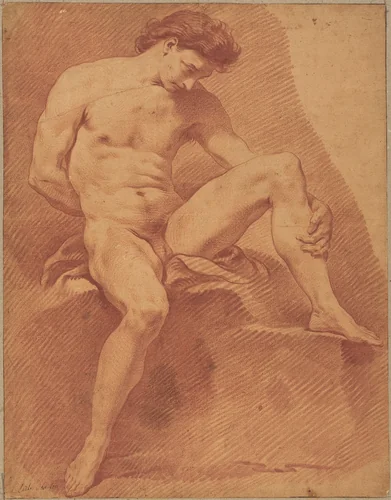
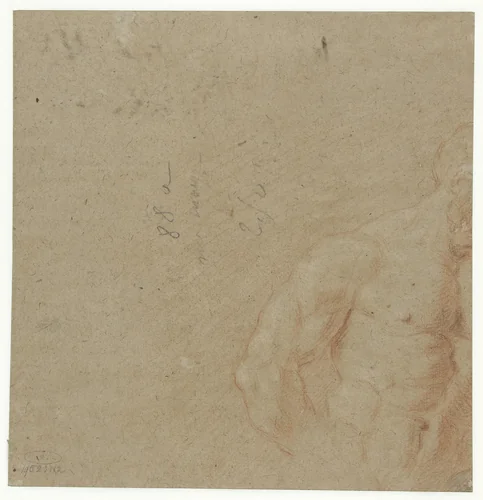
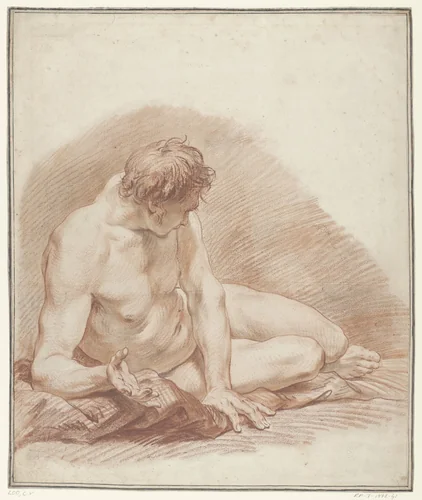
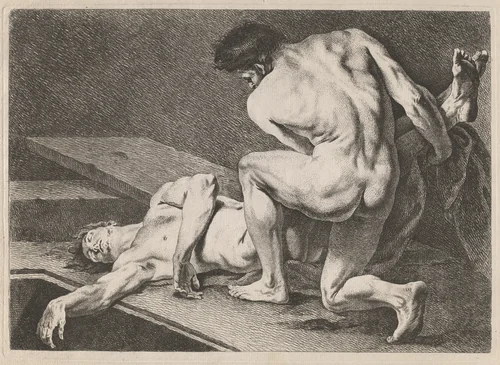
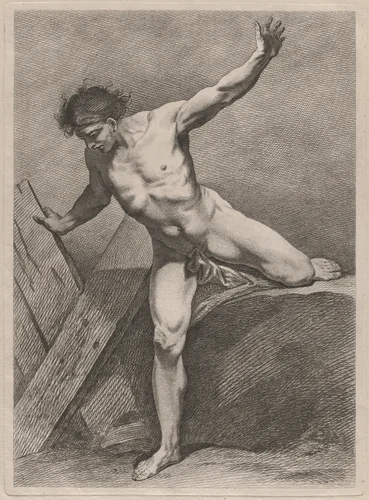
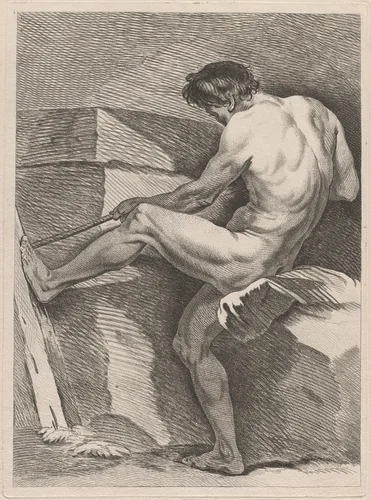
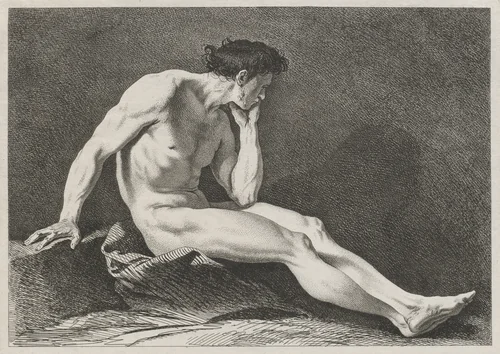
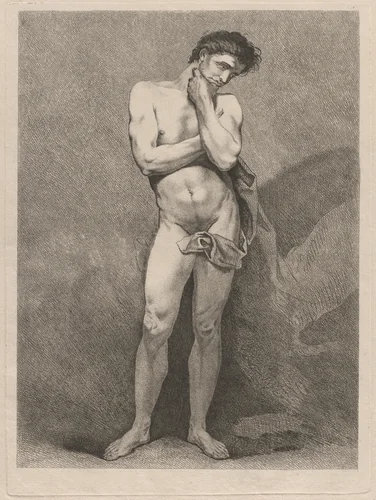
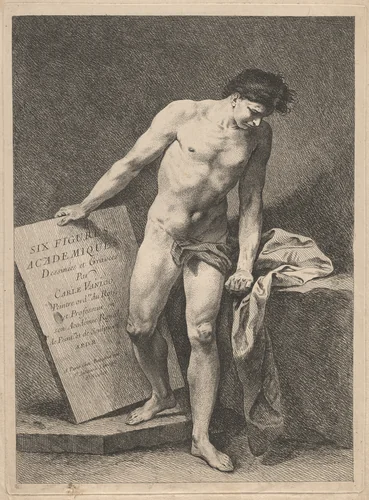
Van Loo’s oeuvre was exceptionally wide-ranging, encompassing every major category demanded by royal and ecclesiastical patrons: religion, mythology, grand history painting, portraiture, allegory, and genre scenes. This remarkable versatility allowed him to secure influential appointments and patronage across the continent. His mythological and history works, characterized by their robust figure studies and classical foundations, often reveal the meticulous academic preparation that defined his process. Preparatory drawings, such as A Seated Male Nude and the anatomical study Studie van een liggende naakte man, confirm his rigorous focus on drafting and the human form, a prerequisite for the high-quality prints sometimes derived from his finished works.
He held a rare position in French painting, defining the mainstream aesthetic standard for courtly art between the 1730s and the early Neoclassical shift. One might observe that Van Loo was almost too successful; his style was so perfectly aligned with the tastes of his era that his works became the undisputed benchmark for academic excellence. This ubiquitous demand ensured that he was not only highly visible in Paris but also widely collected internationally.
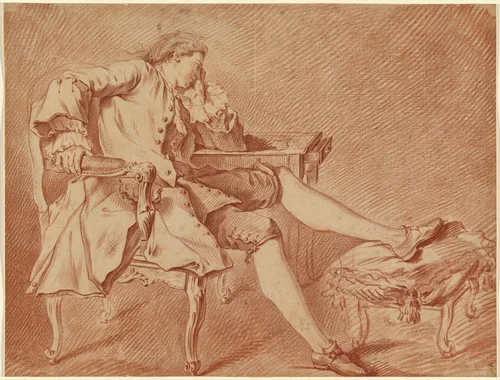
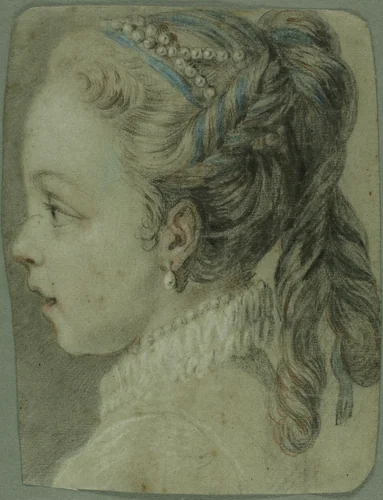
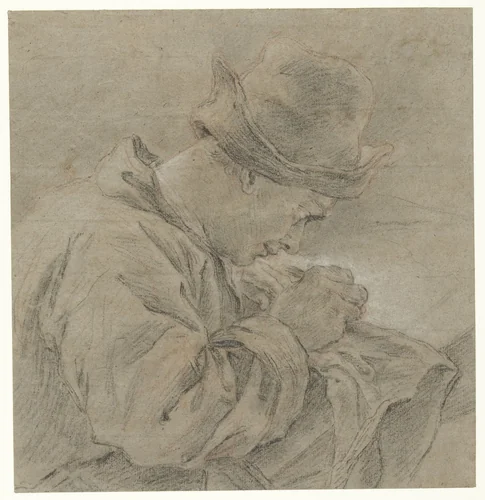
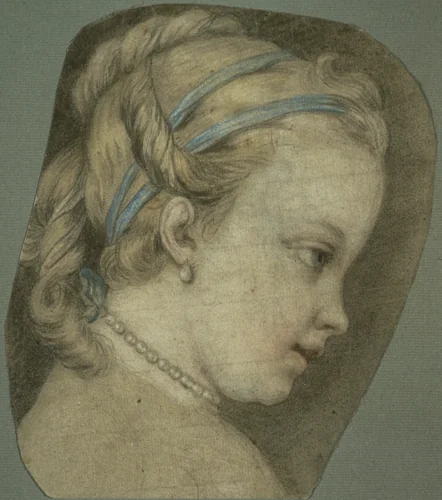
Van Loo’s legacy continues through major institutional collections worldwide, including the National Gallery of Art, the Rijksmuseum, and the Art Institute of Chicago. The detailed nature of studies like Gentleman Lounging in a Chair and Study: Head of a Young Girl Facing to the Left provides invaluable insight into the workshop practices of the period. Today, his masterful draftsmanship and influential compositions are accessible to scholars and the public, with many of his works, including detailed Carle van Loo prints, now available in the public domain.