Carl Weiss
Carl Austin Weiss Sr. occupies a historically unique and critically important position within the documentation of American decorative arts. While historically recognized as the American physician responsible for the September 8, 1935, assassination of Senator and former Governor Huey Long, Weiss’s substantial artistic contribution lies in his meticulous documentation work for the Index of American Design (IAD).
Active during the pivotal years spanning 1935 to 1953, Weiss became a key contributor to this comprehensive New Deal project, which aimed to preserve the visual record of historical American craft and material culture for educational purposes. His ten documented works, now held in major institutional collections including the National Gallery of Art, Washington, D.C., reveal a precision-focused commitment to detailing mid-century furnishings with analytical clarity.
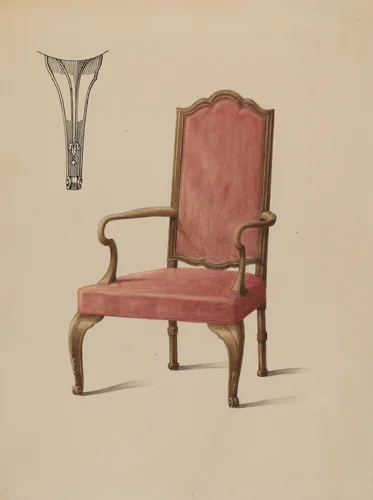
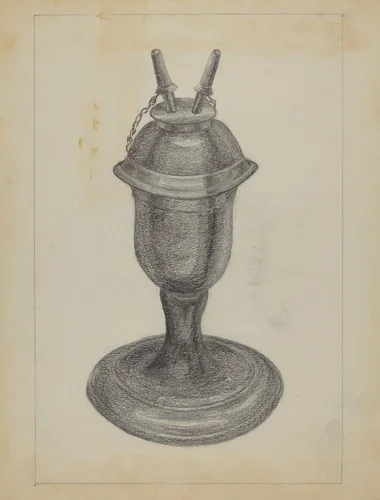
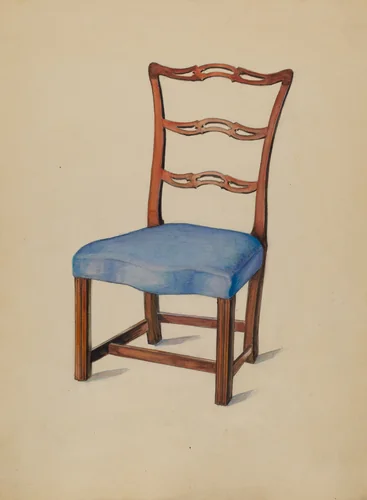
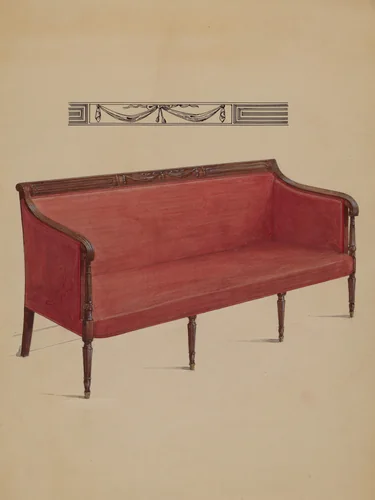
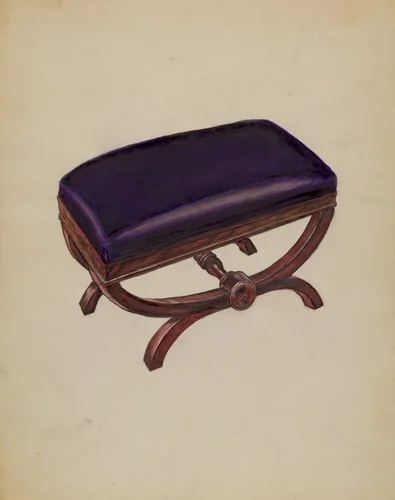
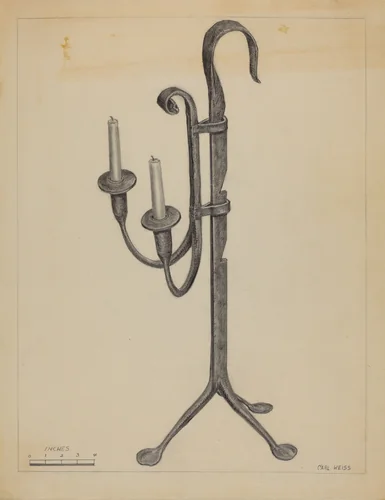
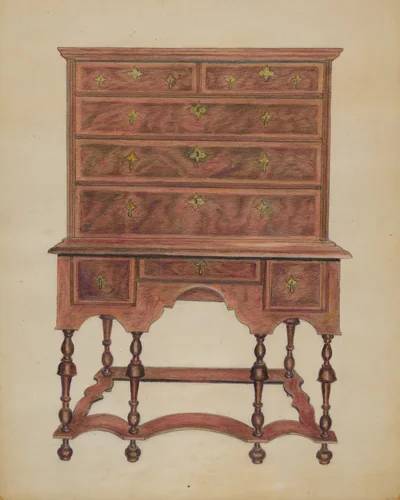
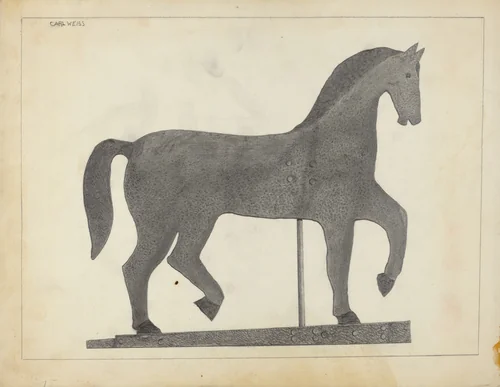
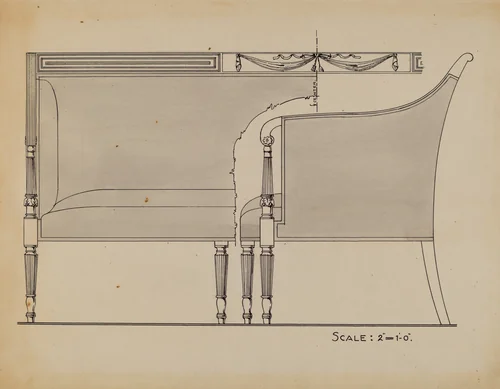
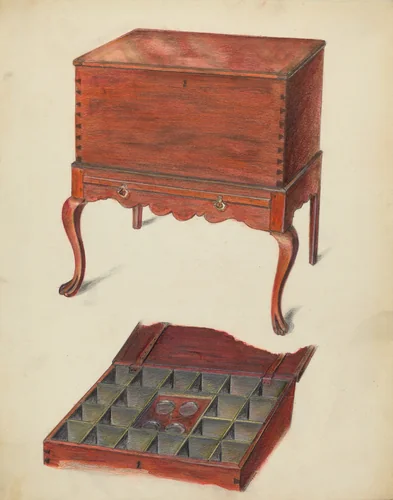
Weiss specialized in translating three-dimensional utility into precise, two-dimensional records. His renderings provide invaluable technical documentation of domestic objects that might otherwise have been lost to history. The collection of works is focused almost entirely on domestic seating and lighting, capturing the intricate lines of the Armchair, the purposeful structure of the Side Chair, and the proportions of the Sofa. His other submissions, such as the straightforward rendering of a Stool-Living Room and an intricate drawing of a period Lamp, exemplify his sharp attention to architectural detail and textural accuracy.
As documentation intended for widespread educational dissemination, the Index of American Design drawings created by Weiss continue to serve as vital reference points. These original design studies have since transitioned into the public domain, providing students, designers, and historians with museum-quality resources. The resulting high-quality prints and downloadable artwork ensure that this unique chapter of American craftsmanship remains globally accessible and royalty-free.
It is a subtle, yet striking, irony that an individual whose life ended in sudden, searing national notoriety dedicated his creative output to the painstaking, quiet permanence of American domestic goods. Weiss’s contributions underscore the IAD’s profound success in documenting both celebrated and anonymous artists and craftspeople, ensuring their records persist long beyond their individual circumstances.