Carl Wagner
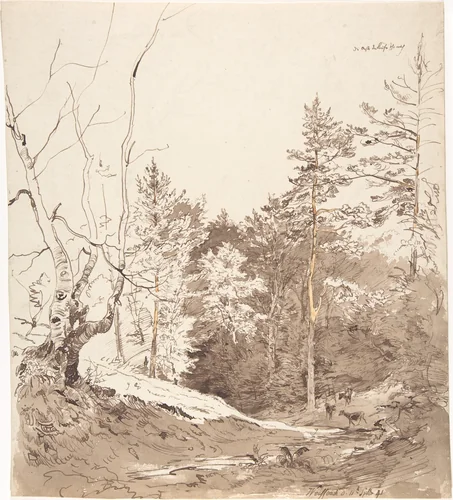
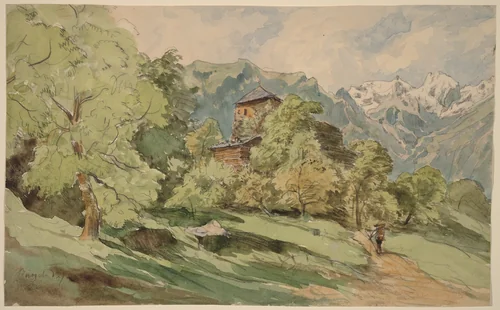
Carl Wagner (active 1816-1862) is recognized for his precise and atmospheric draftsmanship, capturing the topography of central Europe during the apex of the Romantic era. While his documented output is relatively small, the placement of his drawings within the collections of the Metropolitan Museum of Art and the National Gallery of Art confirms his significance as a contributor to 19th-century European visual documentation. Wagner specialized almost exclusively in highly detailed pencil and chalk renderings, suggesting a dedication to rigorous preparatory study and the intimacy afforded by works on paper.
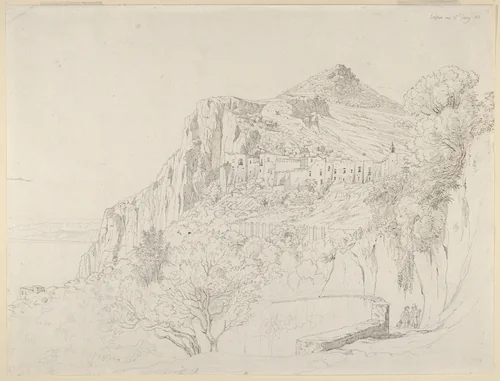
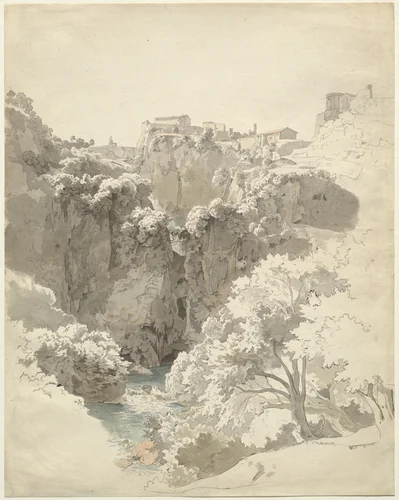
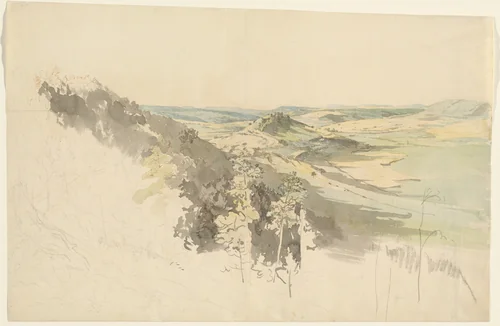
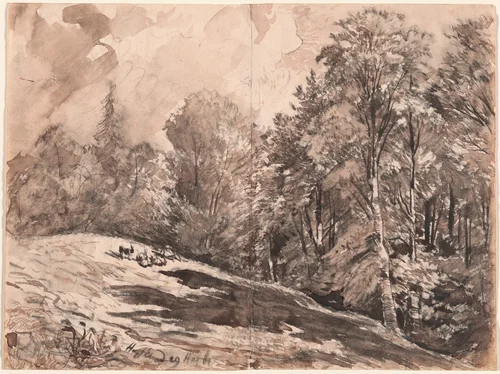
His known oeuvre is dominated by scenes drawn along the route of the classical Grand Tour, showcasing a particular affinity for the monumental ruins and sweeping geography of Italy. Works such as View of Capri and the dramatic Tivoli and the Temple of the Sibyl Above the Aniene Gorge display an exceptional commitment to architectural accuracy, paired with an understanding of light and mist that heightens the emotional impact of the landscape. This rigorous precision, which defines his handling of the Italian sublime, is also evident in drawings closer to his German roots, notably Hilly Landscape with Landsberg Castle.
Wagner’s methodical technique hints at a mind dedicated to fundamental structure and detail. This level of rigorous observation takes on an unexpected dimension given his other life as Carl Wilhelm Wagner, a pioneering physical chemist. His crucial work on oxidation rate theory and defect chemistry, which led to a better understanding of how reactions take place at the atomic level, defined the solid-state field for subsequent generations. This unusual duality-the rigorous analytical scientist applying exacting standards to fleeting natural beauty-lends a unique intellectual tension to his artistic output.
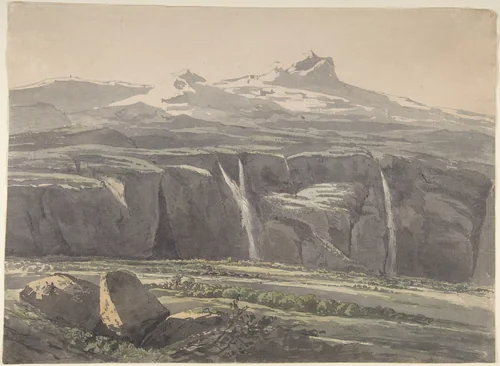
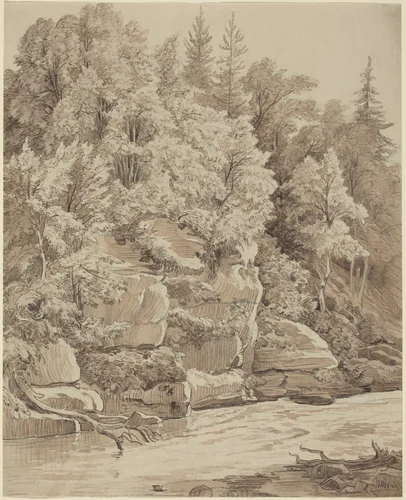
Whether capturing the dense atmosphere suggested in the Foggy Landscape in the Apennine or defining the contours of natural formations like the Wooded Cliffs along a Stream, Wagner’s compositions are clearly the product of a scientifically observant eye. Today, these historic documents, maintained as museum-quality resources, are increasingly available through the public domain, allowing enthusiasts access to high-quality prints that document the classical itinerary of the 19th century.
Source: Wikipedia · CC BY-SA 4.0