Carl Schütz
Carl Schütz (active c. 1770) was an Austrian master of the graphic arts, renowned both as an architect and as an exceptional engraver. Active during the transitional period bridging the dramatic late-Baroque style and the emerging purity of Neoclassicism, Schütz carved out a distinctive niche specializing in the production of architectural capricci—imaginative, often ruinous, architectural fantasies.
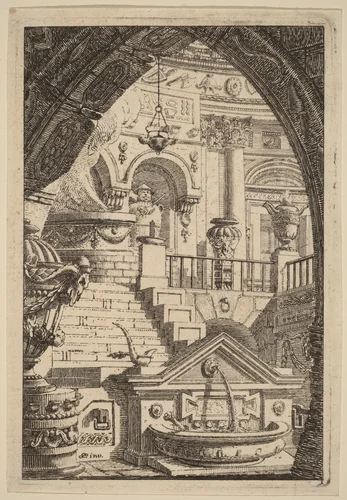
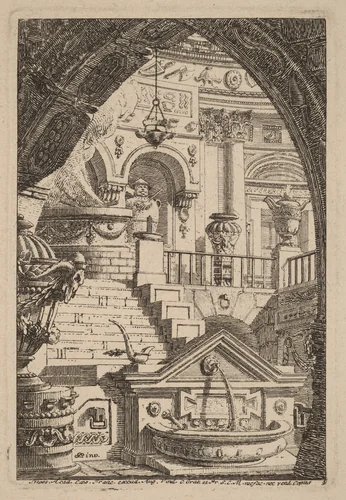
His extant body of work, comprising highly detailed prints, reveals a singular focus on the monumental relics of classical antiquity. Unlike practical architectural studies, these engravings function as meditations on time, scale, and the sublime power of ancient structures. Schütz’s skill lay in manipulating perspective and deep shadow to create environments that feel simultaneously vast and oppressive, drawing the viewer into a theater of imagined history.
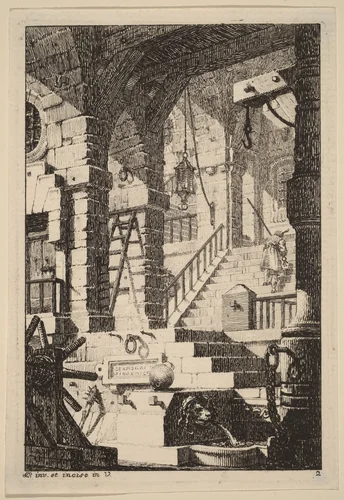
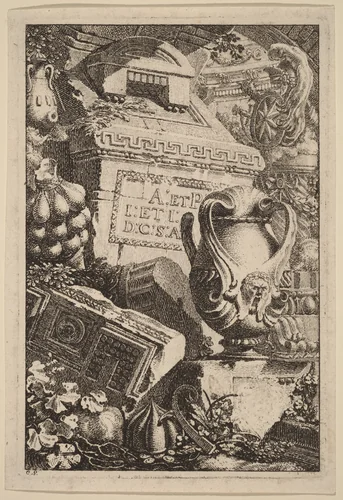
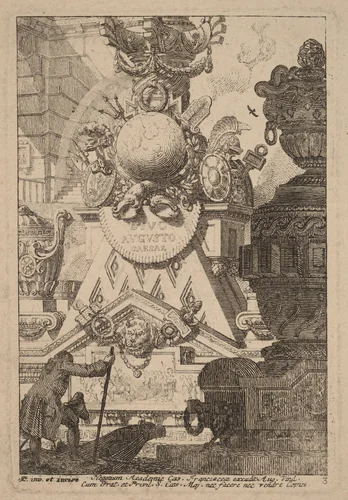
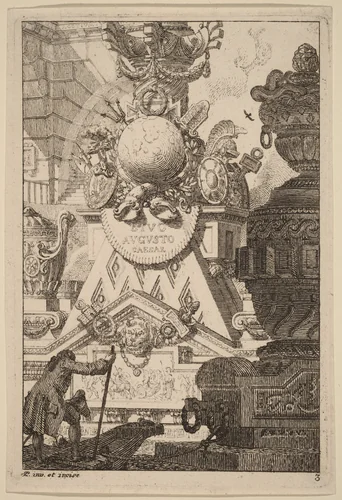
The six known prints by Schütz confirm his mastery of the genre. Works such as Fantasy of an Antique Prison and Fantasy of an Antique Tomb with Fragments of Architecture and Sculpture eschew straightforward representation. Instead, they depict intricate, decaying structures overgrown with shadow and myth. Titles like Fantasy of an Antique Trophy to Augustus further emphasize his ability to construct elaborate historical narratives solely through light and stone. It is tempting to see in these imagined prisons and tombs a quiet, compelling critique of the rigorous order favored by later Neoclassical designers, suggesting that the most profoundly affecting structure is often the one that has succumbed to time.
As an engraver, Schütz played a crucial role in disseminating sophisticated architectural ideas throughout eighteenth-century Europe. The reproducibility of his work allowed his imaginative designs to influence a wide circle of artists and collectors. Today, the enduring quality of his draftsmanship ensures that these Carl Schütz prints remain vital historical documents. Major repositories, including the National Gallery of Art, maintain collections of his work, much of which is available in the public domain, providing researchers and enthusiasts access to high-quality prints and downloadable artwork that define the era’s fascination with ruinous grandeur.
Source: Wikipedia · CC BY-SA 4.0