Carl Russ
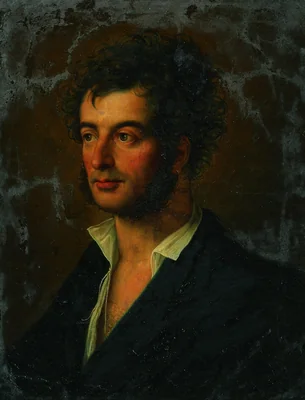
Carl Russ was an influential, though perhaps under-documented, printmaker whose active period spanned the final decades of the eighteenth century and the early years of the nineteenth century (1779-1811). Working during a pivotal era transitioning from refined Neoclassicism toward emergent Romanticism, Russ established his reputation through masterful engravings focusing on classical antiquity, high drama, and complex narrative history.
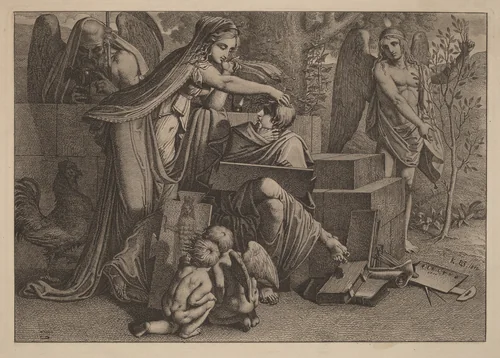
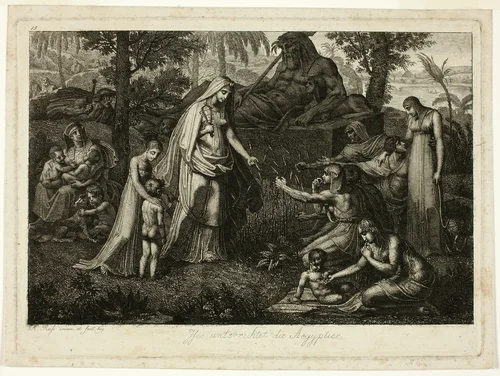
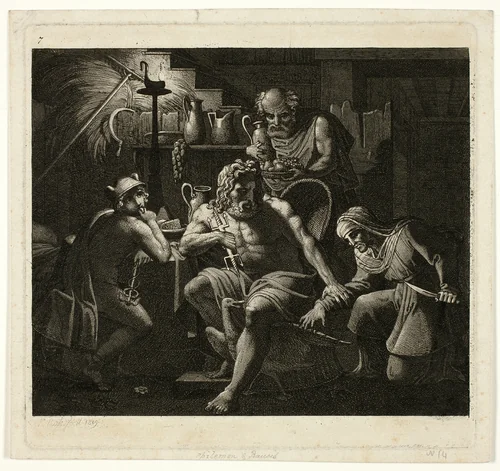
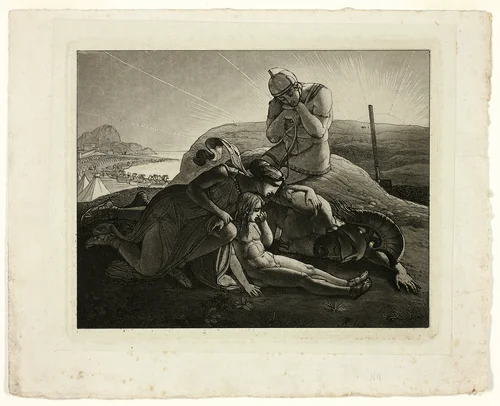
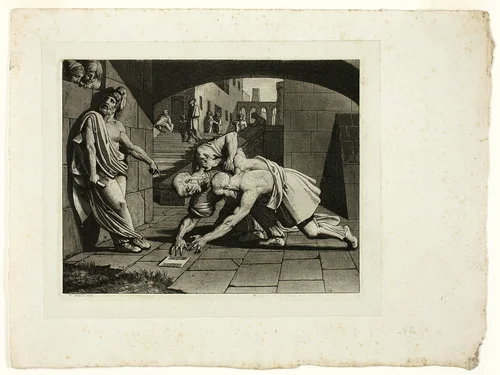
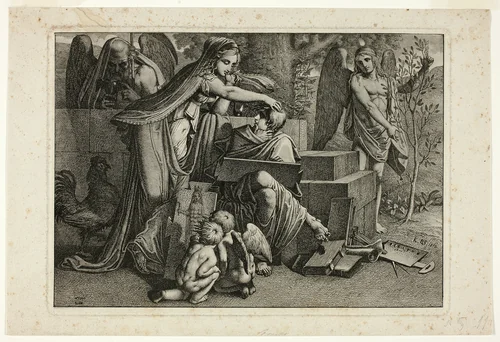
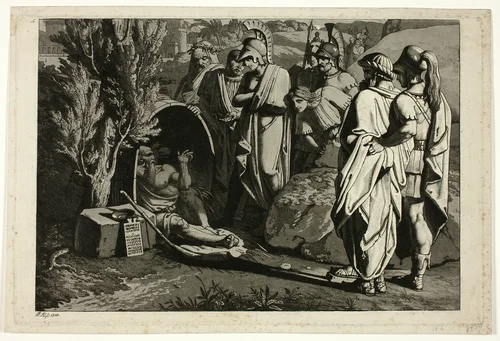
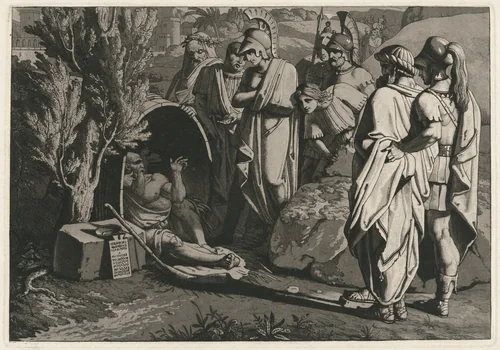
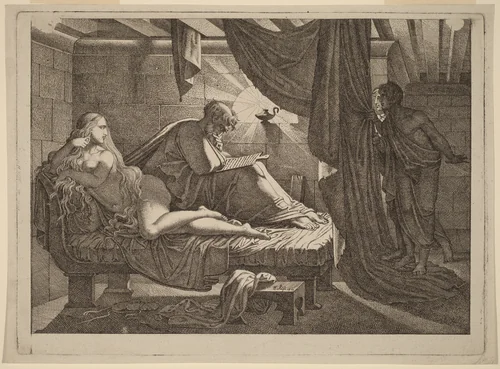
His classical inclinations are evident in detailed works such as Isis Instructing the Egyptians and the richly composed Jupiter Visits with Philemon and Bacchus, pieces that demonstrate a meticulous command of composition and figure study common to the period's academic standards. Russ’s subject matter frequently pulled from established literary and mythological sources, capturing intense emotional apexes, as seen in the poignant drama of Tecmessa, Her Son and Teucer Lamenting the Dead Ajax. Conversely, works like Young Man Inspired by Genius suggest an interest in allegory and the intellectual forces driving the Enlightenment era.
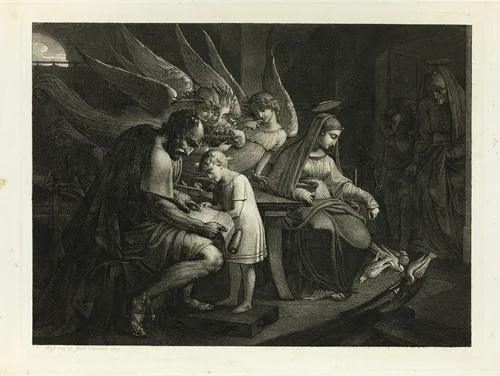
The breadth of his technical skill extended beyond grand mythological scenes. Perhaps his most unusual surviving work is the domestic vignette The Holy Family Busy at Home: Joseph Teaches the Boy Jesus to Read. Mary Feeds the Pigeons. Elizabeth Enters the Room with John. This lengthy title itself hints at the shift in artistic focus during the period from monumental historical gestures toward intimate, moral lessons, providing a fascinating counterpoint to the more formal Carl Russ prints for which he is usually known.
Russ was a respected figure whose output was circulated widely enough to ensure survival in prestigious institutions. Today, examples of his limited edition output, comprising approximately ten known prints, are held in major American repositories, including the National Gallery of Art and the Art Institute of Chicago, testifying to their lasting historical value and museum-quality craftsmanship. Much of Russ’s surviving work is now in the public domain, meaning scholars and enthusiasts can easily find high-quality prints or downloadable artwork, allowing for close study of these royalty-free historical narratives, further cementing Carl Russ’s subtle but important contribution to the visual arts of the late Enlightenment.
Source: Wikipedia · CC BY-SA 4.0