Carl Rottmann
Carl Anton Joseph Rottmann (1797-1850) was a pivotal German Romantic landscape painter, recognized today as the most famous and influential member of the renowned Rottmann family of artists. His significance rests not merely on lineage but on his profound synthesis of classical topography with the subjective, expressive goals of 19th-century Romanticism.
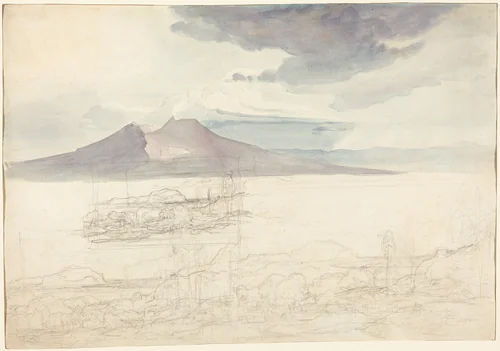
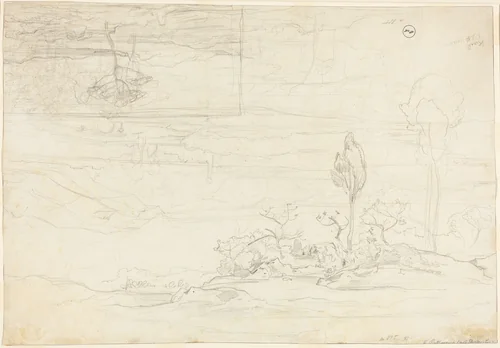
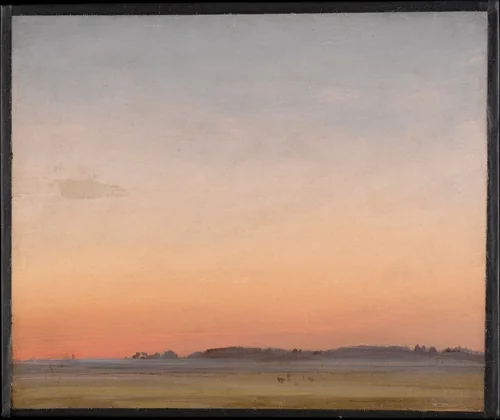
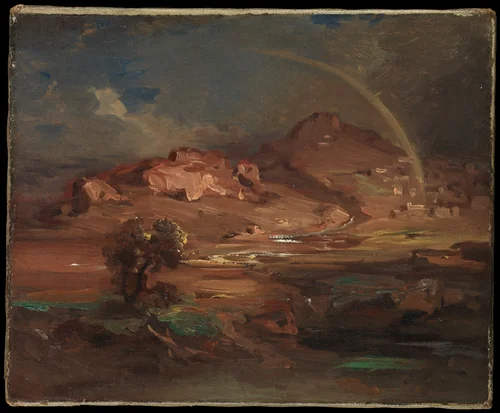
Rottmann’s most concentrated creative phase, approximately 1827 to 1838, was defined by rigorous travel and detailed observation, primarily focusing on the monumental landscapes and historical ruins of Italy and Greece. He distinguished himself from previous generations of idealized painters by adopting a highly analytical approach; his works combine almost geological accuracy in rock formations and light studies with an evocative sense of historical weight. This duality is manifest in his limited, highly impactful corpus of work from the period, which includes three intricate drawings and two known major oil paintings.
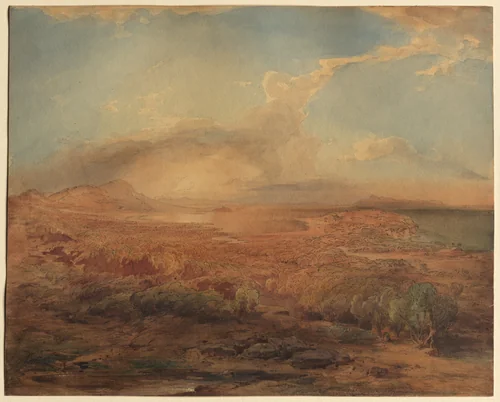
His exploration of specific sites often resulted in extended series, demonstrating a preoccupation with how a single view changes under different conditions. The detailed draughtsmanship present in his Panoramic Views of Vesuvius and Monte Pellegrino and the related Views of Monte Pellegrino captures the dramatic light of the Italian south, paving the way for later large-scale, immersive European landscape projects. It is worth noting that for an artist so dedicated to depicting the grand tour, Rottmann was remarkably selective in his output, perfecting a small number of motifs rather than pursuing volume.
Later in his career, Rottmann turned his attention to the burgeoning nation of Greece, documenting its newly uncovered classical sites with powerful clarity. Works such as The Cemetery at Pronoia near Nauplia and Epidauros reflect a powerful dialogue between decay and enduring classical structure. The art historical importance of these canvases is attested by their inclusion in major American institutions, confirming their status as museum-quality achievements. For those unable to experience the originals, the widespread interest in his distinctive method means that numerous Carl Rottmann paintings and studies are now available in the public domain. Researchers and enthusiasts frequently acquire high-quality prints of his preparatory drawings, allowing for detailed scholarly access to his disciplined approach to the Romantic ideal.
Source: Wikipedia · CC BY-SA 4.0