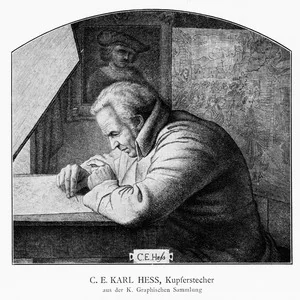
Carl Ernst Christoph Hess
Carl Ernst Christoph Hess (1755-1828), identified variably as Carl Ernst Heß, was a significant German copper engraver and painter whose active period spanned the late eighteenth century, notably from 1765 to 1792. Operating in the transitional era between the Rococo and Neoclassical styles, Hess established a reputation primarily through his precise, detailed print work, which skillfully translated the textures and depth of painted originals into the monochromatic medium of etching and engraving.
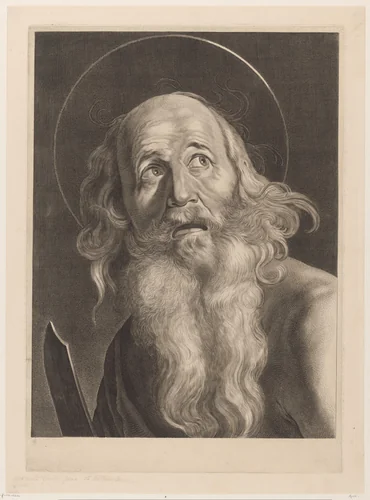
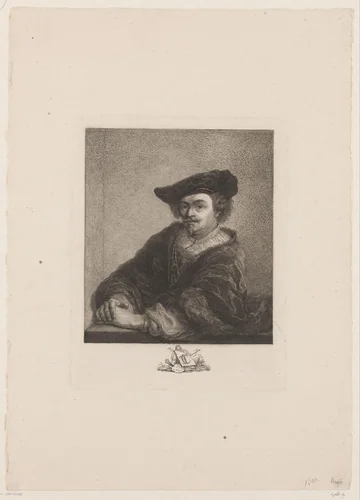
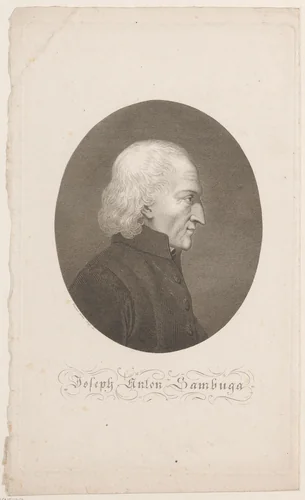
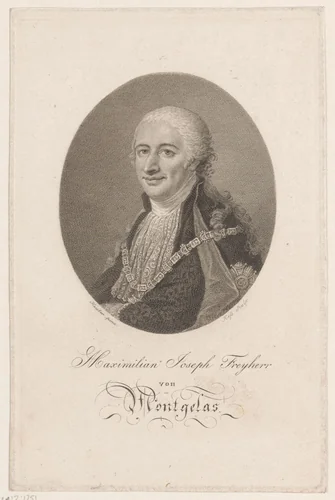
His meticulous approach secured his position as an important reproducer and portraitist of the period. Hess’s prints serve as vital historical records and artistic documentation, particularly his engagement with contemporary figures and religious themes. His known print output includes distinguished portraits such as the Portret van Govert Flinck, the theologian Portret van Joseph Anton Sambuga, and the influential Bavarian statesman Portret van Maximilian von Montgelas. These works demonstrate a keen ability to capture intellectual gravity and individual character, often working from established paintings by others. Hess was, fundamentally, a master of interpreting painterly technique for the widest possible audience of his day.
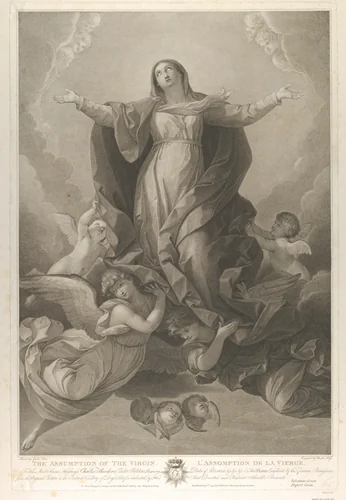
The ambition of his reproductive work is best illustrated by The assumption of the Virgin, who rises with arms outstretched, angels supporting her from below, after Reni. This work, drawing upon the grand Baroque style of Guido Reni, underscores Hess’s technical capacity to handle complex figure arrangements and dramatic lighting, transforming a monumental canvas into accessible, high-quality prints. This practice ensured that significant European masterpieces became available beyond the aristocratic collections, anticipating the modern accessibility of public domain images.
His surviving legacy, though centered on engraving, confirms his dual expertise as both a graphic artist and a painter. Works by Hess are held in major institutional collections, including the Rijksmuseum and the Metropolitan Museum of Art. The accessibility of his catalog, much of it now available as downloadable artwork, allows contemporary audiences to appreciate the rigor of late eighteenth-century graphic arts. Hess's career trajectory, marked by technical consistency and high-quality reproduction, illustrates the central role the engraver played in the pre-photographic distribution of European art and culture.
Source: Wikipedia · CC BY-SA 4.0