Carl Blechen
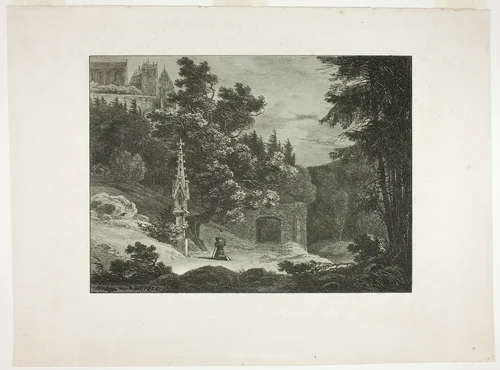
Carl Eduard Ferdinand Blechen (1798-1840) holds a pivotal position in early 19th-century German visual culture. A highly respected professor at the Academy of Arts, Berlin, his academic tenure cemented his role as a leading figure in institutional art education. Blechen’s work, primarily focused on landscape, moved beyond simple topographical representation. His distinctive style embraced the core tenets of Romanticism, prioritizing subjective emotion and the raw power of the natural world. Unlike some contemporaries who sought only the sublime beauty, Blechen often explored the atmosphere of isolation or profound melancholy, evident in works like Pilgrim in the Woods.
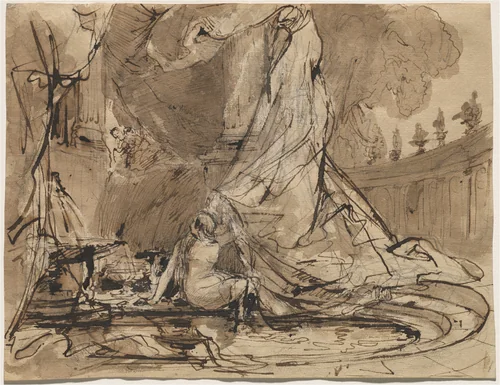
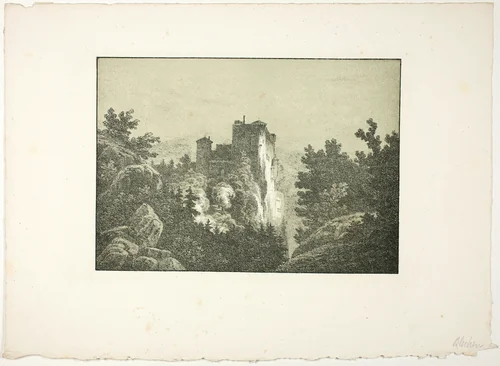
Blechen’s active period, largely concentrated between 1823 and 1834, produced a varied output encompassing oils, intimate drawings, and powerful prints. Although known chiefly for his landscapes, he demonstrated intriguing versatility in subjects that ranged from the dramatic decay seen in Ruins of a Castle to the unusual biblical historical scene of David and Bathsheba. This fluctuation between austere naturalism and narrative history is perhaps his most fascinating characteristic.
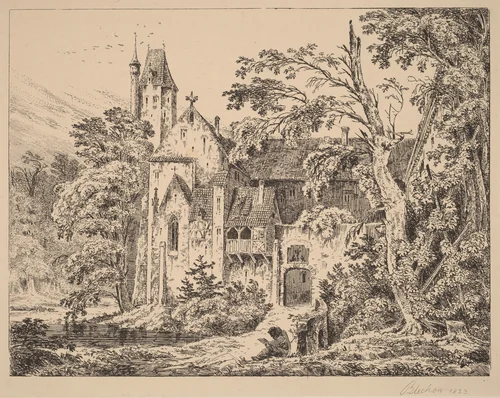
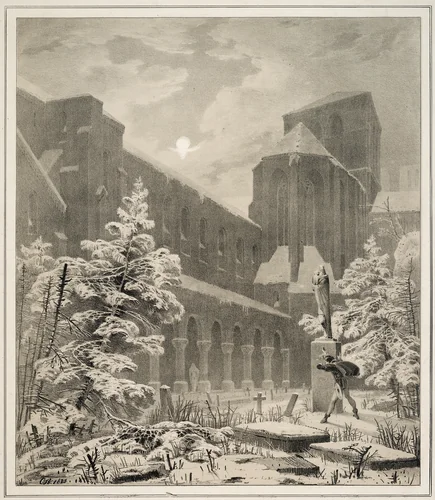
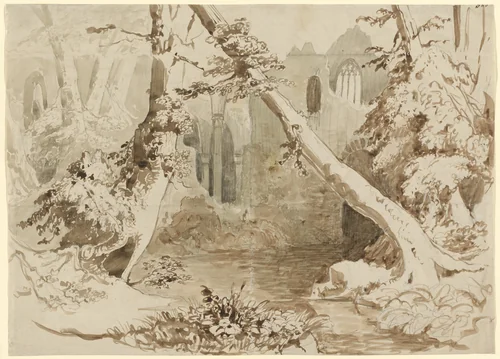
He mastered dramatic lighting and texture effects, whether depicting the dense, claustrophobic atmosphere of The Monastery in the Forest or the stark, unsettling luminance of winter, beautifully captured in the chilling Church and Graveyard in the Snow by Moonlight. These works are now staples in major institutions, with key examples held by the Art Institute of Chicago and the National Gallery of Art.
Blechen was instrumental in steering the German landscape tradition toward a more expressive, pre-modern interpretation of reality. Today, the enduring influence of Carl Blechen paintings and drawings means scholars continue to analyze his critical role in bridging classical Romanticism and emerging realist tendencies. Fortunately, many of his graphic works and studies are now in the public domain, allowing for easy access and scholarly examination. These historical pieces are increasingly available globally as high-quality prints, providing an unprecedented opportunity to study his mastery of light and shadow outside traditional museum walls.
Source: Wikipedia · CC BY-SA 4.0