Carel de Moor
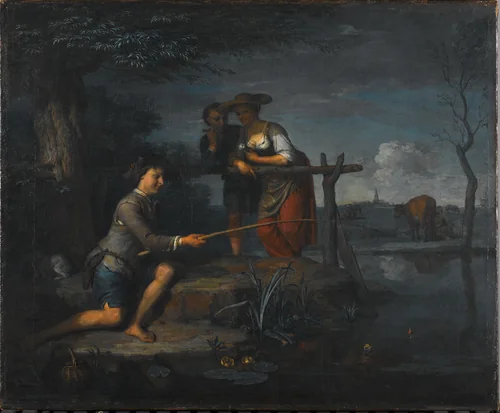
Carel de Moor stands among the skilled etchers and painters who shaped the latter phase of the Dutch Golden Age. Active between roughly 1665 and 1700, de Moor’s career was anchored in the highly specialized artistic environment of Leiden. His training was academically rigorous, having studied directly under the celebrated Gerard Dou, thereby absorbing the meticulous detail and precise finish characteristic of the fijnschilders school. This association anchored de Moor firmly within a tradition valuing high-quality production and polished surfaces, whether applied to canvas or copper plate.
De Moor’s oeuvre demonstrates a keen specialization in portraiture, though his total recorded output is numerically small-just one painting is noted alongside eight known prints. The scarcity of original Carel de Moor paintings contrasts sharply with his success as a printmaker. His skill as an etcher allowed him to translate the exacting standards of his master into a reproducible medium, catering to the increasing demand for collectable prints among the mercantile class.
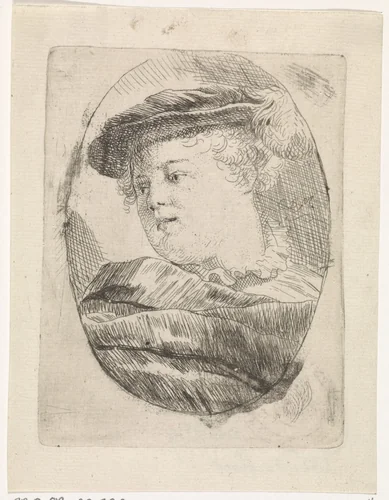
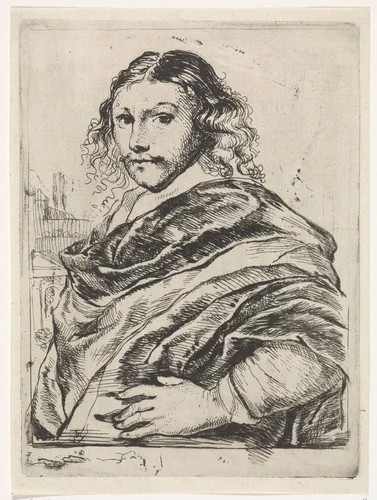
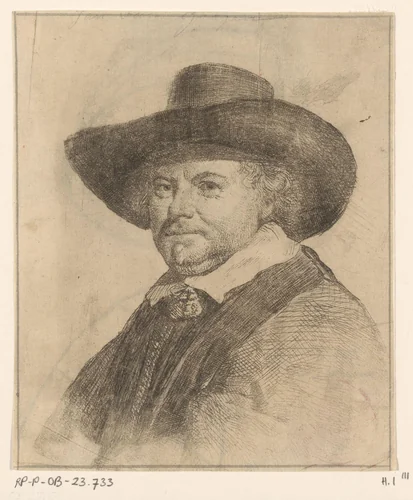
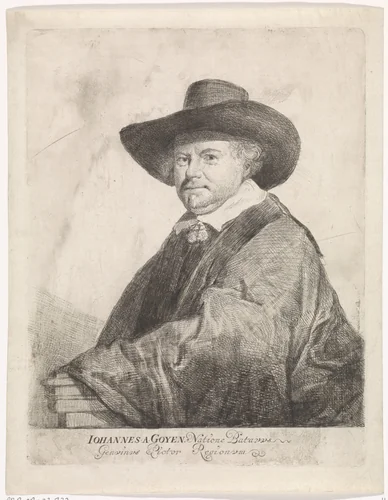
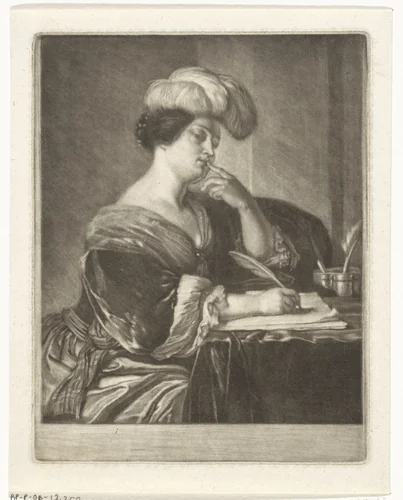
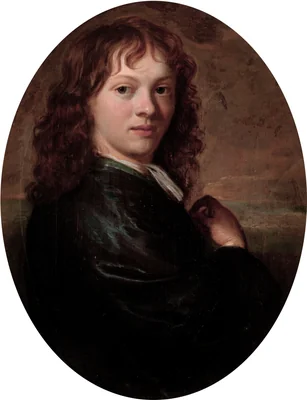
He was particularly successful in capturing the likenesses of contemporaries, creating evocative etched portraits such as Portret van Frans van Mieris (I) and the striking double entry dedicated to fellow artist, Portret van Jan van Goyen. These pieces exemplify the clear, controlled line work and effective use of shadow essential to successful 17th-century engraving. It seems de Moor found his true calling not in the arduous, slow process of oil painting, but in the rapid, democratic reach of printmaking. His output focused heavily on authoritative portraits, though the inclusion of works like Portret van een schrijvende vrouw suggests a quiet interest in intimate, domestic scenes typical of the Leiden school.
Today, the enduring value of his contribution is recognized by major institutions; his core works are preserved in the collections of the Rijksmuseum. The legacy of Carel de Moor prints is one of clarity and technical mastery in the reproductive arts. Many of these historical images are now available for study and admiration as downloadable artwork in the public domain, ensuring that these museum-quality reproductions remain accessible to scholars and enthusiasts worldwide.
Source: Wikipedia · CC BY-SA 4.0