Calvert Jones
Calvert Richard Jones (1804-1877) occupies a pivotal position in the visual arts history of the mid-nineteenth century, embodying the critical transition from traditional painting to the technological innovations of early photography. A Welsh native and a rigorous mathematician by training, Jones was recognized throughout his early career primarily as a painter, celebrated especially for his atmospheric seascapes. This deep artistic and technical understanding prepared him uniquely for the advent of the nascent photographic medium.
While his initial reputation stemmed from his Calvert Jones paintings, his enduring legacy today is inextricably linked to the focused period when he embraced the camera, particularly around 1846. His photographic output, though modest in volume, showcases an acute sensibility for composition and the documentation of historic sites and coastal activities. Traveling extensively, particularly in the Mediterranean, Jones captured complex scenes with clarity and precision.
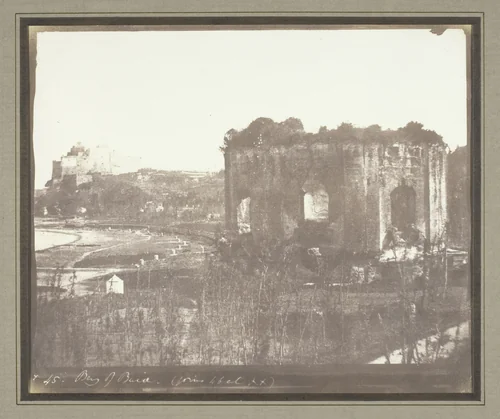
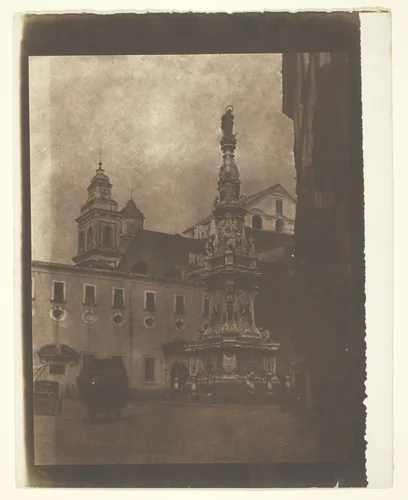
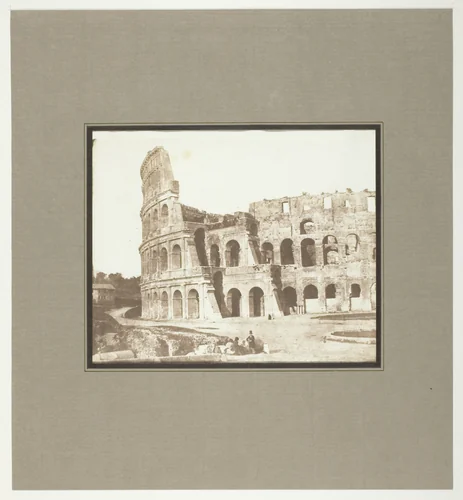
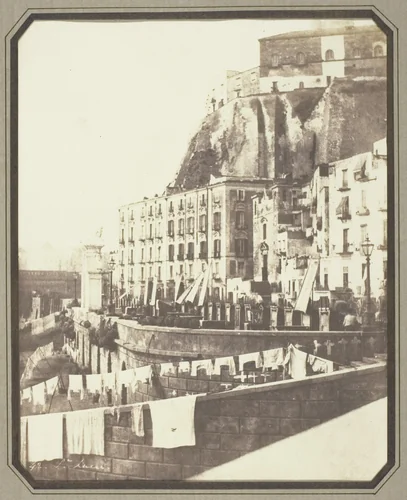
Key photographic studies, held in significant collections such as the Art Institute of Chicago, include vivid documentation of Italian landmarks like Bay of Baia, the architectural record Celebrated Obelisk, Naples, and the classical formality of Colosseum, Rome, 2nd View. These images reflect a painter’s eye for framing combined with the necessary technical discipline to master processes like the Calotype. It is perhaps no surprise that a mathematician, accustomed to solving complex equations, excelled at wrestling the scientific variables required to successfully fix a light-sensitive image permanently.
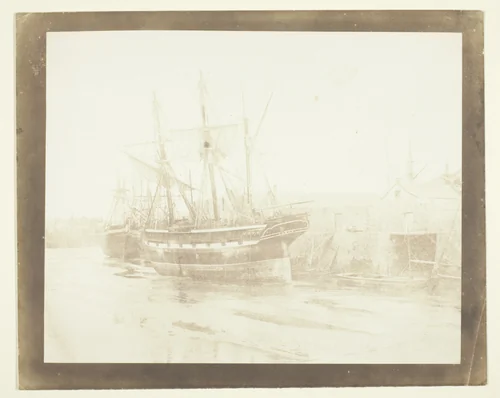
His works frequently blend the maritime focus of his painterly background, seen in views like St. Lucia, Naples and the industrial study Copper Ore Vessel, Swansea, with the emerging demands of objective documentation. Jones successfully translated established aesthetic objectives onto the photographic plate, ensuring his images resonate not merely as historical records but as considered works of art. Today, his contributions are widely available; due to their age, many of his photographs reside in the public domain, allowing enthusiasts and scholars alike to access high-quality prints and study this important stage in the history of the visual arts. His photographic achievements confirm him as a sophisticated early adopter whose influence extends far beyond his original reputation.
Source: Wikipedia · CC BY-SA 4.0