Bramine Hubrecht
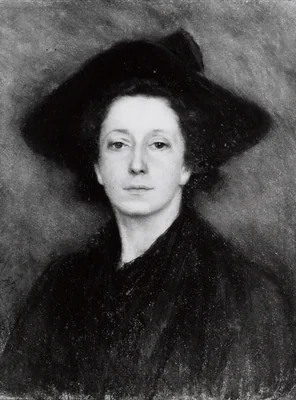
Abrahamina Arnolda Louise Hubrecht (1855–1913), professionally known as Bramine Hubrecht, was a highly capable Dutch artist whose career flourished from 1870 to 1905. A disciplined practitioner of painting, etching, and illustration, she produced a corpus of work distinguished by its technical precision and intimate observational focus. Hubrecht successfully navigated the late nineteenth century art world, contributing significantly to the established tradition of Dutch academic and genre painting. Her significance is confirmed by the preservation of her output in major institutional collections, including the Rijksmuseum.
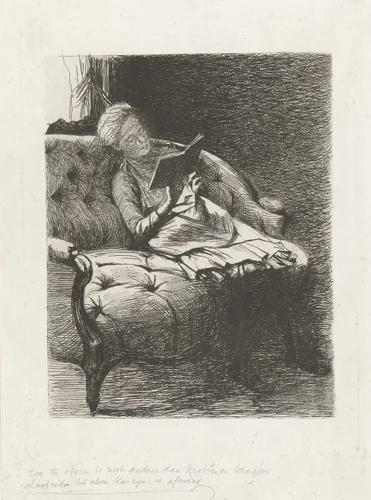
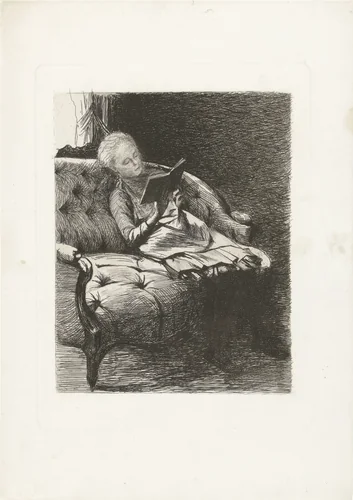
Hubrecht's paintings demonstrate a consistent thematic engagement with intellectual life and contemplative domesticity. Her compositions often feature figures immersed in books or engaged in tutorial settings, reflecting the era’s shifting focus on education and interiority. This dedication to depicting concentration is perhaps best exemplified by the double iteration of Lezend meisje op een sofa, where the simple act of reading becomes the central subject. Hubrecht possessed an almost anthropological curiosity about the precise moment knowledge is being absorbed, capturing this internal focus with meticulous detail.
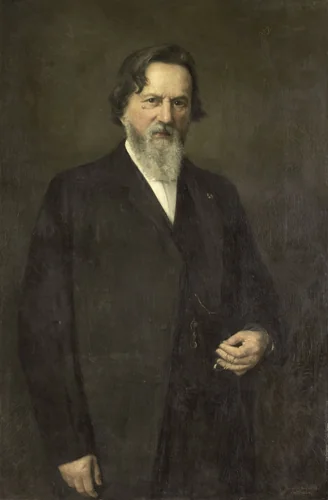
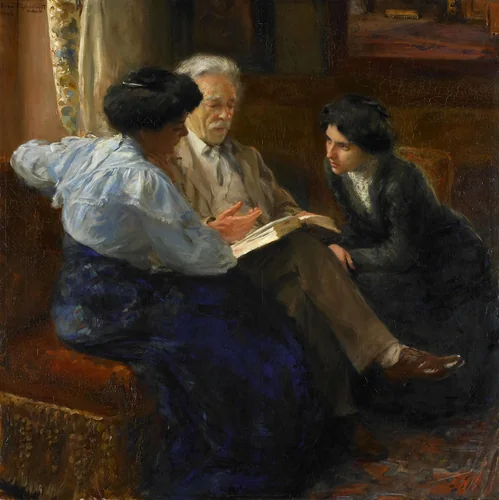
Her versatility allowed her to move fluidly between public portraiture and private scene-making. The commanding rendering of Professor Franciscus Donders (1818-1889), Physiologist and Opthalmologist established her credentials in intellectual portraiture. Conversely, the more personal canvas showing Alphons Marie Antoine Joseph Grandmont (1837-1909), the Artist's second husband, Tutoring two Italian Girls, combines the rigor of portraiture with the warmth of genre painting. These Bramine Hubrecht paintings and prints attest to her technical range, which also extended into drawing, evidenced by the surviving Schetsboek met 45 bladen, detailing her skillful command of various media necessary for her work as an illustrator and etcher.
Although she remains less familiar than some of her male contemporaries, Hubrecht's meticulous output provides valuable insight into the professional life of a female artist at the turn of the century. Today, many of her key works reside in the public domain, ensuring their continued accessibility for academic research and public appreciation. The consistent quality of her craftsmanship confirms her as a museum-quality practitioner, and high-quality prints of her defining Bramine Hubrecht prints and paintings are widely available for study.
Source: Wikipedia · CC BY-SA 4.0