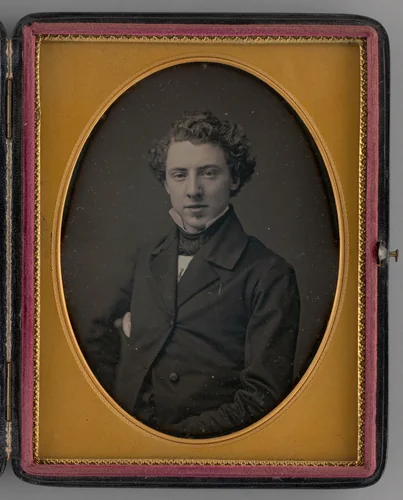
Boston School
The designation "Boston School" is complex within art history, referring variously to the academic painters active around 1900, the Boston Expressionism movement of the mid-twentieth century, and specific photography collectives of the 1970s and 1980s. However, within major institutional collections such as the Art Institute of Chicago, the name is also applied to a highly distinct mid-nineteenth century artistic practice, active primarily between 1852 and 1858.
This earlier iteration of the Boston School focused almost exclusively on portraiture and character studies, offering a sober documentation of the American middle class during the decade preceding the Civil War. Unlike the grand society portraits favored by European academic artists, these works centered on occupational identity and quotidian reality. The surviving body of work, limited to five known pieces, offers high-quality prints that capture the social dynamics of a rapidly industrializing society.
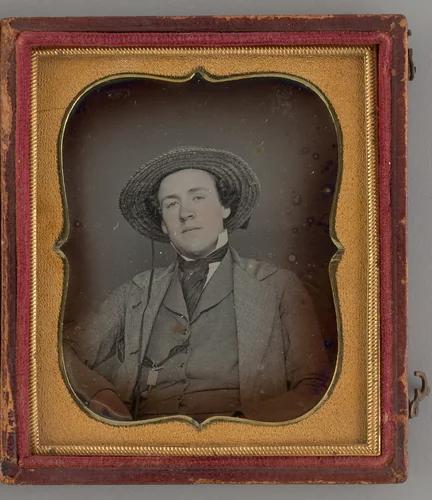
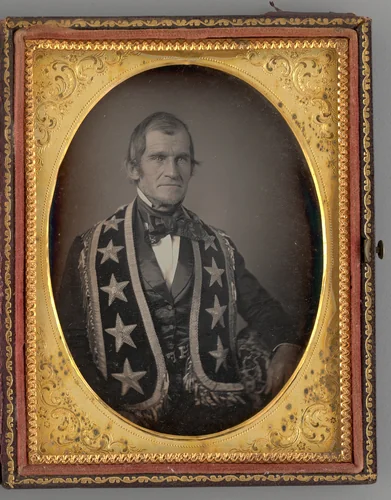
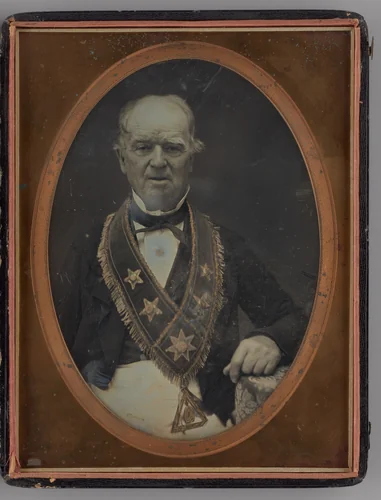
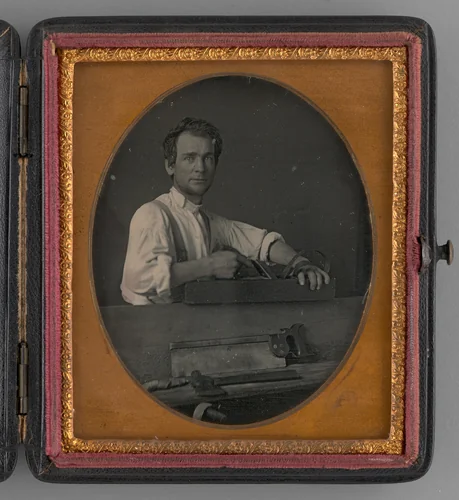
Works such as Untitled (Portrait of a Man with a Straw Hat) and Untitled (Portrait of a Carpenter) eschew idealized settings for direct, unflinching realism. The subjects are typically identified by their profession or social role, as seen in the striking Untitled (Freemason). Even the more personal study of Untitled (Portrait of Charles Darling) suggests an interest in local, rather than national, celebrity. The enduring anonymity of the majority of these sitters hints at the commercial realities of mid-19th century art production, where the likeness was often paramount regardless of the individual’s lasting fame.
The brevity of this group's recorded activity makes these specific Boston School paintings valuable artifacts, serving as a transitional link between early American folk art and the later waves of American realism. These museum-quality examples are now often found in the public domain, offering researchers and institutions royalty-free access to downloadable artwork that charts this critical, under-documented period of American visual history.
Source: Wikipedia · CC BY-SA 4.0