Bill Traylor
William Traylor (c. 1853-1949) occupies a unique and significant position in 20th-century American art, establishing a powerful and distinctive graphic style in a career that began unexpectedly in his ninth decade of life. Born into slavery in rural Lowndes County, Alabama, Traylor spent the majority of his post-Emancipation years as a sharecropper. His artistic achievement is remarkable, not only for its prolific nature but for its late emergence, transforming the final years of a life characterized by agricultural labor into a period of intense visual documentation.
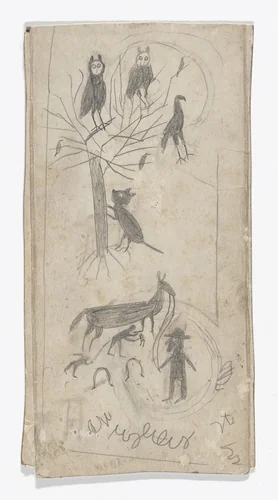
Following his move to Montgomery, Alabama, around 1939, Traylor began to draw at the age of 85. Armed primarily with pencils, crayons, and discarded scraps of cardboard, he quickly developed a profound visual language. From 1939 to 1942, while working on city sidewalks, Traylor produced nearly 1,500 individual works, chronicling his memories of plantation life, observations of the segregated urban environment, and fantastical geometric figures.
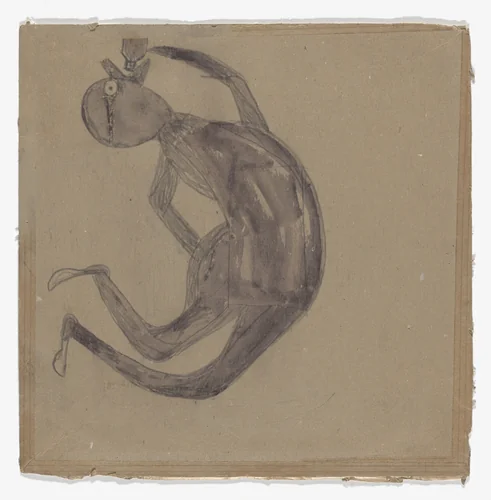
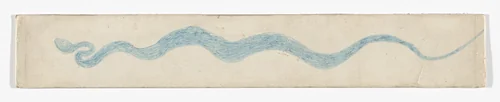
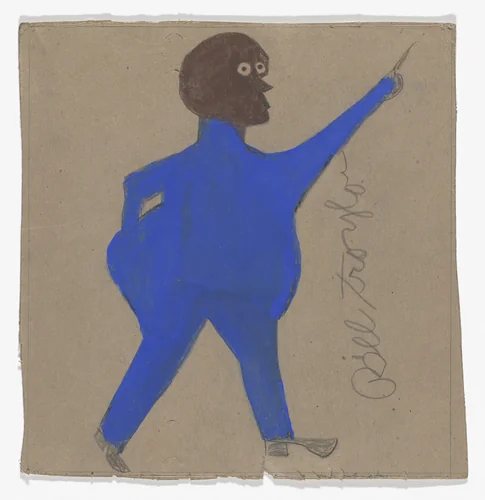
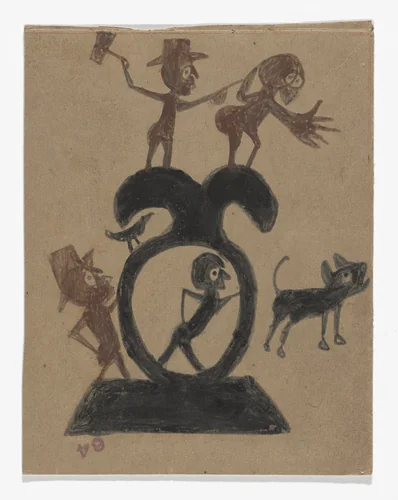
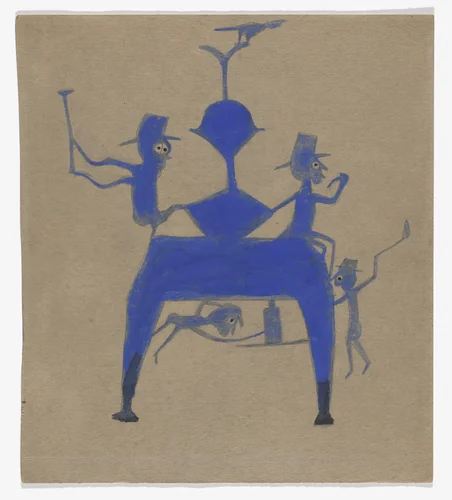
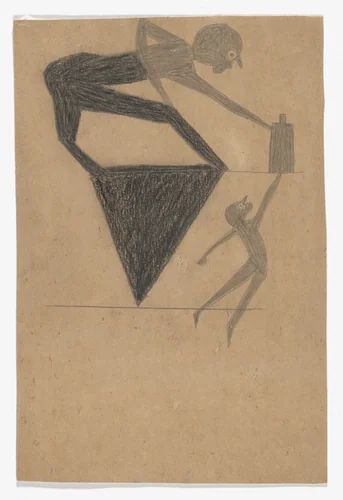
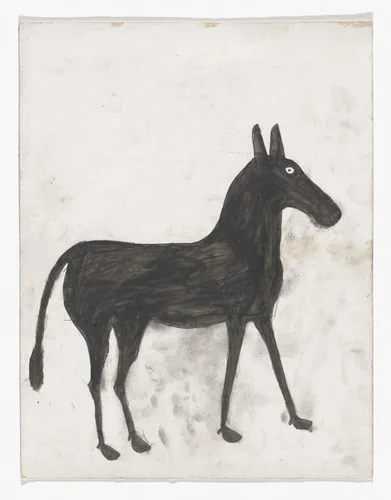
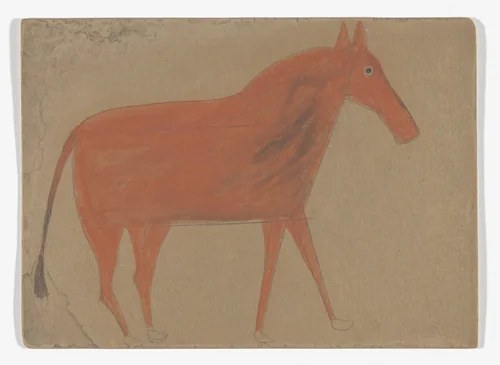
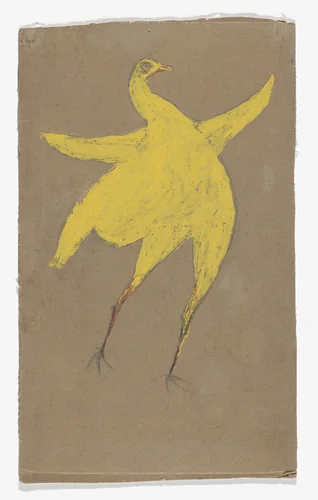
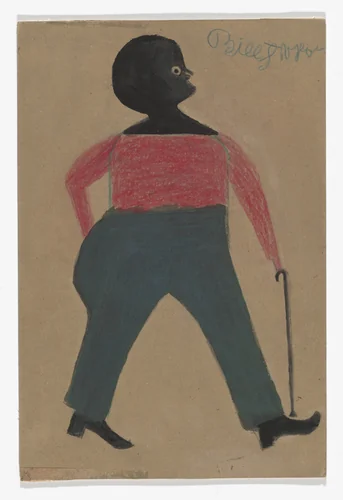
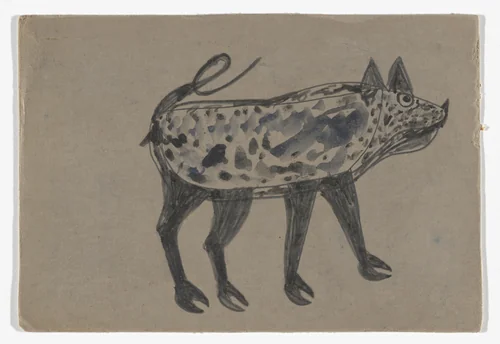
Traylor's style is defined by efficiency and dynamic clarity. Utilizing flattened perspective and bold silhouettes, compositions like Arched Drinker and Figure Construction (Woman and Man with Axe) achieve monumental scale despite their small physical size. He used color sparingly, often allowing the natural tone of the cardboard substrate to function as a crucial compositional background. This resourcefulness transforms found materials into durable artistic statements.
Though he produced no traditional Bill Traylor paintings, his highly original drawings have achieved museum-quality status and international recognition. Collected by institutions such as the Museum of Modern Art, Traylor’s concise yet evocative imagery provides critical insight into the social and cultural history of the Jim Crow South. The fact that this vast and influential output was created over a compressed period of only three years is perhaps the most astonishing aspect of his legacy. Today, the enduring graphic power of his work ensures that Bill Traylor prints and downloadable artwork remain crucial references for students of self-taught and vernacular modernism.
Source: Wikipedia · CC BY-SA 4.0