Bian Shoumin
Bian Shoumin (courtesy name Yi-gong, or Jian-seng; sobriquet Weijian Laoren) stands as one of the definitive figures of early eighteenth-century Chinese painting. A native of Shanyang, he was centrally aligned with the radical cohort known collectively as the Eight Eccentrics of Yangzhou. Operating during the initial decades of the Qing Dynasty, Bian Shoumin rejected the formalized traditionalism often favored by the Imperial court, opting instead for individualistic expression and direct, untamed observation.
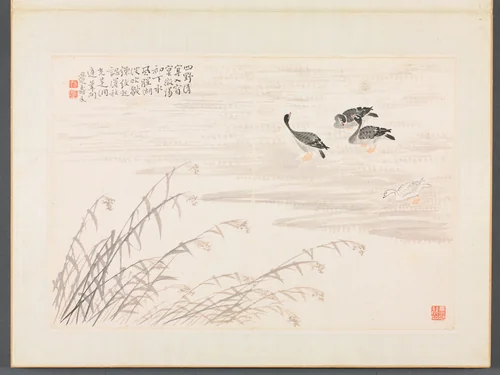
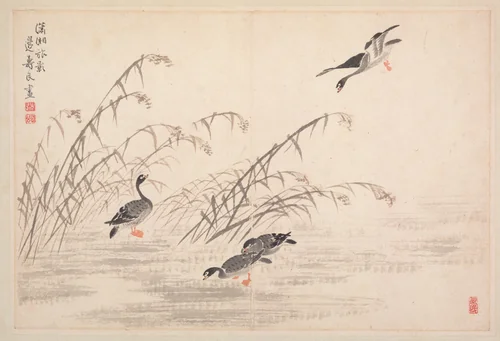
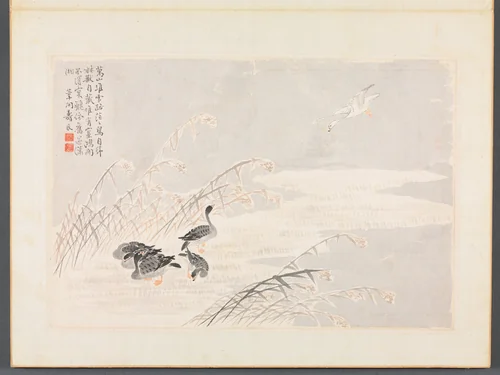
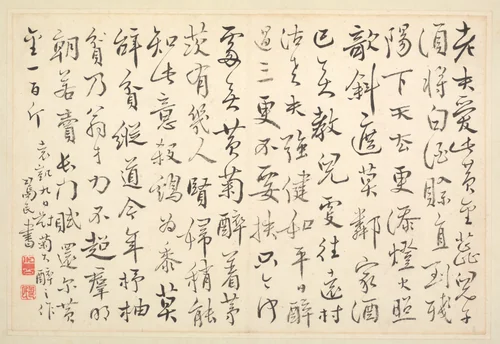
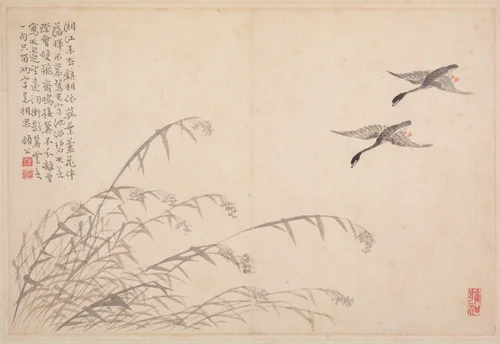
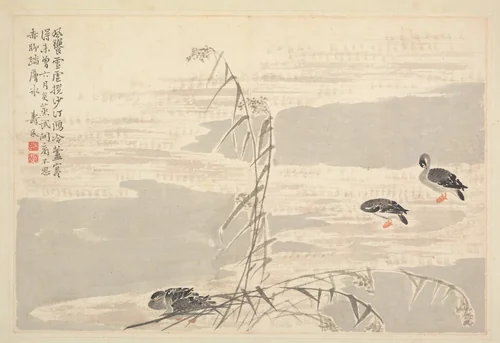
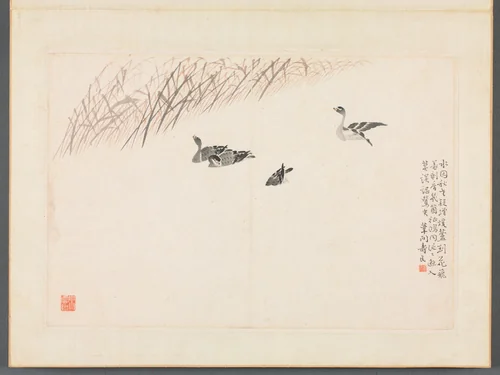
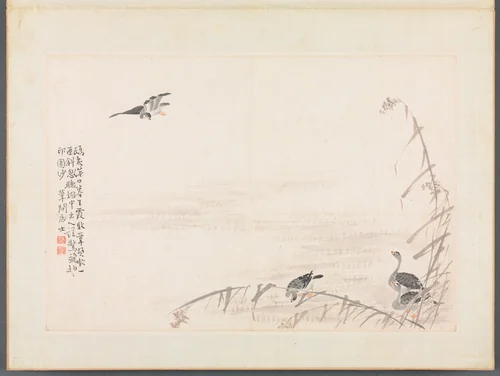
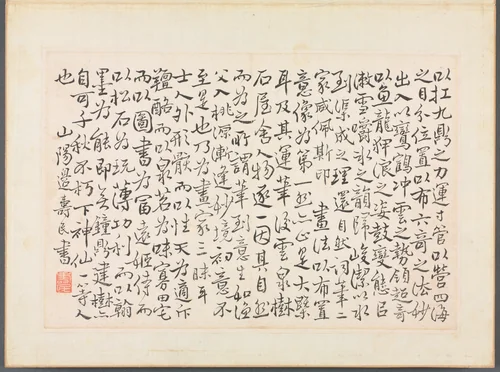
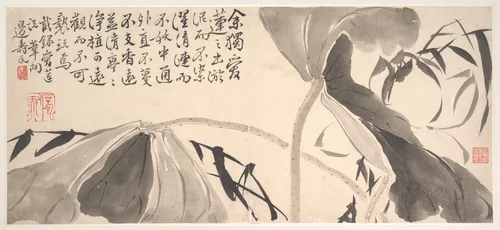
His documented output during his most active period (circa 1700-1729) includes at least fourteen paintings and several significant multi-sheet Album of Calligraphy and Paintings. Within the unconventional circle of the Eccentrics, Bian Shoumin distinguished himself through his unparalleled mastery of a singular motif: the wild goose. This focus was so complete that he earned the descriptive, slightly affectionate nickname Bianyan, meaning "Bian the Goose."
Rather than relying on static, idealized forms, Bian Shoumin's handling of the geese depicted them in dynamic motion, whether landing, stretching, or grouping on misty riverbanks. His approach utilized a distinctive calligraphic freedom that imbued the animals with profound personality. His technique often employed quick, wet brushstrokes for the feathered bodies and stark, angular strokes for the accompanying reeds and marsh environment, lending his Bian Shoumin paintings an unmistakable freshness and immediacy. It is perhaps a subtle testament to his dedication that a specialist in wild fowl could secure such a lasting reputation among artists known for their defiant breadth.
Today, Bian Shoumin’s influence is assessed not merely through his association with the Eight Eccentrics but through the enduring quality of his compositions. Key examples of his work, characterized by museum-quality detail and expressive brushwork, are preserved in internationally significant institutions, including the Metropolitan Museum of Art and the Cleveland Museum of Art. As many of these historic pieces have entered the public domain, art enthusiasts are now able to access high-quality prints reflecting his unique style. The availability of downloadable artwork ensures that Bian Shoumin prints continue to engage new generations interested in the bold, individualized spirit of Qing Dynasty innovation.
Source: Wikipedia · CC BY-SA 4.0