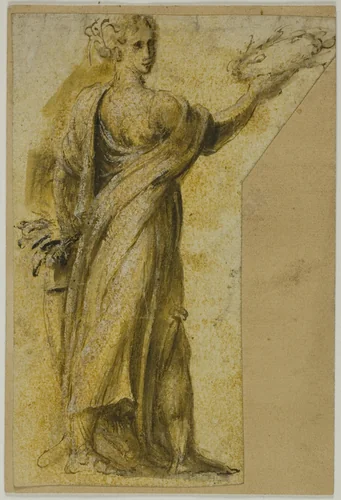
Biagio Pupini
Biagio Pupini (active c. 1530-1540) is recognized as a significant practitioner within the Bolognese school of the High Renaissance. Working primarily in his native Bologna, his output anchors the crucial transition period following the foundational masters of the Quattrocento. His early training under the esteemed painter Francesco Francia provided him with a classical grounding in compositional balance and elegant draughtsmanship, characteristics that define his surviving corpus of drawings and paintings.
Despite a recorded period of intense activity spanning little more than a decade, Pupini secured substantial ecclesiastical patronage. He executed important commissions for major religious institutions across Bologna, contributing paintings to the Basilica of San Giacomo Maggiore, the church of San Giuliano, and the church of Santa Maria della Baroncella. While the scale of his public works varied, his consistent skill in handling complex narrative cycles is evident.
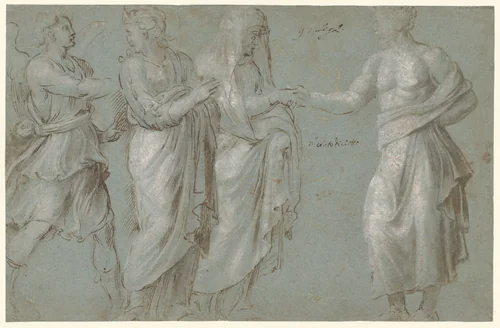
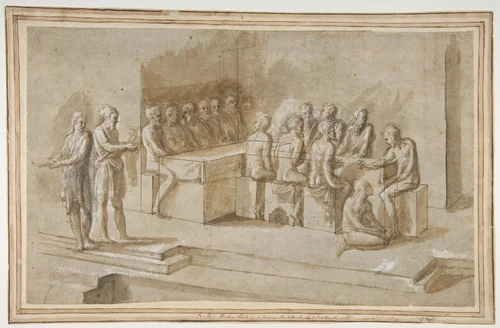
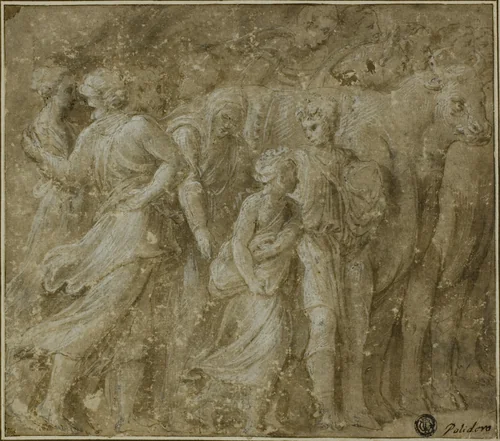
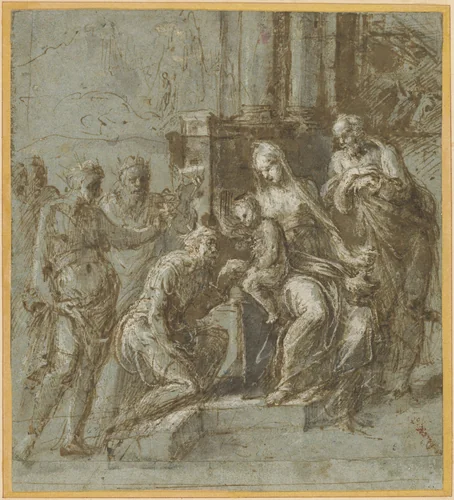
The bulk of Pupini’s enduring legacy rests upon his preparatory studies, which reveal an artist adept at rendering both grand historical scenes and intimate human interactions. Drawings such as A Winged Figure, two Women, and a Man and the meticulously detailed Penitent Woman Anointing the Feet of Christ at the Table of Simon the Pharisee (Luke 7:36-50) showcase his dynamic approach to figural grouping. His capacity for high-speed execution and precision is suggested by the compressed timeline of his peak period: he appears to have been the consummate professional, delivering important commissions within a remarkably focused span of years.
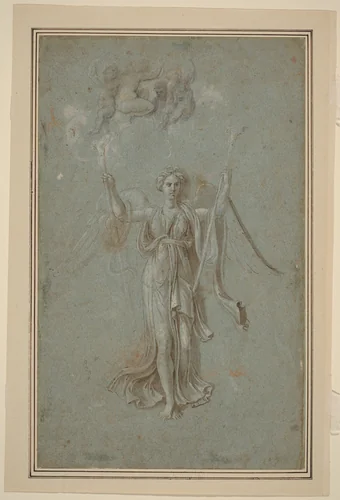
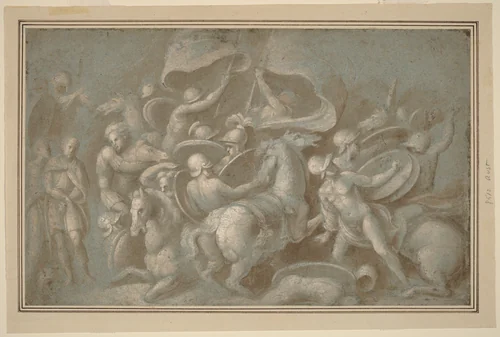
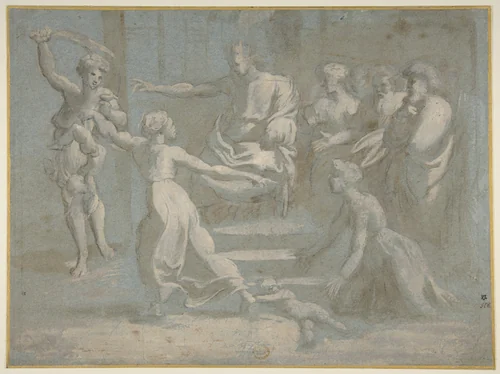
Today, Pupini’s critical importance is affirmed by the global distribution of his work. His compelling drawings, including Study for Figure of Fame and the vigorous Battle Scene, are held in prestigious international institutions such as the Metropolitan Museum of Art, the National Gallery of Art, and the Art Institute of Chicago. The continued study of Biagio Pupini paintings and drawings provides insight into the sophisticated visual culture of 16th-century Bologna. This lasting appreciation ensures that museum-quality works and high-quality prints derived from these collections remain widely accessible for art historical scholarship.
Source: Wikipedia · CC BY-SA 4.0
![Mary Magdalene [recto] by Biagio Pupini, drawing, 1524](https://img.artbee.org/28ed92bb-b481-4578-ac16-0d17b210ba22/small.webp)
![Mary Magdalene [verso] by Biagio Pupini, drawing, 1524](https://img.artbee.org/1b5b2732-98a3-44f2-9bf1-bb0a70530be3/small.webp)