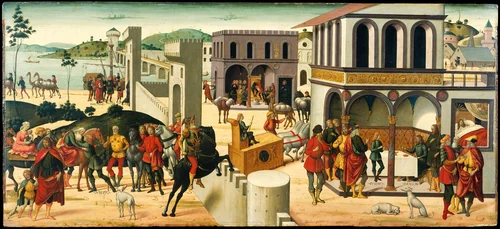
Biagio d'Antonio
Biagio d’Antonio Tucci (active 1470-1476) was a compelling Italian Renaissance painter whose career, though concentrated into a relatively short period, established him as a significant secondary master operating across the key artistic centers of Florence, Faenza, and Rome. Working during the critical phase of the Quattrocento, Biagio excelled in panel painting, providing crucial visual documentation of Florentine narrative traditions as they evolved toward the High Renaissance.
While known for his mobility, the core of Biagio’s output centered on detailed, intimate commissions, particularly spalliere and cassone panels. These elaborate furnishings required artists to compress complex mythological, historical, or religious narratives into visually legible sequences for domestic settings. Biagio proved highly adept at this exacting skill, mastering the balance between crowded figures, realistic portraiture, and architectural recession.
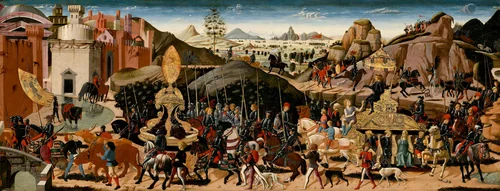
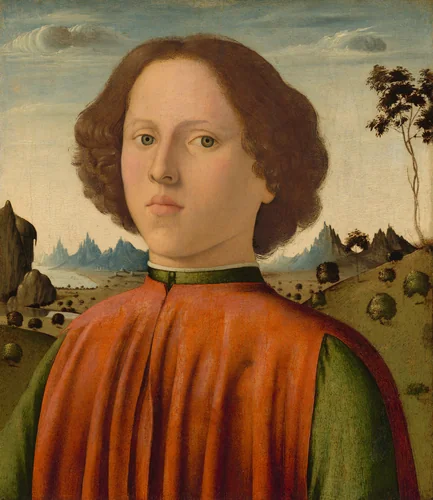
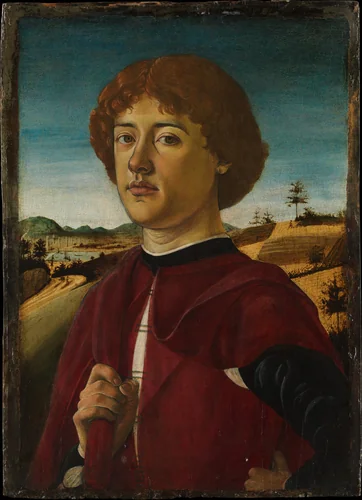
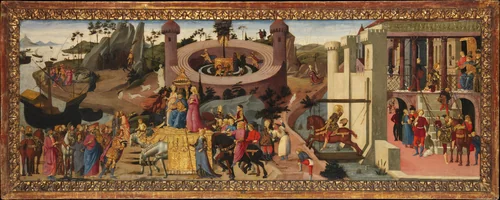
Works such as The Triumph of Camillus and the surviving sections of Scenes from the Story of the Argonauts showcase his facility for translating epic tales into compelling visual language, often integrating contemporary realism into classical motifs. His commitment to individual likeness is also evident in carefully observed psychological studies like Portrait of a Boy and Portrait of a Young Man. The surviving narrative panels, including The Story of Joseph, are prized for their vivid color palettes and meticulous attention to setting, illustrating the visual sophistication demanded by the Florentine patrons who commissioned these high-quality Biagio d'Antonio paintings.
That a career documented over barely six years could result in works held in world-class repositories, including the Metropolitan Museum of Art and the National Gallery of Art, confirms his technical mastery and critical reception during his era. For modern audiences, the continued importance of this master is underscored by the current accessibility of his work. Many of his significant compositions are now in the public domain, allowing institutions and enthusiasts to produce museum-quality high-quality prints for study and appreciation. It is perhaps this historical concentration on durable, domestic commissions, rather than monumental fresco cycles, that has helped ensure the enduring vibrancy and pristine preservation of his distinctive narrative scenes.
Source: Wikipedia · CC BY-SA 4.0