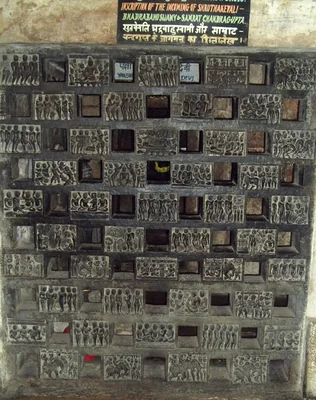
Bhadrabahu
Ācārya Bhadrabāhu stands as a pivotal figure in the history of Jain scholarship, traditionally revered as the last Shruta Kevalin, or the final ascetic to hold complete, immediate knowledge of the sacred Jain scriptures. Active around 1400 CE, his influence transcended the monastic sphere; historical accounts identify him as the spiritual advisor to the Mauryan Emperor, Chandragupta Maurya. This immense authority imbues the manuscripts associated with his name with profound historical and cultural weight.
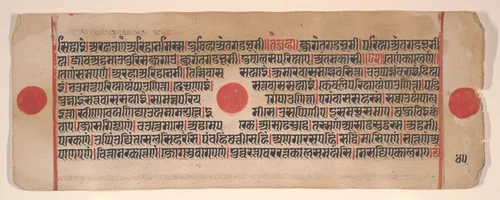
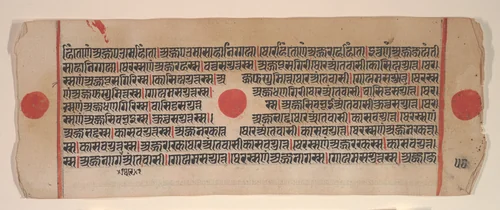
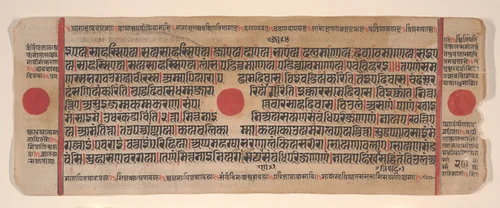
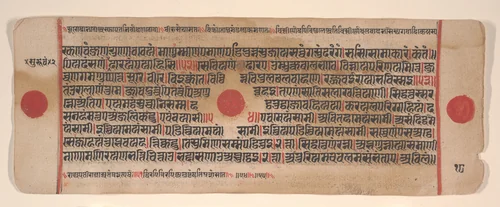
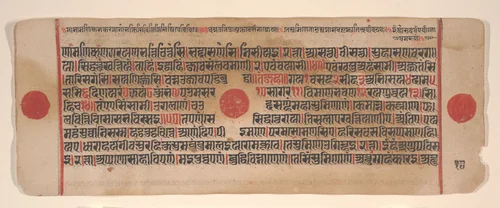
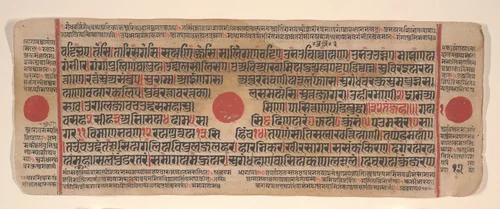
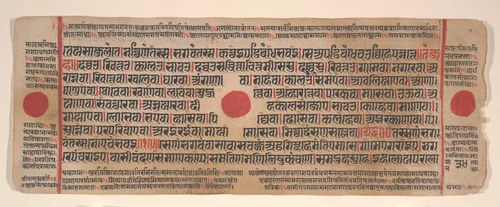
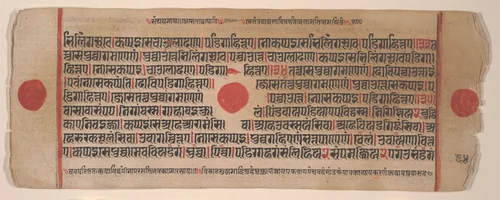
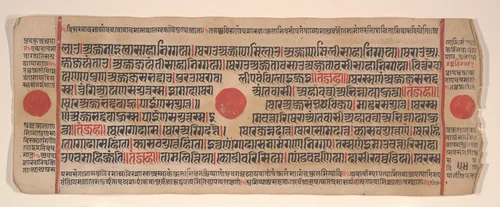
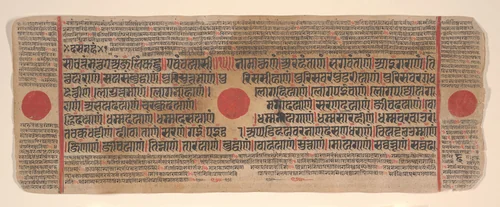
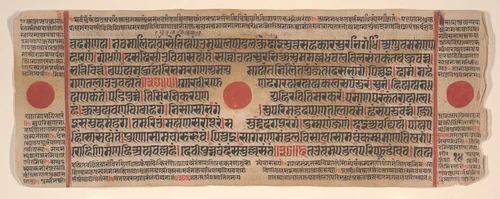
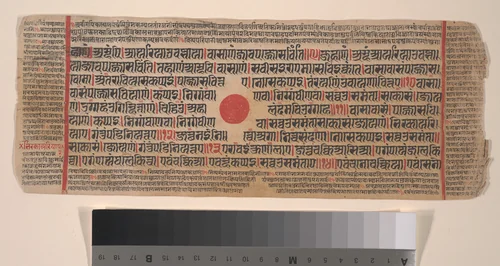
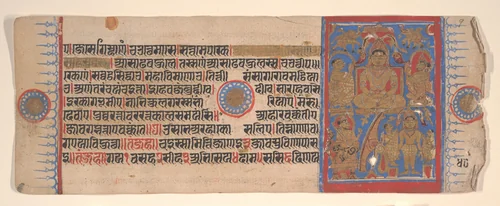
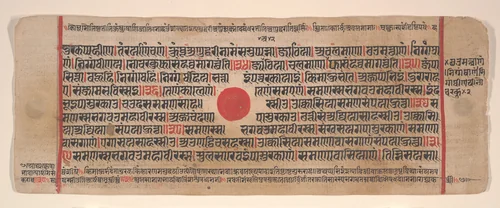
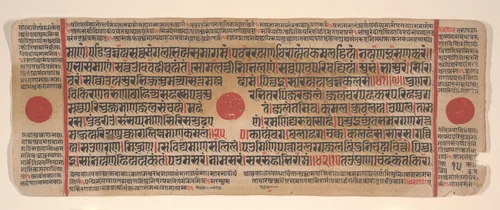
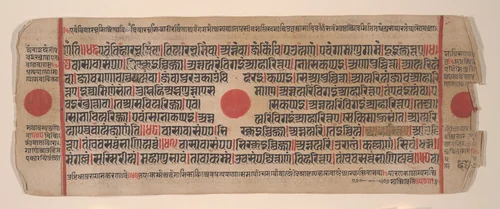
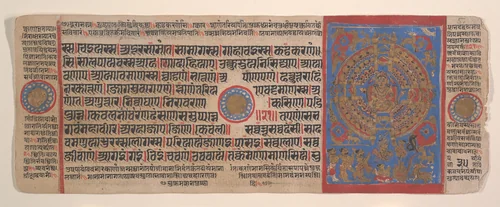
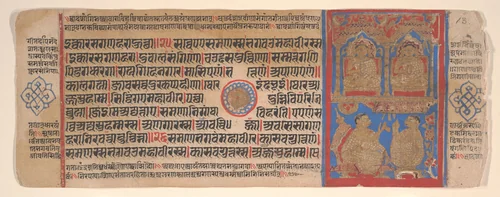
Bhadrabāhu’s extant artistic contributions—primarily several leaves from a Leaf from a Kalpa Sutra (Jain Book of Rituals), now housed in institutions such as the Metropolitan Museum of Art—are crucial documents of the Western Indian school of miniature painting. While the traditional chronology places the historical Bhadrabāhu centuries before the execution of the 15th-century illustrated manuscripts, the name served as an indispensable sanctioning authority for the texts they illustrate. These Bhadrabahu paintings are defined by their intense palette of carmine, lapis lazuli, and substantial gold leaf, showcasing the characteristic profile figures and strong, angular linear execution that defined Jain manuscript production during this transitional era.
These illustrated leaves, executed primarily on palm-leaf or paper, represent the meticulous craftsmanship required to ensure the survival and dissemination of the sacred narratives across generations and regions. It is perhaps an amusing irony that the last figure recorded to possess complete, unwritten scriptural knowledge is now chiefly known in the art world for the exquisite painted records of that knowledge.
Today, these illuminated pages are highly regarded by scholars and collectors seeking detailed reproductions of the Western Indian tradition. Recognizing their importance, many institutions make high-quality prints and downloadable artwork of these fragile works available for research. The inclusion of these rare pieces in major collections confirms their enduring status as museum-quality examples of early Indian miniature painting, ensuring that the legacy of Bhadrabāhu’s associated manuscripts remains accessible for study.
Source: Wikipedia · CC BY-SA 4.0