Bernardus Johannes Blommers
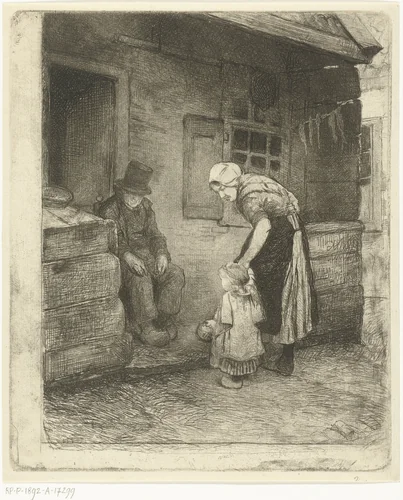
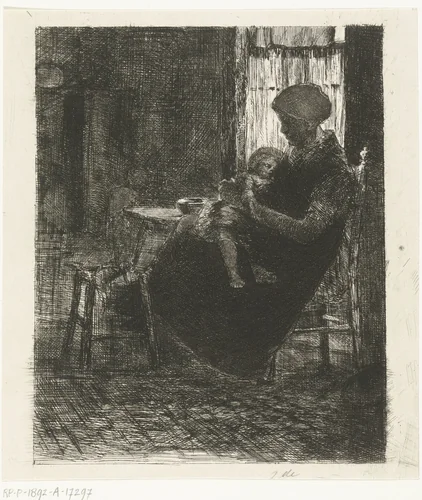
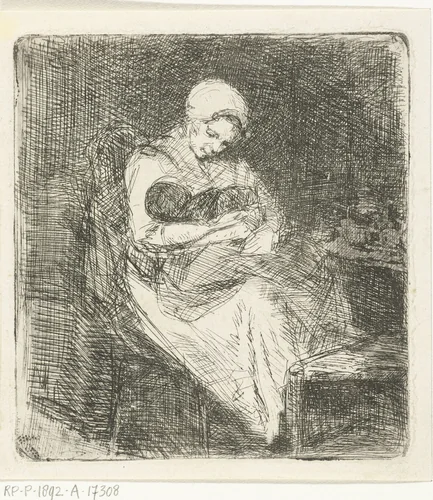
Bernardus Johannes Blommers was a vital exponent of the late 19th-century movement known as the Hague School. Active in printmaking and painting from at least 1855, Blommers inherited the rigorous naturalism of his Dutch predecessors while advancing the school’s commitment to capturing authentic, atmospheric representations of local life. While renowned as a painter, his achievements as an etcher remain crucial, demonstrating an intimate command of the medium that resulted in a body of graphic work encompassing at least eleven known prints.
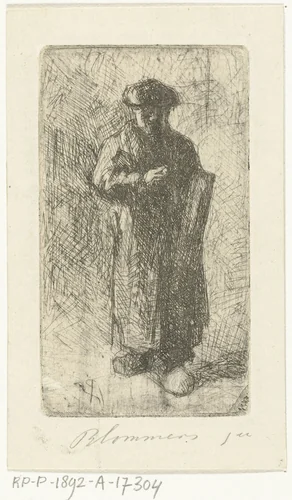
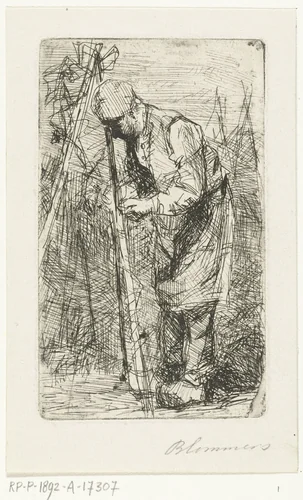
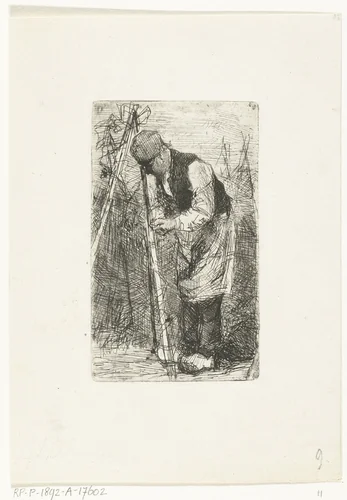
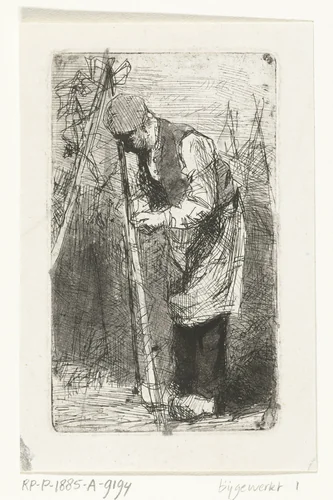
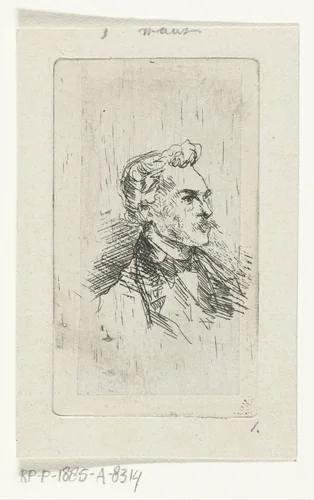
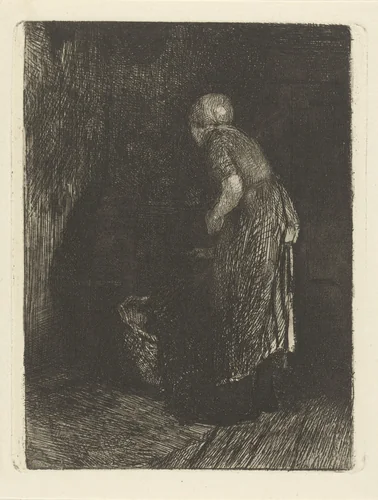
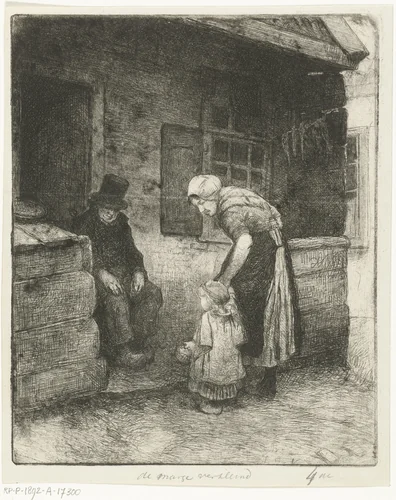
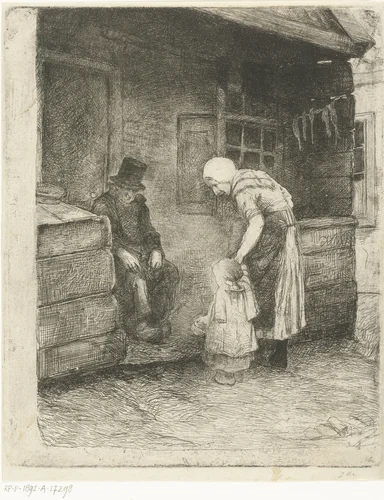
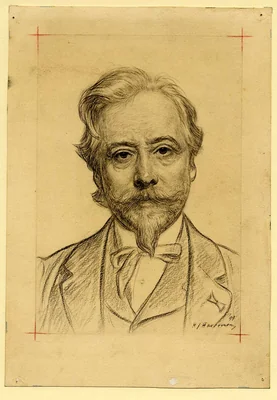
The Hague School aesthetic favored quiet observation, moving away from grand historical narrative toward the intimate genre scene, often centering on the lives of fishermen, farmers, and domestic workers. Blommers consistently translated this focus into his work. His database entries illustrate this dedication, ranging from the repetitive agricultural studies, such as the multiple impressions dedicated to Man bindt bonenstaken in groententuin, to observations of the artistic community itself, exemplified by the portrait Kunstenaar op klompen met tekenmap onder zijn arm. These etchings provide not only technical insight into the period but also valuable social documentation. A more formal aspect of his practice is represented by the sensitive Portret van kunstenaar Frederik Hendrik Weissenbruch, linking Blommers directly to the influential network of his contemporaries.
His success lay in applying the visual principles of painterly light and atmosphere to the precise craft of etching. The continued preservation of his catalogue in major institutional holdings, notably the Rijksmuseum, confirms the lasting museum-quality of his output. If Blommers’ surviving catalogue is any indication, he held a distinct, perhaps slightly obsessive, fondness for garden labor; the sheer volume of variations dedicated to the subject of a man tying bean stakes suggests an artist finding infinite visual possibilities in the simplest of seasonal tasks.
Due to the historical significance and relatively early date of creation, many Bernardus Johannes Blommers prints are now widely accessible. Today, archives and libraries regularly make high-quality prints and downloadable artwork available, ensuring that this influential segment of the Dutch realist tradition remains actively studied within the public domain.
Source: Wikipedia · CC BY-SA 4.0