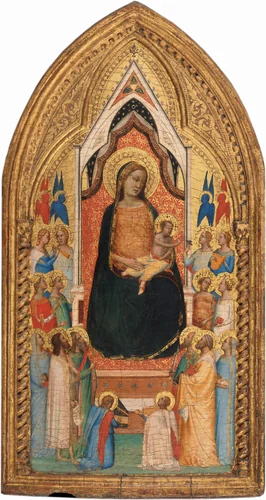
Bernardo Daddi
Bernardo Daddi (active c. 1320-1345) stands as the foremost painter of the Florentine school during his active decades, a pivotal figure whose work defined the early Italian Renaissance transition. Operating at the height of the 14th century, Daddi inherited the groundbreaking monumentality introduced by Giotto yet propelled Florentine painting toward a more lyrical and intimate style that suited the era’s shifting spiritual and political landscape. His mastery positioned him as the leading artistic voice of his generation in Florence.
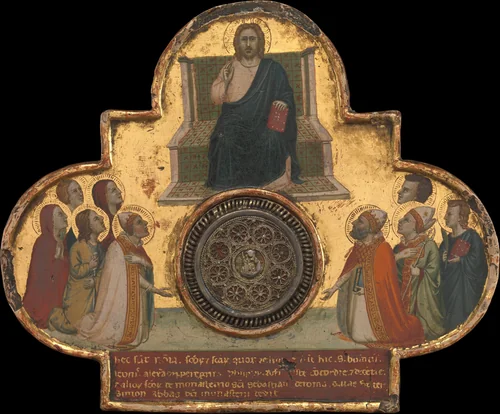
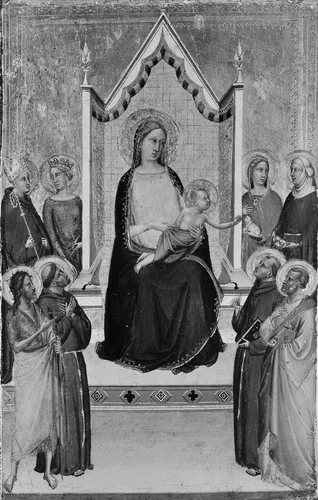
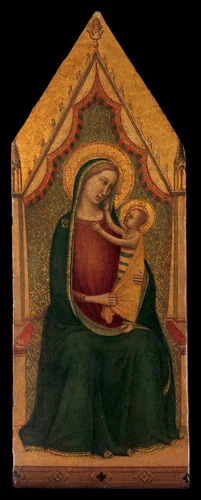
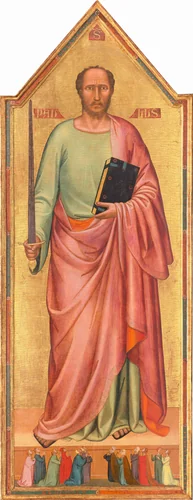
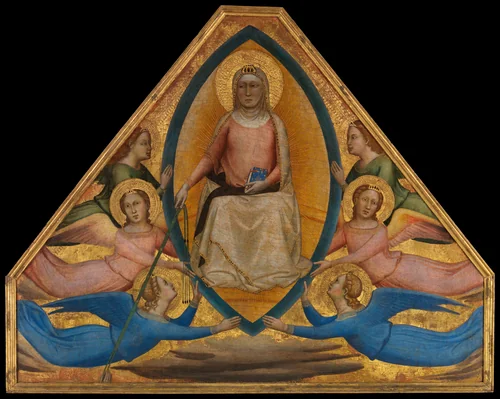
Daddi was a crucial contributor to the revolution in visual culture that separated the Renaissance from the preceding Gothic conventions. Unlike the rigid formal requirements of earlier artists, Daddi consistently sought compositions that provided a more naturalistic, even tangible, representation of reality. He innovated techniques designed to achieve visual depth and realism, establishing a standard for verisimilitude that influenced the trajectory of later painting. This pursuit of sophisticated naturalism is clearly evident in surviving works, including his powerful Christ Enthroned with Saints and the various interpretations of Madonna and Child Enthroned with Saints.
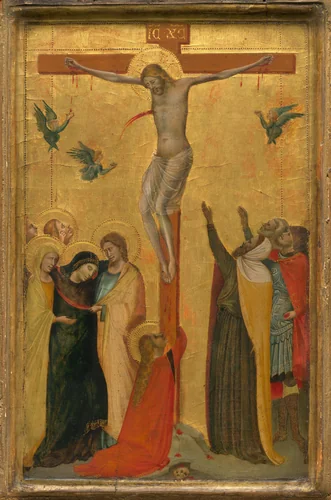
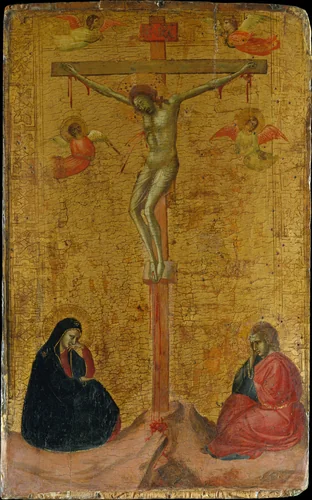
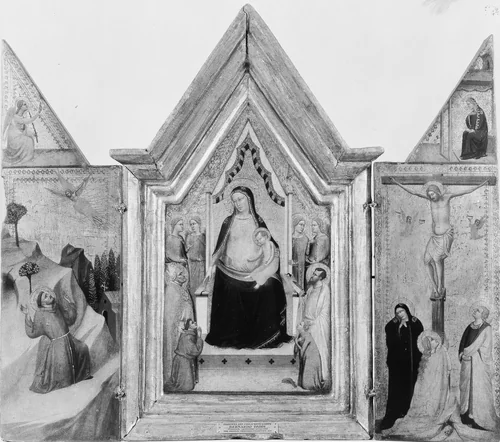
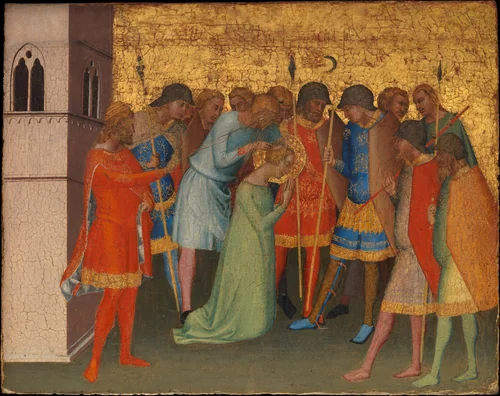
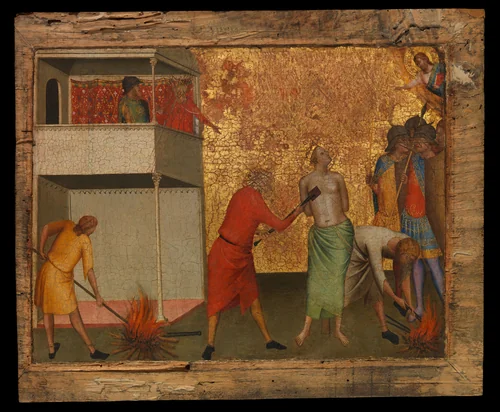
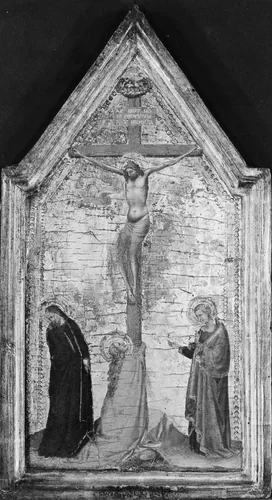
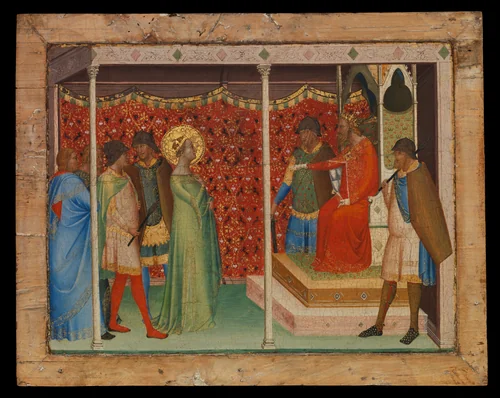
Perhaps Daddi’s most enduring legacy lies in his exceptional skill with small-scale devotional works. He was particularly successful in this genre and played a defining role in the development and popularization of the portable altarpiece. These compact, intricately detailed panels catered directly to the burgeoning demand for private devotion among wealthy patrons who preferred intimate meditation over public spectacle. It is fair to say Daddi cornered the market on exquisite, compact piety, translating the grand spiritual drama of the altarpiece into accessible, personal narratives. This format subsequently gained immense popularity throughout Italy and beyond.
Today, significant Bernardo Daddi paintings are housed in major international collections, including the National Gallery of Art and the Metropolitan Museum of Art. Daddi's masterful synthesis of established tradition and radical naturalism cemented his historical importance. His works are often available as high-quality prints, allowing modern audiences to appreciate the subtle, humanizing details he introduced. Viewing the extant body of his work reveals an artist who refined Florentine artistry, ensuring the continuity and development of revolutionary artistic ideas well into the 15th century.
Source: Wikipedia · CC BY-SA 4.0