Bernardino Luini
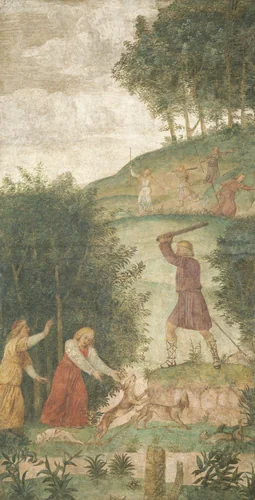
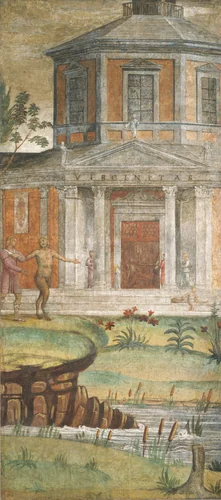
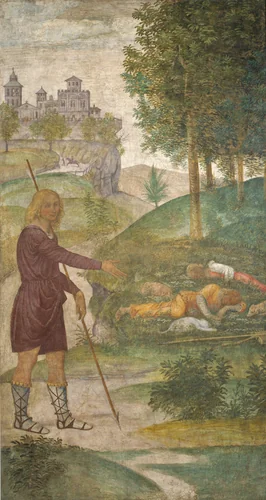
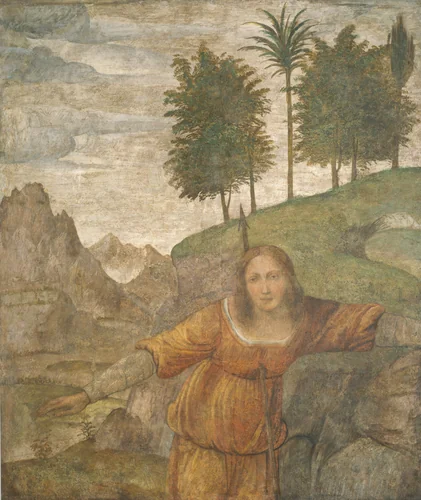
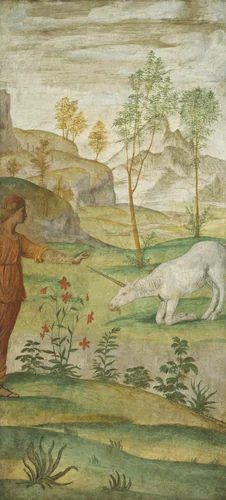
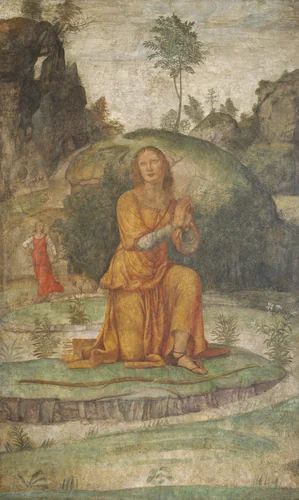
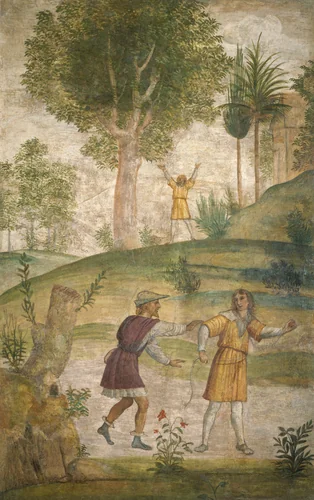
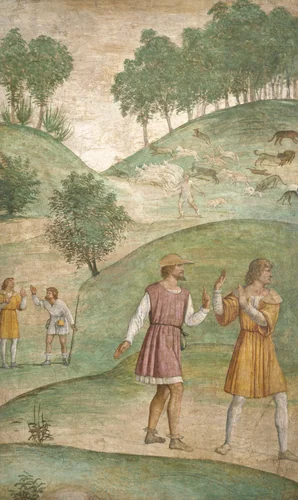
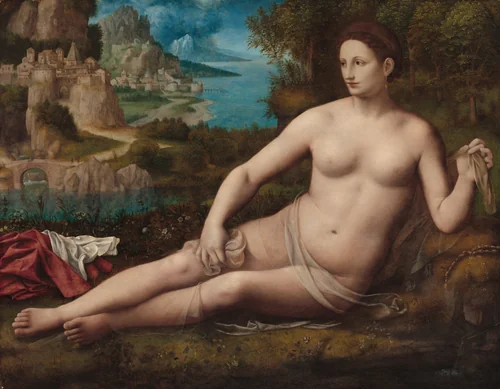
Bernardino Luini (c. 1480-1532) stands among the most sophisticated painters of the Lombard school, occupying a vital position within the orbit of Leonardo da Vinci during the height of the Italian Renaissance. Active primarily between 1500 and 1530, Luini masterfully synthesized Leonardo’s revolutionary artistic language with the softer, devotional sensitivities native to Northern Italy, resulting in a unique and widely admired body of work.
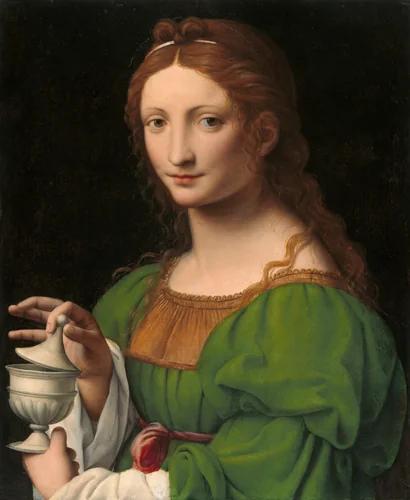
Luini’s historical significance is magnified by his direct proximity to Da Vinci. Contemporary accounts suggest that both Luini and Giovanni Antonio Boltraffio may have worked in the master’s studio, affording them unparalleled access to his innovative techniques. A critical observation from art history asserts that Luini absorbed "as much from Leonardo as his native roots enabled him to comprehend." This resulted in an art that employed Leonardesque effects, such as a delicate sfumato and refined compositional symmetry, but eschewed the intense psychological scrutiny often favored by the Florentine genius.
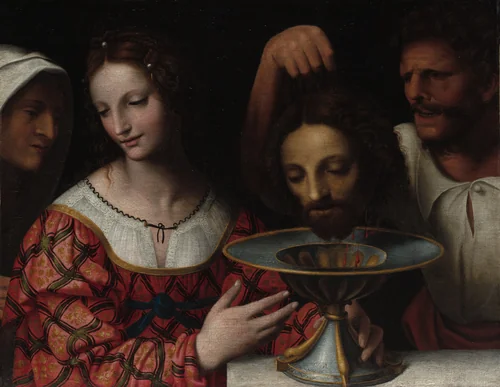
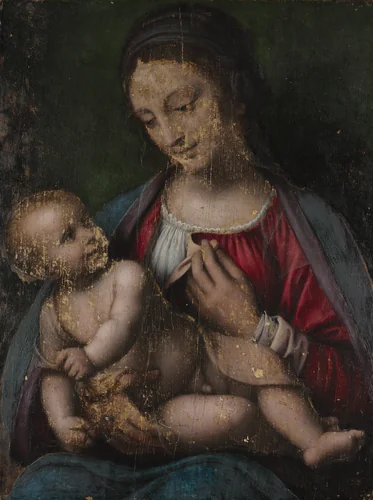
His artistic achievement lies in his ability to imbue conventional religious scenes, such as Virgin and Child, with an extraordinary tenderness and luminosity. This distinctive grace, coupled with Luini’s refined technique, often led to historical confusion; several of his major pieces, including the striking Salome with the Head of Saint John the Baptist, were frequently misattributed to Leonardo himself. The sheer quality of Bernardino Luini paintings speaks to his profound influence during his lifetime.
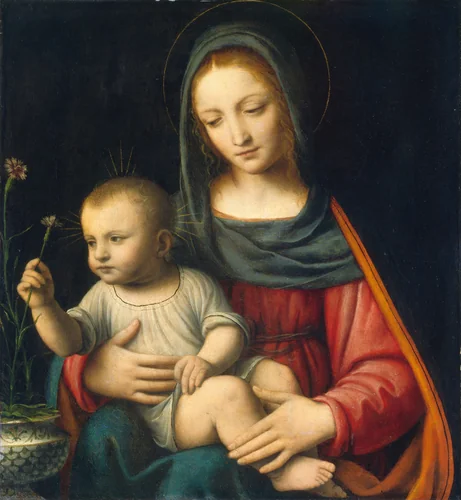
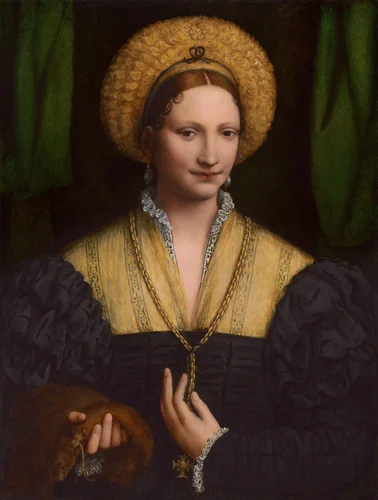
Luini developed a particularly recognizable idiom in his female figures, who are characteristically portrayed with elongated eyes and an air of sublime, melancholic contemplation. This specific aesthetic signature was later celebrated by the novelist Vladimir Nabokov, who dubbed the style "Luinesque," confirming the lasting and distinct character of the artist’s output. Today, his work is held in major international collections, including the National Gallery of Art and the Cleveland Museum of Art. Many masterworks, such as The Madonna of the Carnation, are available as royalty-free downloadable artwork through institutional programs. These museum-quality images ensure that the subtlety of Bernardino Luini prints remains accessible to a global audience, often as high-quality prints available in the public domain.
Source: Wikipedia · CC BY-SA 4.0