Bernardino Lanino
Bernardino Lanino, or Lanini, was a significant Italian painter active primarily in Milan during the High Renaissance and early Mannerism periods. Working from approximately 1512 until 1553, Lanino’s career was rooted in the dynamic artistic environment of Lombardy, where he helped define the regional style that blended classical gravity with heightened emotional expression. His training placed him squarely within the tradition of Leonardo da Vinci’s followers, though his mature output often reflects the dramatic flair of contemporaries like Gaudenzio Ferrari, particularly in his multi-figure religious compositions.
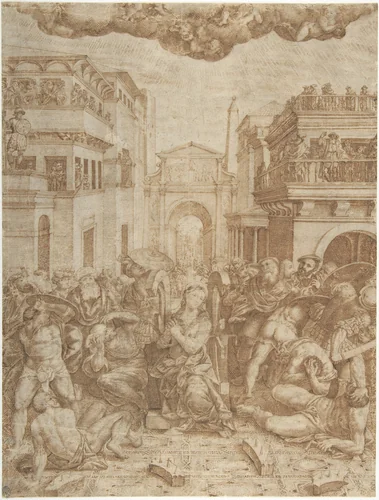
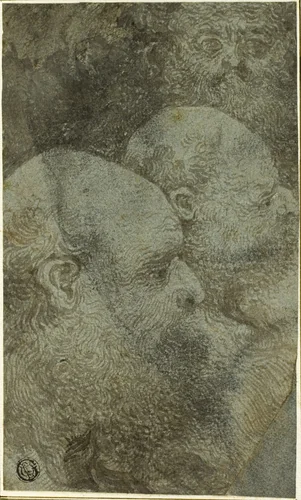
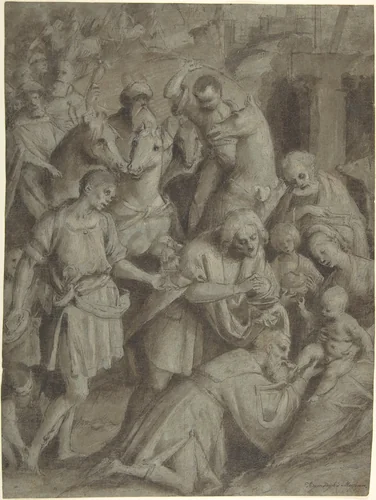
Lanino’s oeuvre demonstrates a mastery of draftsmanship necessary for translating complex theological narratives into compelling visual forms. While his largest works were frescoes and altarpieces, his legacy today is often studied through detailed preparatory drawings, essential components for compositions like The Adoration of the Magi. These studies, which survive in collections like the Metropolitan Museum of Art and the Art Institute of Chicago, showcase an acute technical skill, ranging from broad narrative sketches to focused examinations such as Three Bearded Male Heads, Two in Profile to the Right. These museum-quality drawings confirm his standing among the period’s finest visual thinkers.
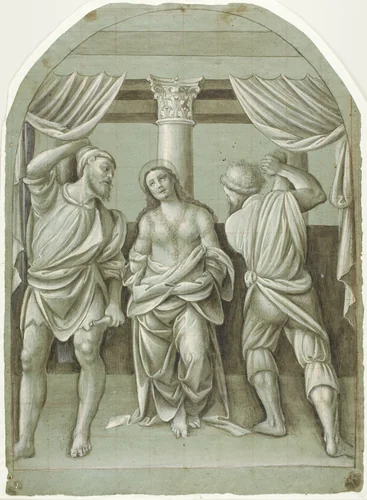
A substantial portion of his documented work focuses on hagiography, offering vivid interpretations of saintly lives and martyrdoms. Lanino appears to have maintained a peculiar and robust interest in Saint Catherine of Alexandria, producing both the harrowing Martyrdom of Saint Catherine of Alexandria and the thematically linked Flagellation of Saint Catherine. This intense focus on a single subject provides a telling insight into the specific devotional and patronage requests characteristic of sophisticated Milanese society.
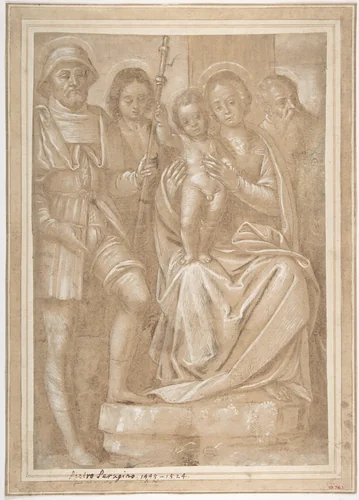
Lanino’s ability to imbue traditional themes, such as The Virgin and Child with Saint Roch and Two Other Male Saints, with a deeply felt humanity ensures the continued study of Bernardino Lanino paintings. Today, many of his graphic works are now available as high-quality prints, providing unprecedented public access to the intricate details of early 16th-century Lombard Renaissance artistry.
Source: Wikipedia · CC BY-SA 4.0