Bernardino Campi
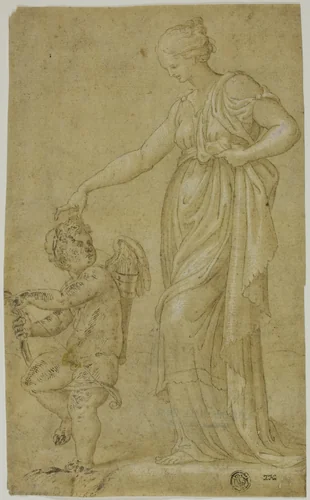
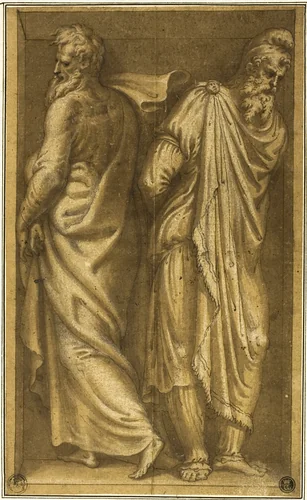
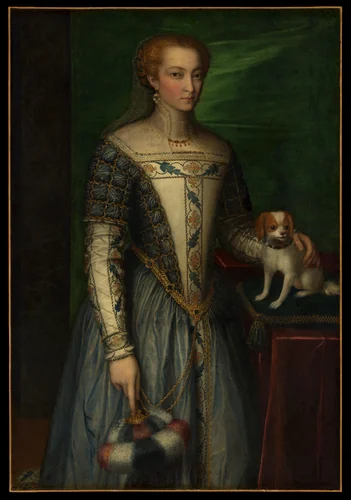
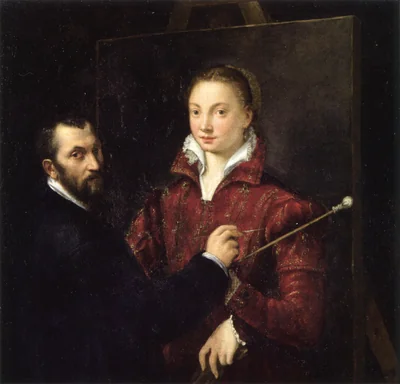
Bernardino Campi (1522–1591) was a significant figure of the Italian late Renaissance, a painter and draftsman active primarily in Cremona and Reggio Emilia. Emerging from a prominent local artistic family, Campi established himself not only through his devotional and mythological works—represented today by drawings such as Venus (?) and Cupid and Two Standing Prisoners in a Niche—but also through his crucial role as a master. His most notable student was the celebrated portraitist Sofonisba Anguissola, alongside Giovanni Battista Trotti.
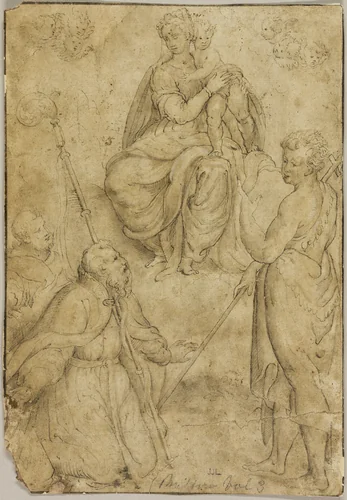
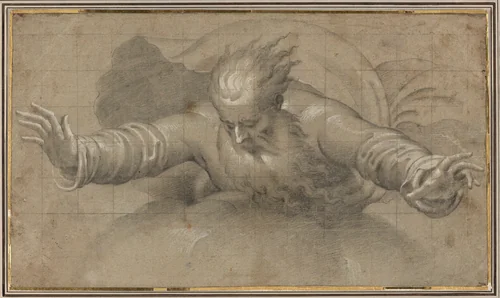
Although Campi was a distant relative of the more widely recognized Cremonese masters Giulio and Antonio Campi, his style was highly distinctive. It resulted from synthesizing the local atmospheric quality favored by Camillo Boccaccino with the expressive dynamism of neighboring regional artists. Campi closely studied and adopted the technical innovations found in the works of Correggio, Parmigianino, and particularly Giulio Romano, learning to handle complex poses and sophisticated light effects. His compositional strength is evident in drawings like God the Father and the intricate religious grouping of Seated Virgin and Child with Bishop Saint and Monastic Saint, and Saint John the Baptist.
Campi’s capacity for meticulous reproduction elevated his status, leading to a historically vital commission: the copying of Titian’s celebrated series of Eleven Caesars, which were housed in the Gonzaga collection. In an act that subtly demonstrates an appreciation for classical completeness, Campi expanded the series by adding a twelfth portrait of Domitian, which he derived from a design by Giulio Romano. This undertaking proved critical when Titian’s originals were tragically consumed by an eighteenth-century fire in Madrid, leaving Campi’s faithful interpretations as indispensable visual records of the lost masterpieces.
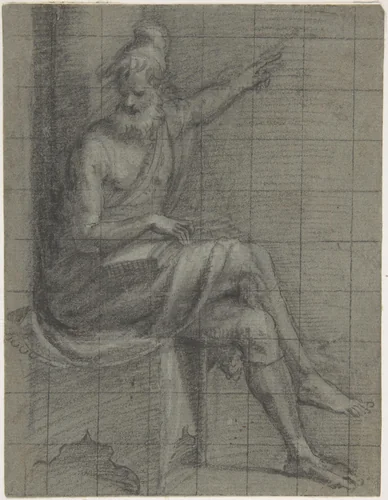
His legacy is preserved in important institutional holdings, including the Metropolitan Museum of Art and the Art Institute of Chicago, which value his vigorous drafting style seen in studies like Bearded Old Man Seated with Left Arm Extented. Today, these historical records, representing key Bernardino Campi paintings and drawings, are increasingly available in the public domain, allowing researchers and collectors to access them for study and reproduction as high-quality prints.
Source: Wikipedia · CC BY-SA 4.0