Bernard Salomon
Bernard Salomon (c. 1506–1561), frequently cited under the designations Little Bernard B. Gallus or Gallo, was a pivotal French figure whose career successfully spanned painting, meticulous draftsmanship, and, most enduringly, engraving. Active during the high Renaissance in Lyon, then the European epicenter for advanced publishing and textile production, Salomon fundamentally established design standards for both the printed page and the decorative arts. His enduring significance is confirmed by the permanent placement of his works in major international institutions, including the Art Institute of Chicago and the Metropolitan Museum of Art.
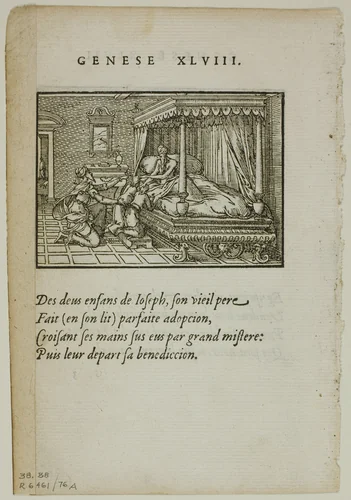
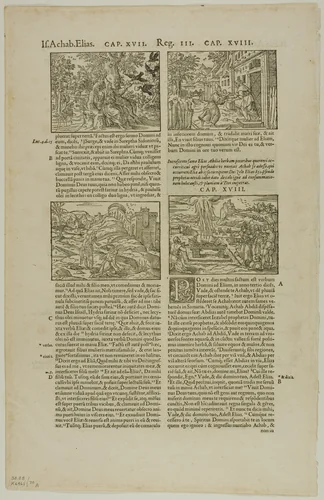
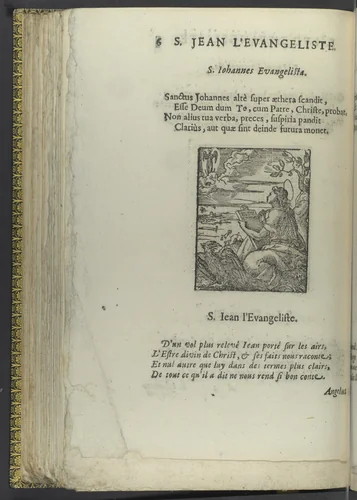
Salomon’s primary artistic output derived from his role as an illustrator for the prolific publishing houses of Lyon. Through his expert woodcuts, he provided the visual narrative for countless volumes, notably contributing to sacred and allegorical texts. His contribution to Quadrins poetiques by Paradin exemplifies his command of narrative compression, where plates such as Jacob Blessing the Sons of Joseph (recto) showcase the clarity and detail that defined 16th-century French illustration. These book designs survive today, compiled in reference volumes like Woodcuts from Books of the XVI Century, providing invaluable access to his oeuvre. For researchers, these works are often available as high-quality prints and downloadable artwork.
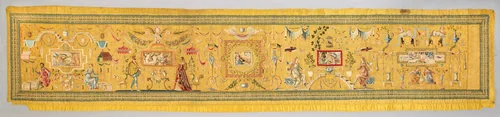
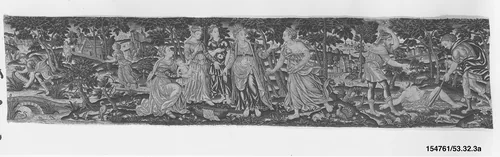
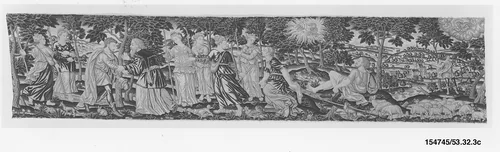
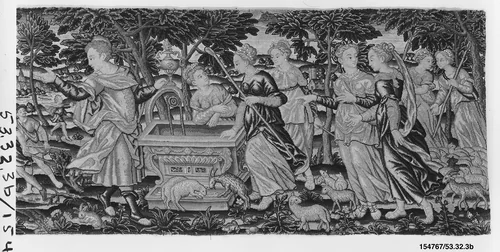
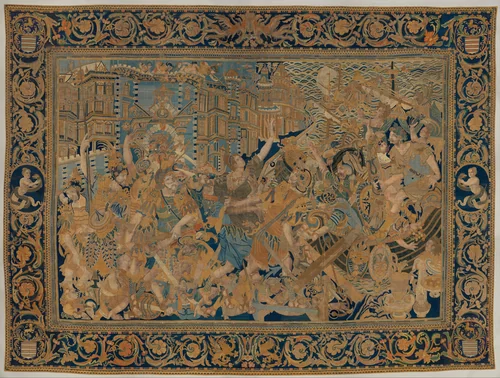
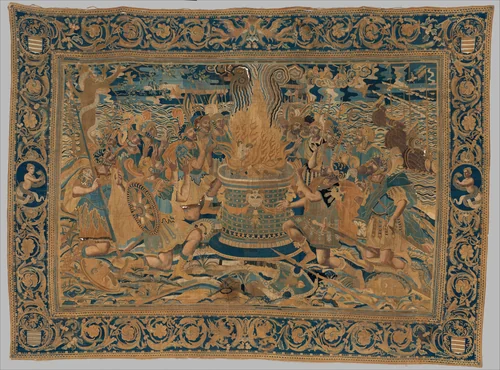
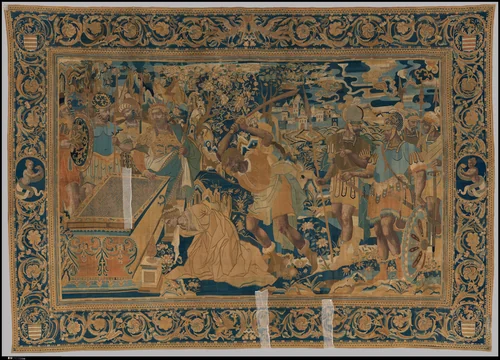
Crucially, Salomon’s commercial success derived from his versatility. His innovative designs were not confined to the book format; he served as a highly sought-after pattern maker for textiles and embroidery. Documentation confirms the existence of seven surviving textiles based on his models, illustrating his capacity to translate the highly complex Grotesque decoration popular in prints onto larger, luxurious woven formats. Examples such as the Embroidered panel with Grotesque decoration and the repeated use of his models in valances depicting The Story of Moses demonstrate the success of his repeatable patterns.
The fact that recorded activity related to his designs extends well over a century past his death (from 1558 until 1681) speaks less to his longevity and more to the persistent utility of his masterful, royalty-free compositions. As both a successful engraver and a preeminent pattern designer, Salomon's contribution underscores the powerful interplay between illustration and the decorative arts in the Renaissance economy. While known to posterity as the "Little Bernard," there was nothing small about the scale of his artistic authority across the entirety of 16th-century visual media. Today, many of his original woodcut compositions are considered public domain, allowing new generations to appreciate his precise artistry.
Source: Wikipedia · CC BY-SA 4.0