Benvenuto di Giovanni
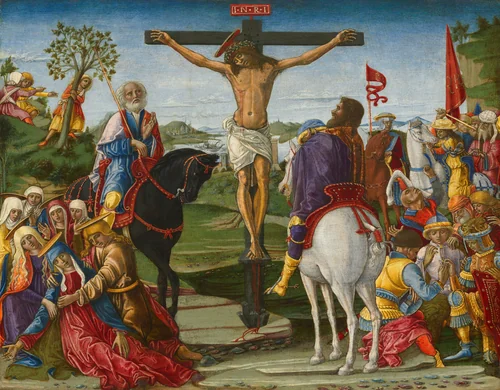
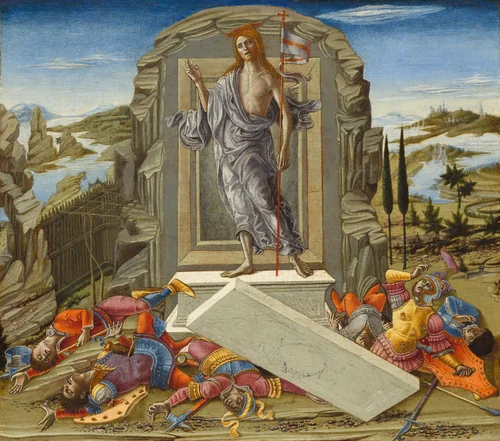
Benvenuto di Giovanni, or Benvenuto di Giovanni di Meo del Guasta, was a prolific Sienese artist whose career spanned the transition from the early to the high Italian Renaissance. Active chiefly in Siena from the mid-15th century, his documented artistic output began in 1453 and continued almost until his death around 1518, granting him a rare breadth of experience within the Quattrocento period.
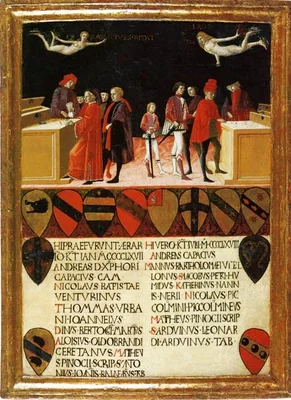
A master of versatility, Benvenuto distinguished himself not only as a painter but also as a designer of monumental civic works. He was responsible for complex frescoes and pioneering pavement designs, demonstrating an ability to transition seamlessly between large-scale public commissions and the intimate demands of manuscript illumination. This dual expertise is evident in the surviving choral miniatures, such as the exquisite Single Leaf from an Antiphonary: Initial H[odie nobis] with The Nativity, which reveals his command of detail and color theory on a small scale.
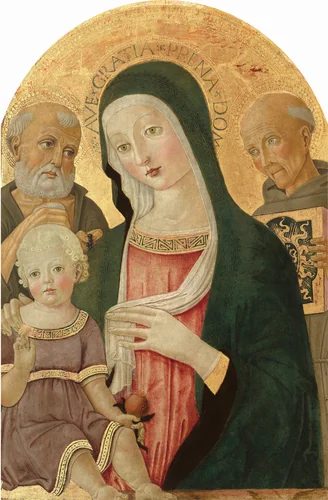
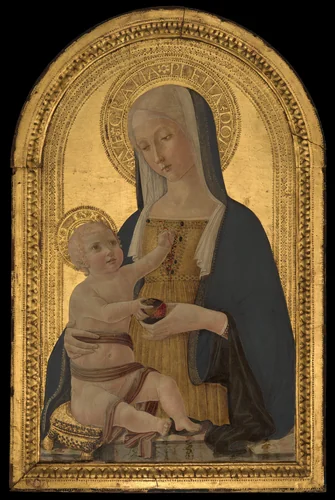
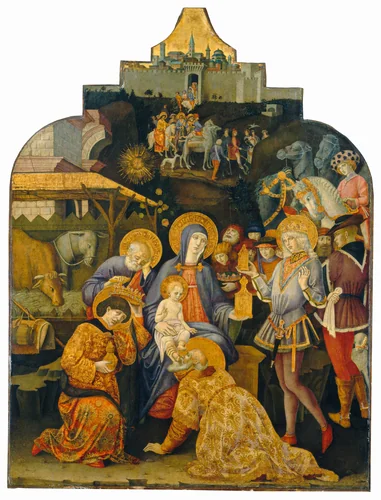
His devotional Benvenuto di Giovanni paintings, including Madonna and Child and The Adoration of the Magi, demonstrate a deep engagement with the Sienese tradition. However, the influence of various regional currents spurred a major reorientation of his practice in the 1480s. This decade marked a distinct and drastic shift in his style, indicating an artist perpetually seeking to integrate new visual vocabularies even late in his career. It is perhaps his most remarkable achievement that, after three decades of established success, he willingly updated his technique, moving away from past conventions to embrace contemporary influences circulating through Tuscany.
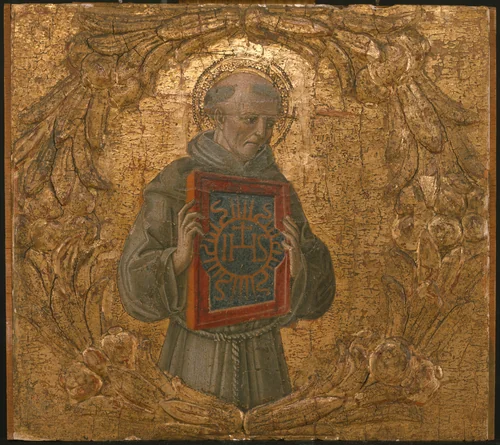
Benvenuto’s enduring legacy is confirmed by the preservation of his work in prestigious international collections, including the National Gallery of Art and the Metropolitan Museum of Art. Researchers and enthusiasts frequently access museum-quality materials and downloadable artwork documenting his oeuvre. For those wishing to study his technique, high-quality prints of works like Saint Bernardino are widely available, securing his place as a vital contributor to the Sienese school.
Source: Wikipedia · CC BY-SA 4.0
![Single Leaf from an Antiphonary: Initial H[odie nobis] with The Nativity by Benvenuto di Giovanni, manuscript, 1471](https://img.artbee.org/6bdf9eb5-2307-4cb7-b243-caf6e2eda29e/small.webp)