Benjamin Dean Wyatt
Benjamin Dean Wyatt (1775–1852) holds a distinct, if specialized, place within the annals of early 19th-century English design. As a key member of the formidable Wyatt architectural dynasty, often referred to collectively as ‘The Wyatts,’ his career spanned the transition from late Georgian classicism into the full flowering of the Regency era. While his primary professional contributions were structural and architectural, the highly detailed drawings he produced for interior fittings offer an invaluable, intimate insight into the refined aesthetic demands of the period.
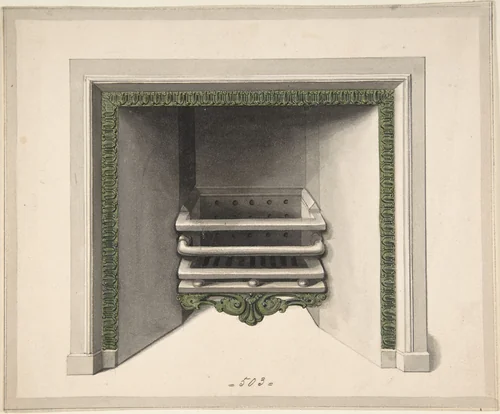
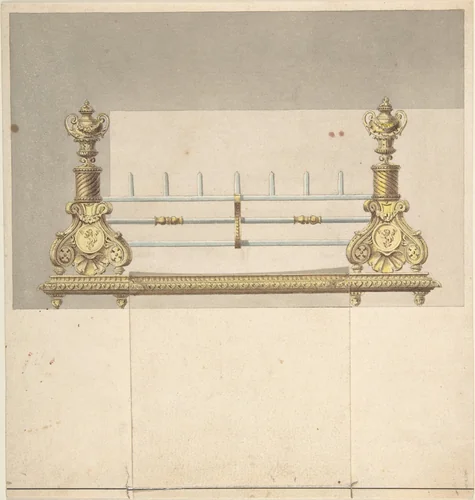
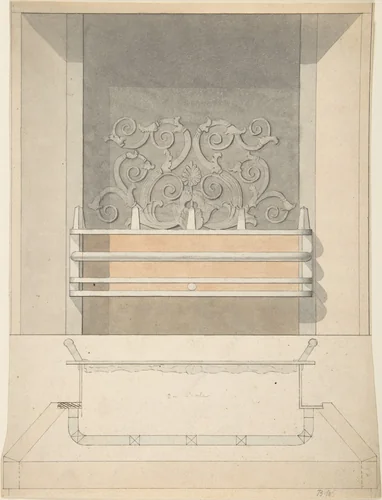
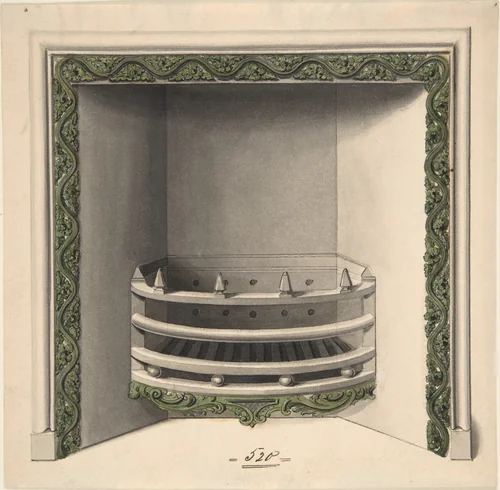
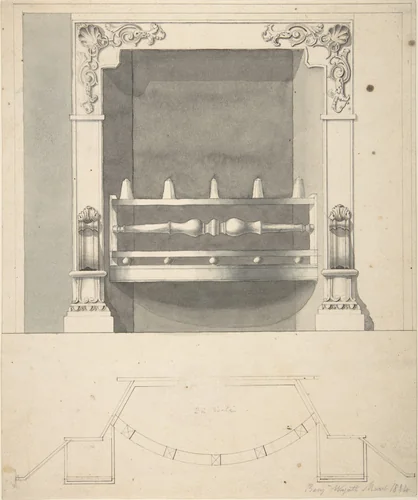
Wyatt’s artistic output is highly focused, concentrated almost exclusively on sophisticated designs for domestic heating apparatus. His extant works, primarily secured in the collection of the Metropolitan Museum of Art, number only seven known drawings, all executed within a concentrated period between 1809 and 1814. These are not merely preparatory sketches; they are precise, finished presentations centered upon the fireplace and the increasingly important role of the decorated cast-iron grate.
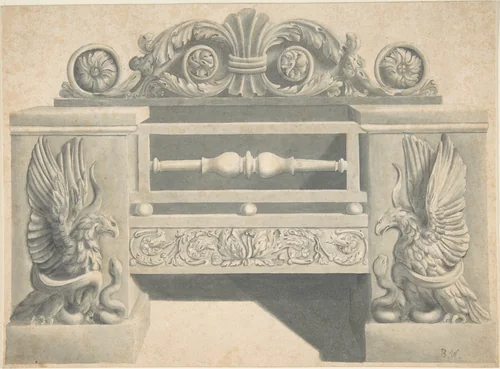
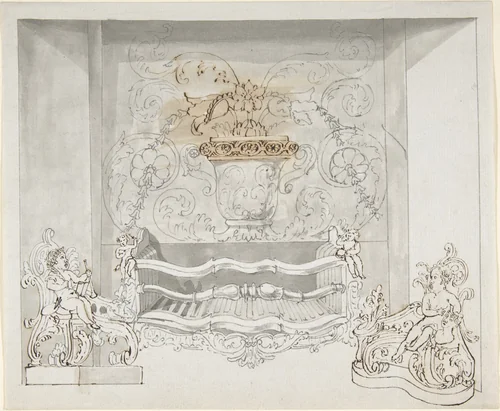
These studies demonstrate a sophisticated engagement with material and style, documenting the moment when industrial production methods began to fully embrace high-style decorative motifs. Pieces such as Design for Cast-iron Grate in Rococo Style with Putti Fire Dogs and the dramatically neoclassical Design for Cast-iron Grate with Eagles Grasping Snakes showcase his facility in adapting historical aesthetics, often reserved for grander plasterwork or stone facades, to the more robust, functional medium of cast iron. It is somewhat charming to observe the precise fusion of robust engineering with the airy, lighthearted capriciousness of Rococo putti.
The meticulous nature of these surviving designs provides crucial documentation for architectural historians studying early industrial fittings. Though the number of known Benjamin Dean Wyatt prints is small, their museum-quality detail preserves the aesthetic standards required for high-style English interiors. Today, these seminal works are widely accessible as downloadable artwork, having entered the public domain, ensuring that this documentation of 19th-century decorative specialization remains available for scholarly study.
Source: Wikipedia · CC BY-SA 4.0