Basavana
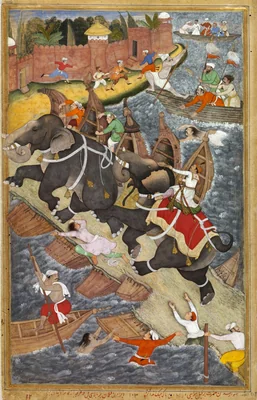
Basavana (active c. 1539-1595) stands as one of the most inventive and technically gifted painters of the nascent Mughal school, crucial to defining the sophisticated visual language of Emperor Akbar’s imperial atelier. Working across the latter half of the 16th century, he was instrumental in the cultural shift that merged imported Persianate traditions with a new, uniquely kinetic and deeply narrative Indian style, setting the formal standards for subsequent generations of court painters.
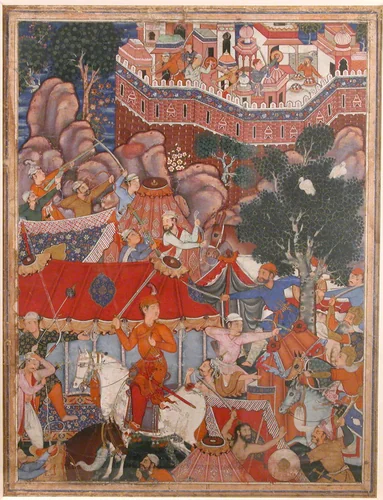
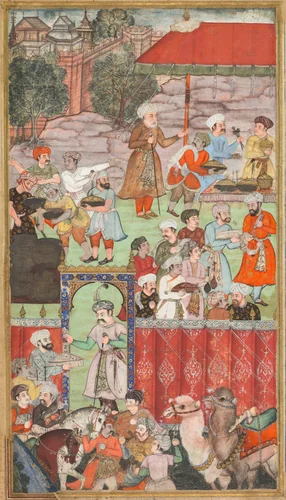
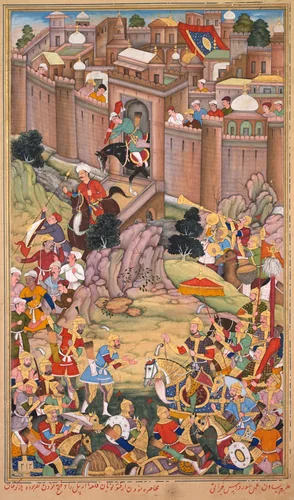
His career began under the direction of Persian masters Mir Sayyid Ali and Abd al-Samad, who guided the massive commission known as the Hamzanama (The Adventures of Hamza). This monumental project, consisting of approximately 1,400 large cloth-mounted folios, demanded a new level of visual complexity and collaborative efficiency. Basavana contributed several dramatic scenes, including Assad Ibn Kariba Launches a Night Attack on the Camp of Malik Iraj, characterized by their bold color palettes and energetic composition. These early Basavana paintings broke fundamentally with the conventions of earlier Persian manuscripts, favoring crowded, dramatic scenes that emphasized immediate visual storytelling over formal courtly elegance.
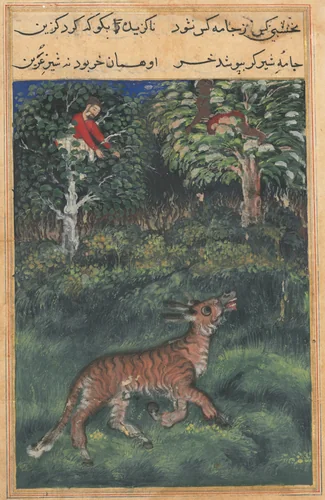
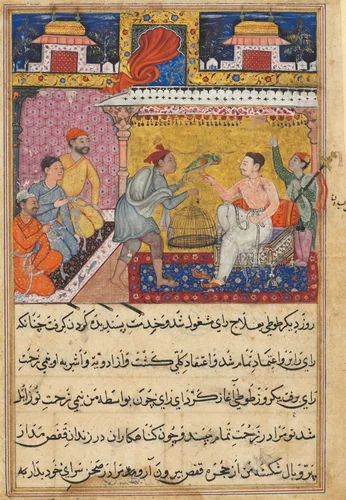
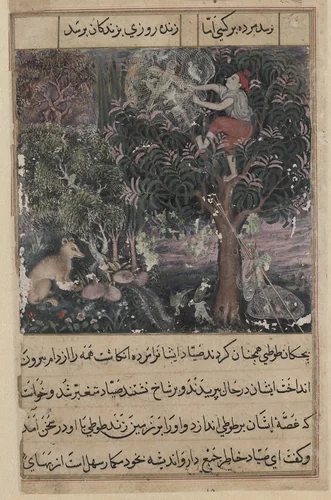
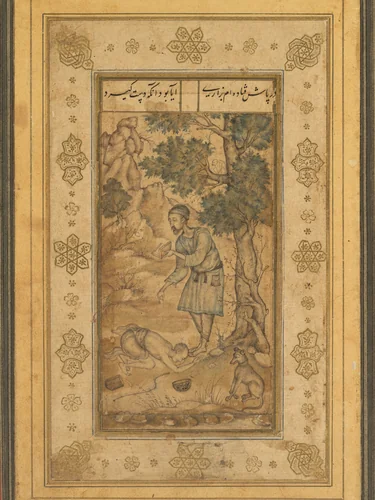
Basavana’s genius for narrative detail and subtle psychological observation shone particularly bright in the more intimate settings of the Tuti-nama (Tales of a Parrot), executed around 1560-1568. Here, he demonstrated a capacity for sophisticated humor and theatrical arrangement, illustrating complex action sequences and scenes of domestic intrigue with equal facility. A celebrated example of his wit appears in the sequence The donkey, in a tiger’s skin, reveals his identity by braying aloud, a clever, understated depiction of folly that showcases his masterful handling of character and texture.
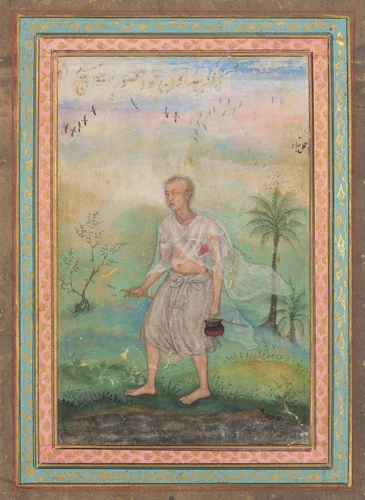
The lasting significance of Basavana lies in his dynamic fusion of aesthetic influences. He was adept at incorporating European elements, such as volumetric shading and atmospheric perspective, which were beginning to filter into the court, while retaining the vibrant colors and intricate patterning of indigenous Indian art. His surviving works are preserved in prestigious global repositories, including the Metropolitan Museum of Art and the Cleveland Museum of Art, attesting to their enduring museum-quality status. Fortunately, many of his masterful compositions are now available as high-quality prints and downloadable artwork, ensuring that the foundational work of this pivotal Mughal innovator remains accessible to scholars and enthusiasts worldwide.
Source: Wikipedia · CC BY-SA 4.0