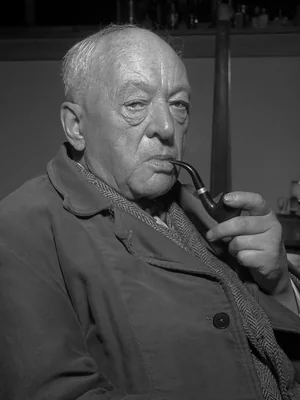
Bart van der Leck
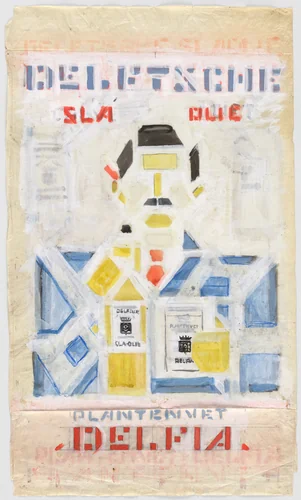
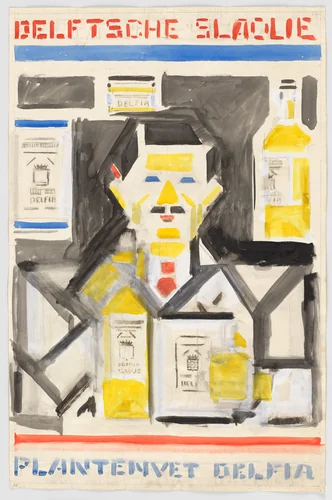
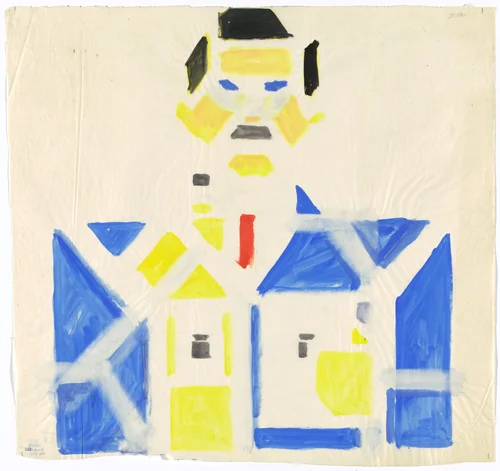
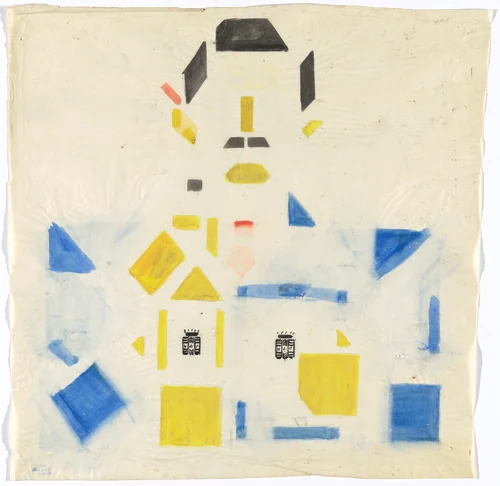
Bart van der Leck (1876-1958) holds a fundamental place in the history of Dutch Modernism, serving as a co-founder of the influential De Stijl movement alongside Theo van Doesburg and Piet Mondrian. A versatile creator, he worked across painting, design, and ceramics, pioneering a systematic visual language that rigorously simplified natural forms into elemental components of line, plane, and primary color.
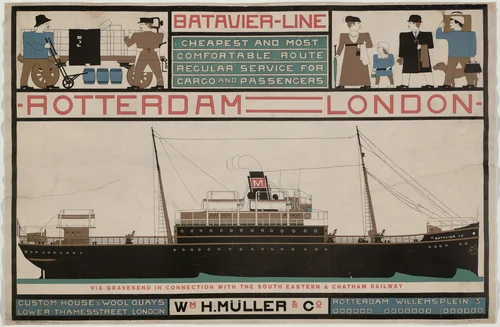
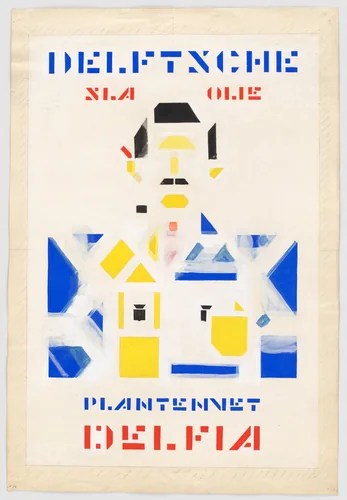
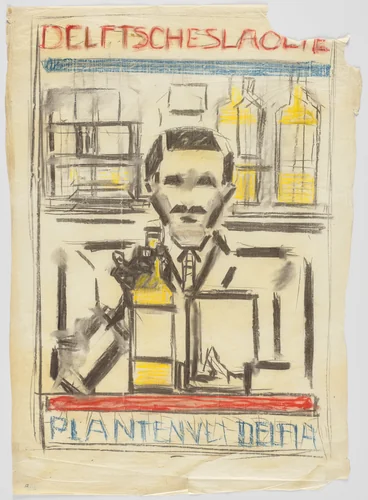
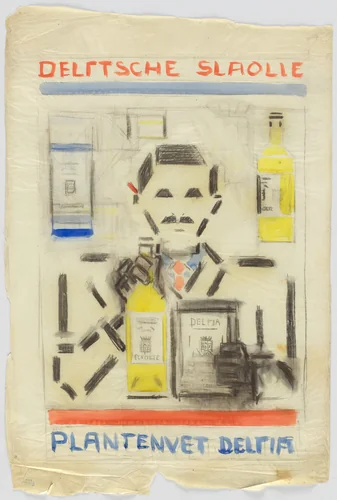
This methodology emerged around 1916, a crucial period marked by intense collaboration and formal experimentation. His early work from this era, such as studies related to the Batavier-Line, Rotterdam-London, demonstrates how this reductive style could be applied directly to recognizable subjects. Van der Leck consistently reduced figures, animals, and industrial scenes into simplified linear arrangements, establishing a critical conceptual bridge between representation and complete abstraction. This emphasis on applying abstract principles to functional subjects was highly innovative and significantly influenced the development of De Stijl, confirming that modern art could integrate seamlessly into public space and commercial design.
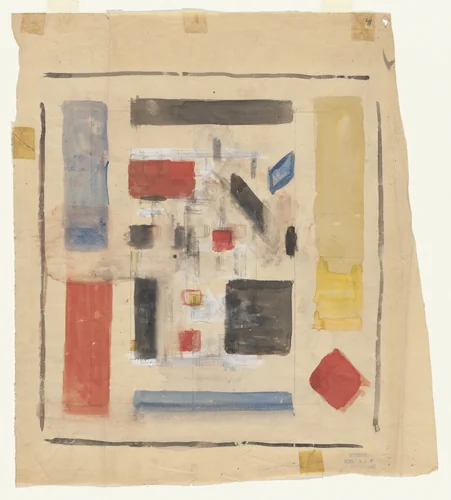
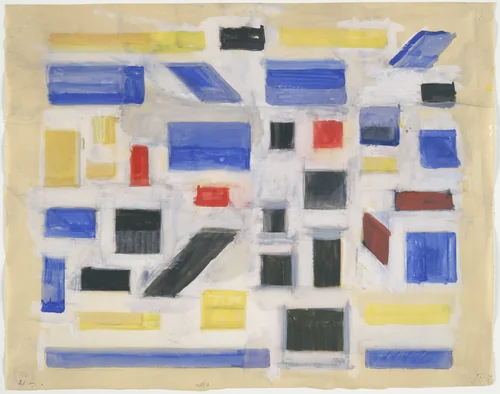
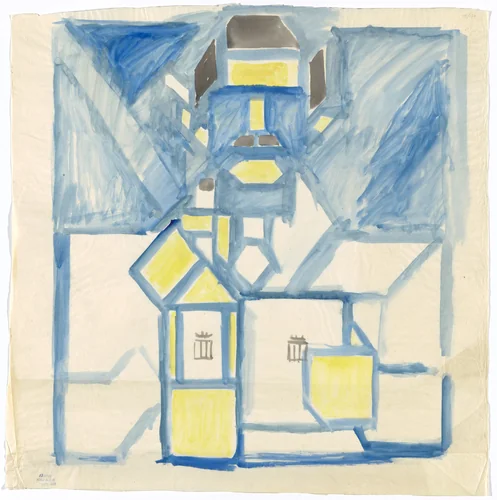
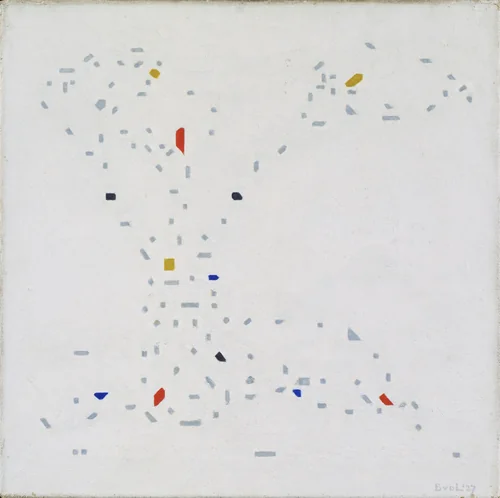
Unlike some of his peers who pursued the strict vertical and horizontal rigidity of the grid, Van der Leck often retained a degree of dynamic freedom in his compositions. His deliberate incorporation of diagonal lines and angled, non-square planes lent his images a distinctive, restless quality, which gave his compositions like Untitled a subtle movement often absent in the more static works of contemporaries.
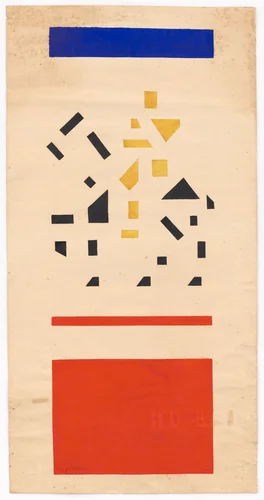
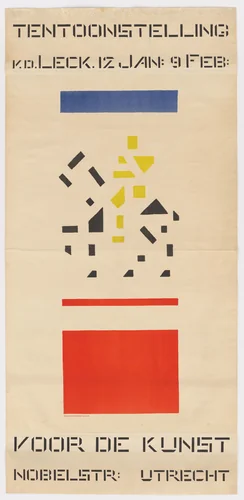
Van der Leck’s commitment extended beyond the canvas, integrating the new aesthetic into architecture and graphic design. His designs, such as the Maquette for the poster for van der Leck Exhibition (Tentoonstelling v.d. Leck), exemplify an exceptional clarity of communication achieved purely through blocks of primary color and bold typography. This rigorous application of the style to exhibition and commercial contexts affirmed the movement’s goal of integrating art into daily life, a mission he carried out with a charming severity. Today, the foundational studies and Bart van der Leck paintings from this critical period are held in major institutions globally, including the Museum of Modern Art, New York. Given their historical significance, many pieces are now available in the public domain, offering access to high-quality prints for scholars and enthusiasts worldwide. His legacy remains crucial for understanding the pivotal shift towards radical geometric purity in 20th-century European art.
Source: Wikipedia · CC BY-SA 4.0