Balthasar Anton Dunker
Balthasar Anton Dunker (1746-1796) was a highly significant German artist active during the latter half of the eighteenth century. Although recorded primarily as a landscape painter, his enduring importance rests upon his mastery of etching, a medium through which he served as a crucial conduit for disseminating key examples of aristocratic visual culture across Europe.
Dunker specialized in transforming complex oil canvases, often those sequestered within private French collections, into precise and accessible graphic works. His technical virtuosity lay in his ability to translate the texture, tonal complexity, and light of the original paintings into meticulously executed Balthasar Anton Dunker prints. This capacity to capture composition and atmosphere made his work highly sought after by publishers and collectors eager to catalogue or own reproductions of exclusive masterpieces.
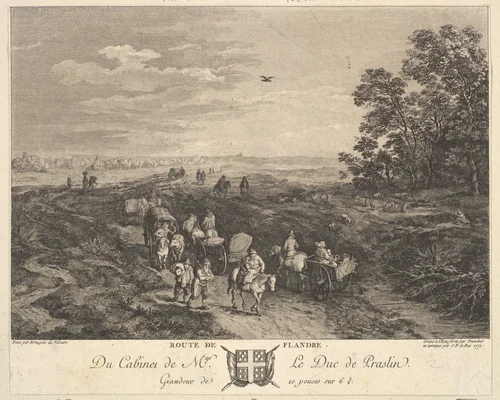
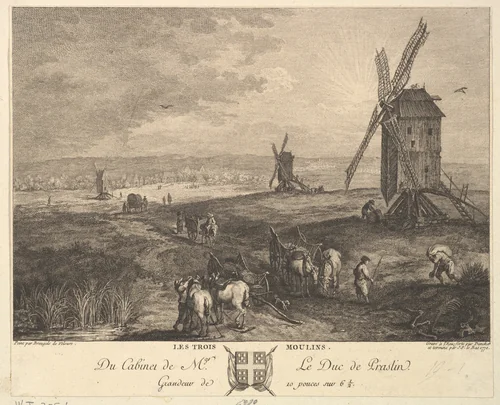
Major examples of this reproductive prowess include Flanders Road (Route de Flandre) and The Three Windmills (Les Trois Moulins), both carefully modeled after paintings in the distinguished collection of the Duc de Praslin. It is through the clarity and detail of these high-quality prints that many contemporaries experienced the coveted, often inaccessible, holdings of the French elite.
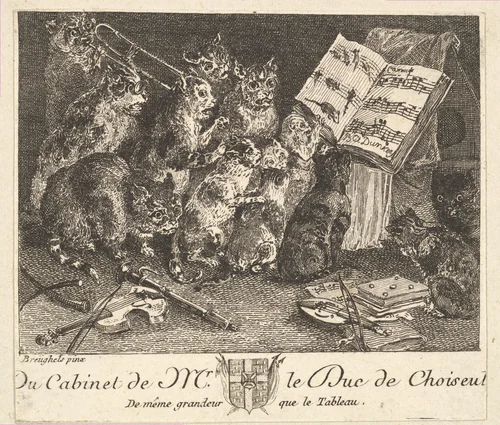
This dedication to replicating elevated taste was occasionally tempered by works of surprising, refined whimsy, notably the etching Concert of Cats, modeled after a painting once owned by the Duc de Choiseul. The inclusion of such sophisticated, almost satirical subject matter confirms Dunker’s keen understanding of the commercial and cultural demands placed upon the reproductive artist.
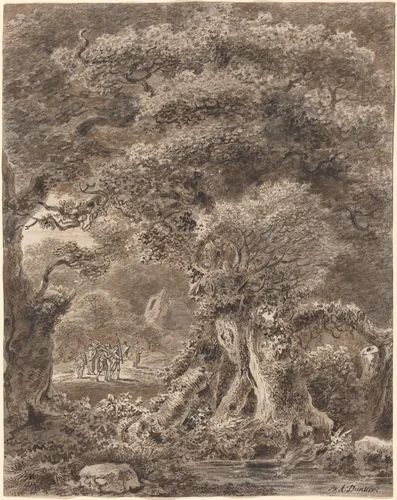
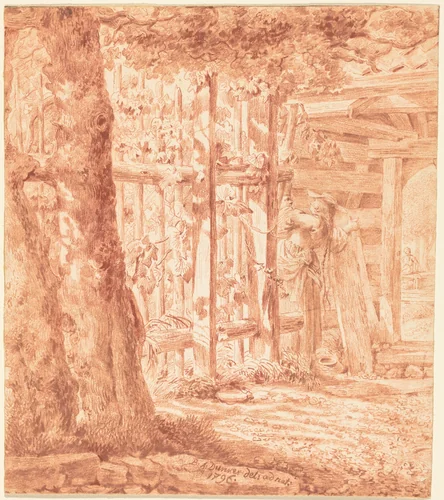
Beyond his major commissions, Dunker maintained a practice of original drawing, evidenced by intimate pieces such as Musicians Traveling through a Forest and Encounter by the Garden Fence. These smaller works reveal his innate talent for observational drawing and composition outside the constraints of replication. Today, Dunker’s legacy is preserved in institutions worldwide, including the Metropolitan Museum of Art and the National Gallery of Art, with much of his material now available in the public domain, confirming his lasting contribution to 18th-century graphic arts.
Source: Wikipedia · CC BY-SA 4.0