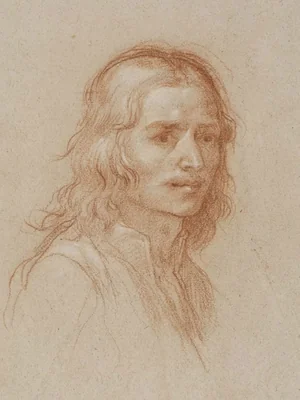
Baldassare Franceschini
Baldassare Franceschini (1611-1666), known almost universally as Il Volterrano, was one of the most prolific and influential Late Baroque painters and draughtsmen active in central Italy. Distinguished by his exceptional facility across media, Franceschini’s career centered primarily in Florence and his birthplace, Volterra, though his reputation secured him major commissions in Rome. The moniker "Il Volterrano Giuniore" was sometimes used to differentiate him from other artists bearing the same regional nickname, underscoring the deep Florentine tradition of using topographical identifiers for successful local masters.
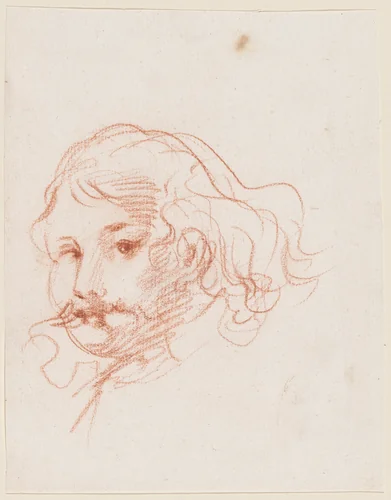
Franceschini excelled in the grand manner typical of the High Baroque. While he is chiefly celebrated for the extensive fresco cycles adorning churches and aristocratic palaces throughout Florence, he maintained a remarkably broad practice that included major altarpieces and smaller easel paintings. His versatility allowed him to move fluidly between diverse subject matters, encompassing dramatic biblical narratives, classical mythological scenes, detailed history paintings, and complex allegorical compositions. He was also a perceptive portraitist, exemplified by his striking Self-Portrait.
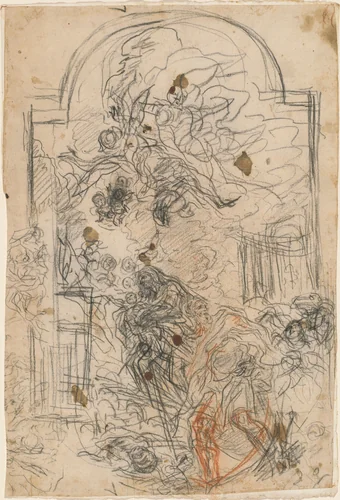
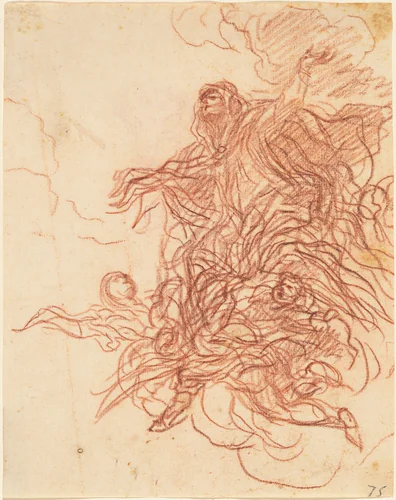
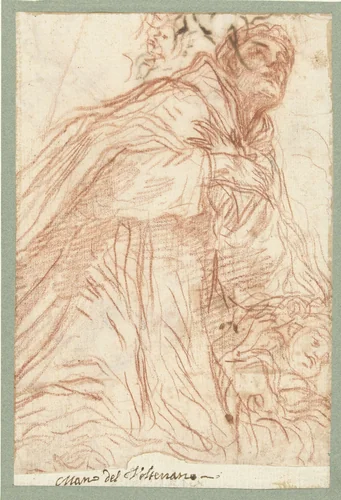
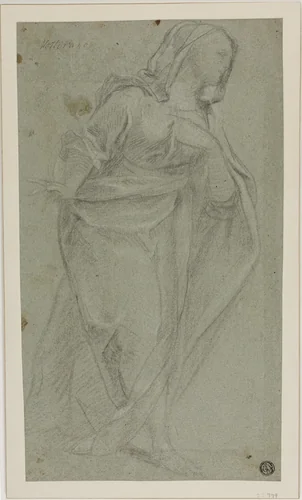
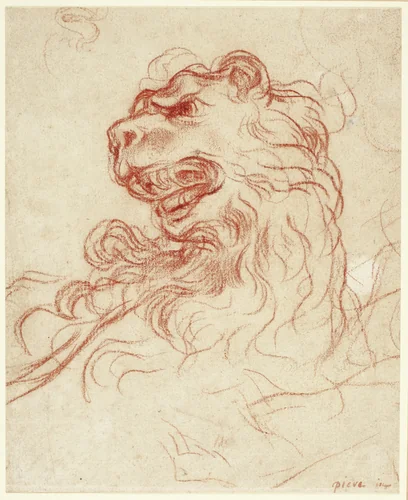
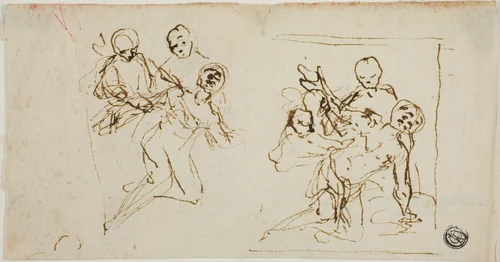
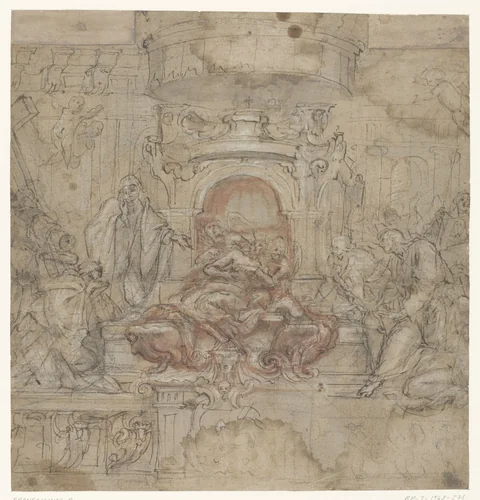
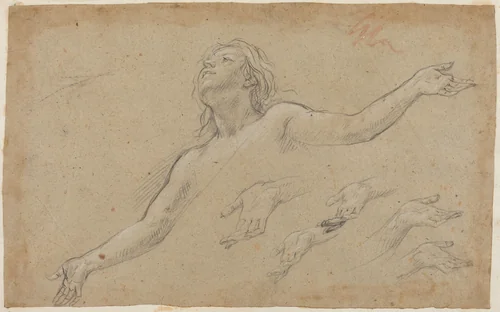
His sophisticated drawing technique provides an essential intellectual foundation for his monumental finished works. Studies like the powerful Study of the Head of a Lion and the preparatory sketch for Female Saint Carrying a Banner [recto] showcase his rigorous attention to form and motion, a factor that distinguished him from his contemporaries. His command of composition is further evidenced in works such as Two Composition Sketches of Collapsing Figure Supported by Two Other Figures, preliminary studies that survive in museum collections today.
The sustained success of Franceschini during the mid-seventeenth century confirms his pivotal role in defining the Florentine Baroque aesthetic. Unlike some contemporaries who specialized narrowly in one genre, Volterrano accepted almost any pictorial challenge, demonstrating an enviable ability to keep pace with the rapidly changing demands of his aristocratic and ecclesiastical patrons. Today, the study of Baldassare Franceschini paintings is enhanced by the widespread availability of high-quality prints and documentation. Works originally housed in private collections, such as the preparatory sketches now held by institutions like the Rijksmuseum and the National Gallery of Art, are often available as downloadable artwork, ensuring his technical mastery remains accessible centuries later.
Source: Wikipedia · CC BY-SA 4.0
![Female Saint Carrying a Banner [recto] by Baldassare Franceschini, drawing, 1611-1689](https://img.artbee.org/ffdba0f2-ab17-496a-b115-97b542c16b32/small.webp)
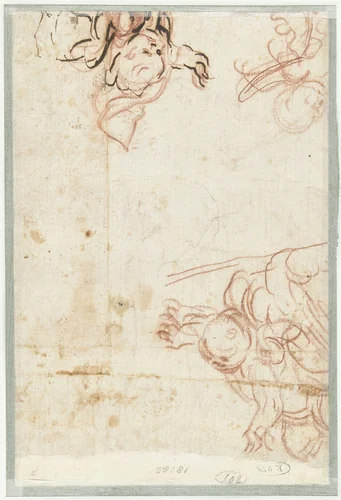
![Baby [verso] by Baldassare Franceschini, drawing, 1655-1659](https://img.artbee.org/5c2bcec8-5f00-4694-9ed0-80e301c038b5/small.webp)
![Drapery Studies [recto] by Baldassare Franceschini, drawing, 1655-1659](https://img.artbee.org/8343482b-8558-45a8-896d-b851b55b3e2a/small.webp)