Bada Shanren
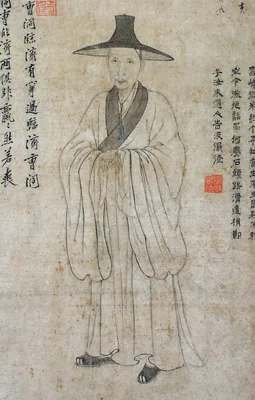
Zhu Da (1626-1705), better known by his poignant pseudonym Bada Shanren (八大山人), stands as one of the most distinctive and influential masters of the late Ming and early Qing dynasty. Born in Nanchang, Jiangxi, he was a member of the imperial House of Zhu, a lineage that faced execution and purge following the establishment of the Qing dynasty in 1644. This political cataclysm forced Zhu Da into immediate seclusion, fundamentally shaping his identity and artistic output. Fearing political reprisal, he sought refuge in a Buddhist temple, adopting the practice of Chan (Zen) Buddhism and remaining a monk for roughly three decades.
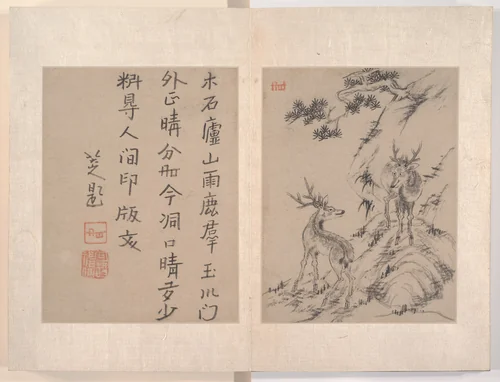
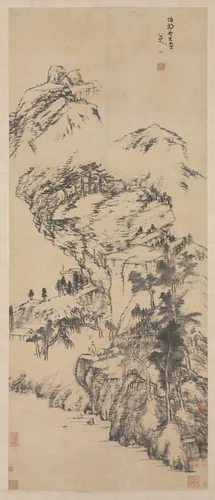
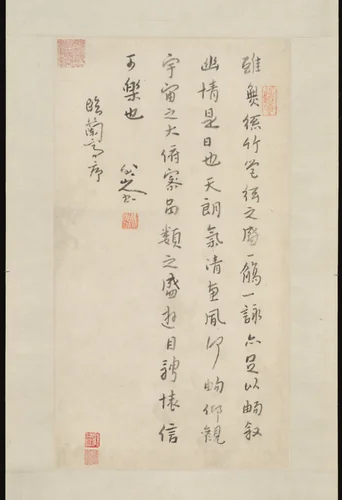
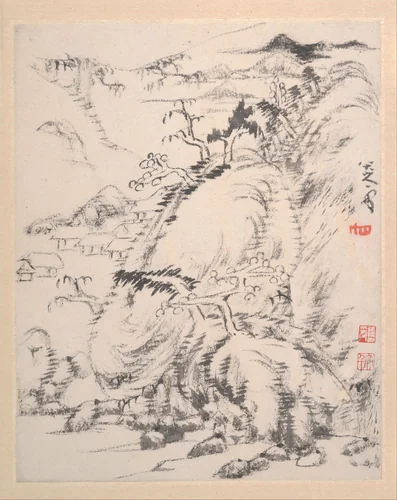
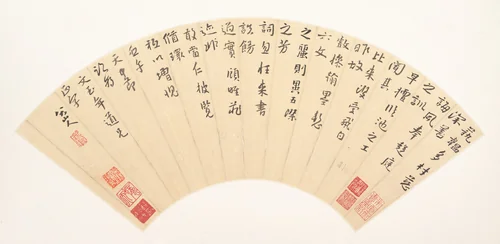
The psychological strain of displacement and the societal shift of the Ming-Qing Transition marked his mature work with an unforgettable, often intense, personal expression. Throughout his long career, Bada Shanren transformed personal anguish into a highly refined and deceptively simple artistic language. His style is characterized by expressive, often unsettling compositions, executed with a swift, minimal brushwork derived from superb calligraphic skill, exemplified by works such as Landscape after Guo Zhongshu and his striking interpretation of After Wang Xizhi's "Preface to the Orchid Pavilion Gathering Collection". He perfected the art of suggestion, leaving vast empty space around his subjects.
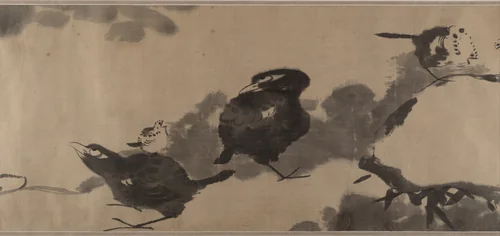
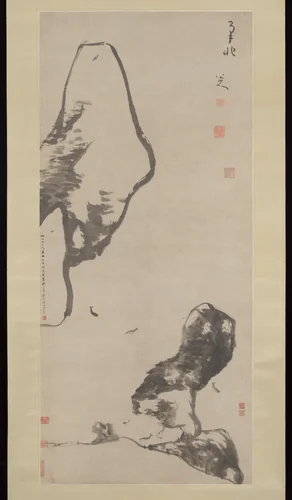
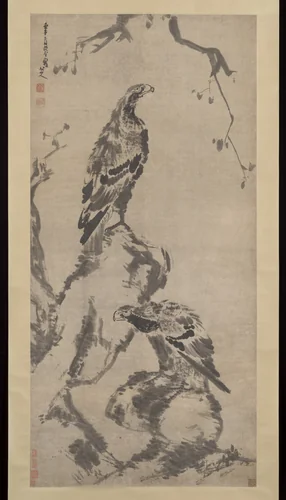
His famous renderings of birds, fish, and rocks frequently appear solitary, slightly defiant, and often possess an unnerving, almost human expression—a visual representation of the artist's own exile and perceived erratic behavior. A subtle observation of his signature elements reveals a touch of dark humor: the inscription Bada Shanren, when written in sequence, strongly resembles the characters for 'laugh' (笑) and 'cry' (哭)—a wry self-assessment of his condition.
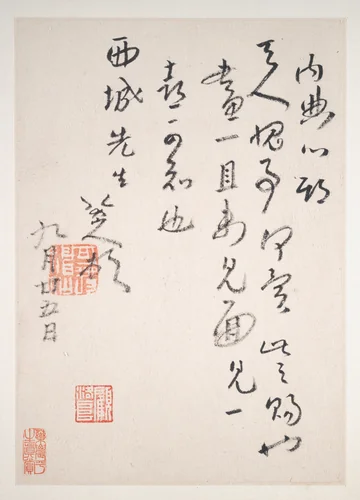
Bada Shanren’s output was concentrated primarily on albums, hanging scrolls, and poetry. Notable surviving examples, such as the Album of miscellaneous paintings and the famous Fish and Rocks, demonstrate his unparalleled control over ink washes and negative space. His influence on later generations of Chinese painters is profound, particularly those who favored expressionistic, individualistic modes of painting over academic formalism. Today, these powerful works anchor major international collections, including the Metropolitan Museum of Art and the Cleveland Museum of Art, ensuring their status as museum-quality masterpieces. Many high-quality prints derived from these Bada Shanren paintings are now available for study, extending the reach of this unique master far beyond the walls of the institutions that house them.
Source: Wikipedia · CC BY-SA 4.0