Baccio Baldini
Baccio Baldini was a pioneering Italian goldsmith and engraver whose activities in fifteenth-century Florence placed him at the crucial juncture between manuscript illustration and mass-produced imagery. Active primarily between 1400 and 1470, Baldini belongs to the first generation of Florentine printmakers who utilized the burgeoning technology of copperplate engraving to disseminate complex compositions, bridging the gap between fine metalwork and graphic art.
As with many early Renaissance printmakers, the biographical record is sparse. What little is known stems largely from the writings of Giorgio Vasari, who characterized Baldini as a pupil of the influential goldsmith Maso Finiguerra. The often-cited biographical information comes via Vasari, who provided the intriguing, if likely exaggerated, detail that Baldini was entirely reliant upon designs furnished by Sandro Botticelli, possessing insufficient disegno (drawing skill) himself. While perhaps lacking the draughtsmanship of his contemporaries, Baldini’s technical proficiency was evident; he is widely acknowledged as the foremost practitioner of the Florentine Fine Manner of engraving, characterized by delicate lines and subtle tonal modeling.
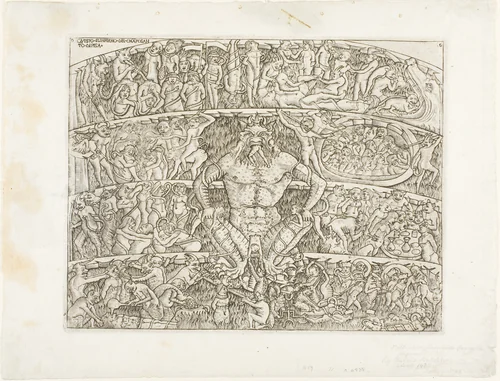
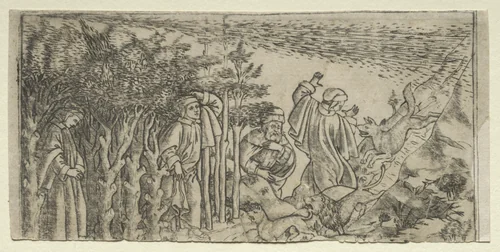
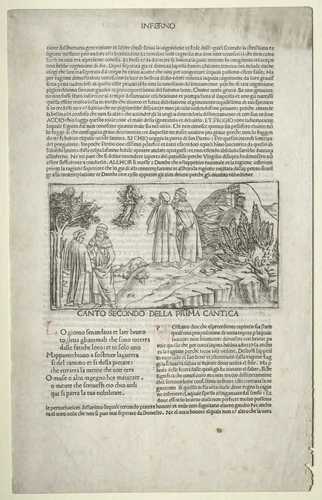
Baldini’s legacy rests heavily on his seminal collaboration with Botticelli on the first illustrated edition of Dante Alighieri’s Divine Comedy in 1481. Although the project was technically ambitious and ultimately left incomplete, it is assumed that Botticelli provided the intricate drawings which Baldini then expertly translated into engravings. This project exemplifies the complex workshop dynamics of early print production, where the specialized skill of the engraver was essential for converting an artist’s design into reproducible form.
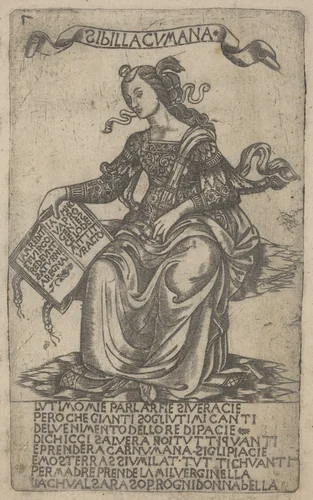
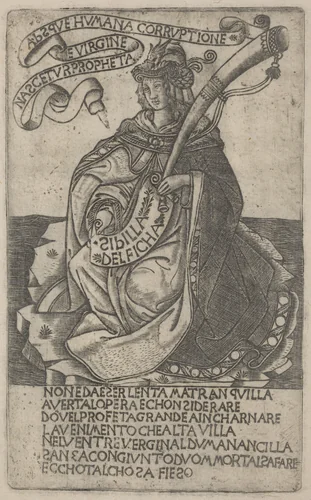
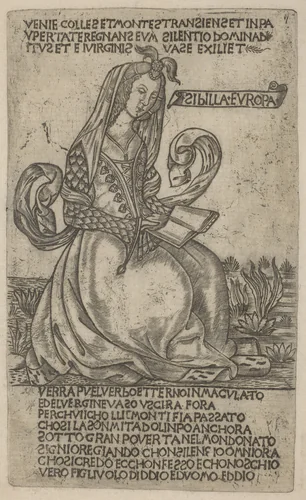
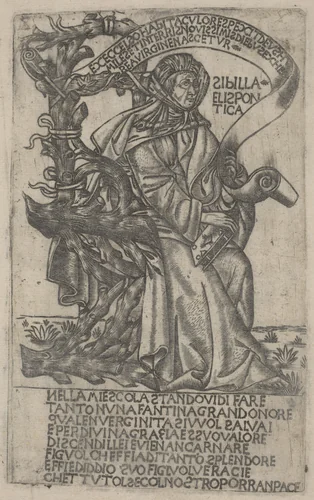
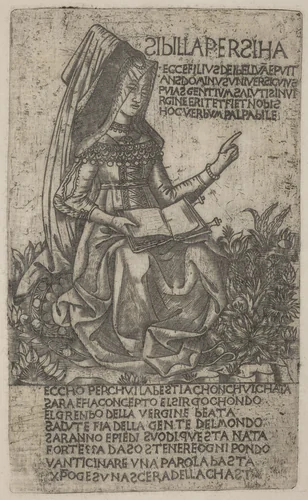
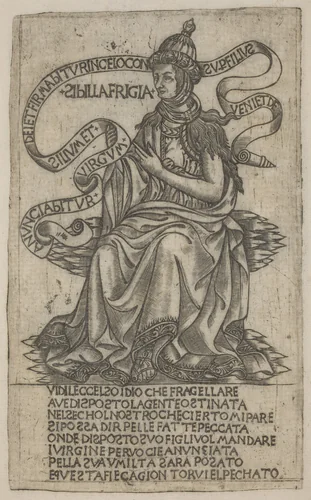
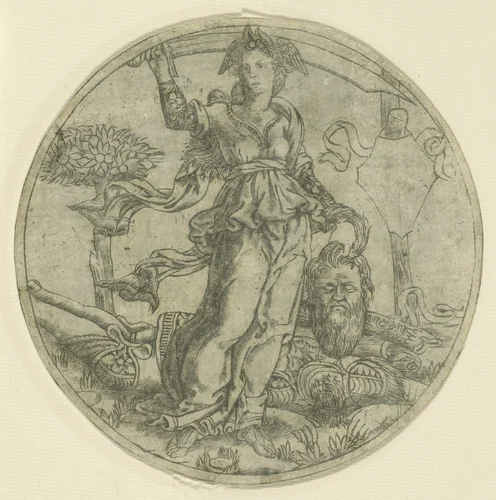
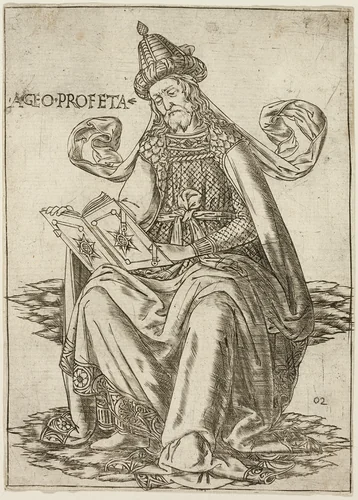
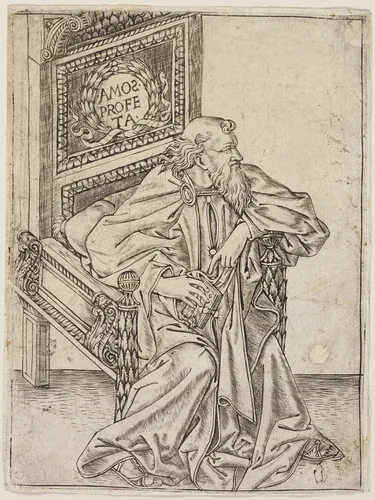
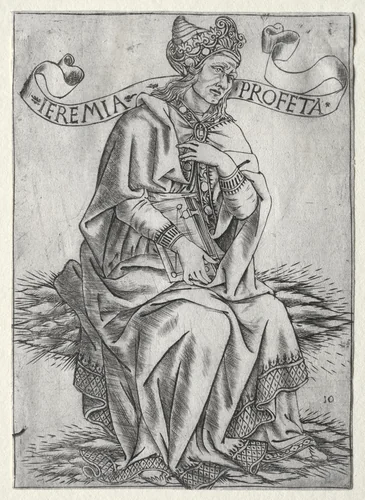
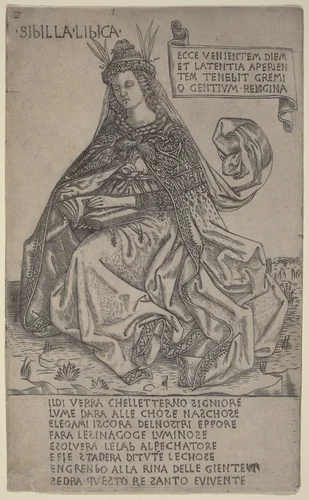
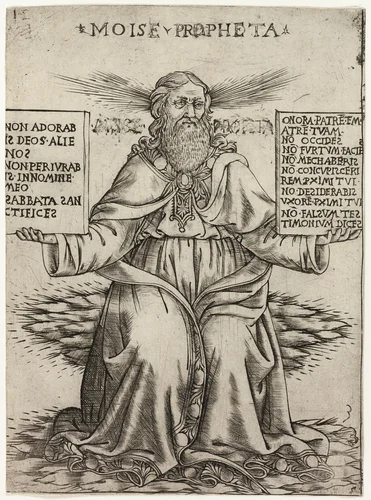
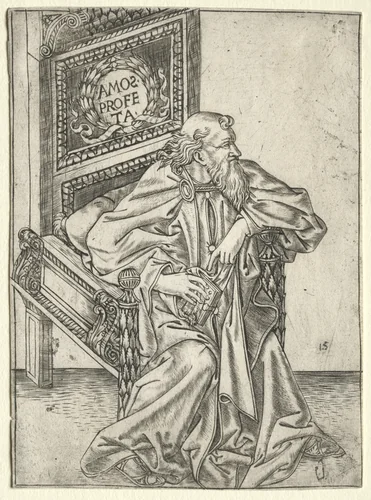
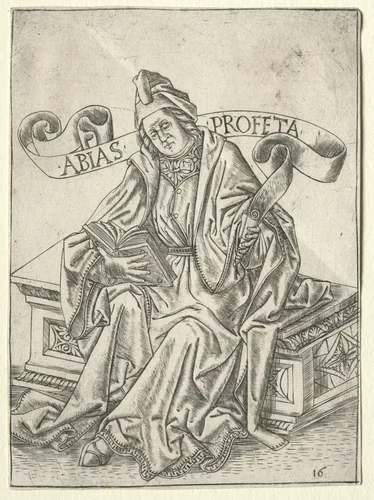
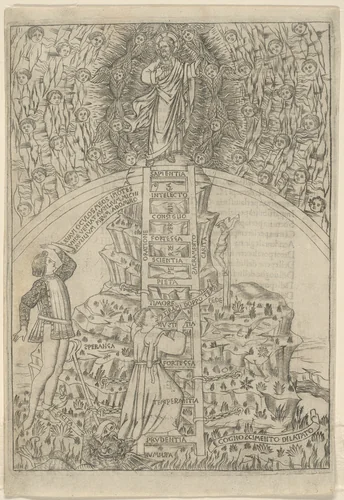
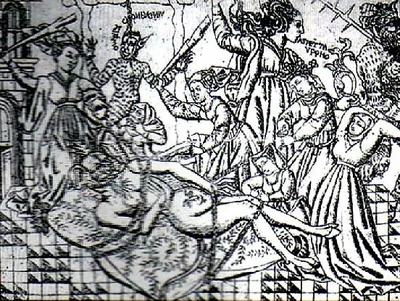
Beyond the Dante commissions, Baldini is attributed with a significant corpus of Baccio Baldini prints, frequently tentative and often grouped under his “workshop” or “circle” due to stylistic variations. Key among these are his didactic series, such as the elaborate Sibyl cycle, including the Cumaean Sibyl and the Persian Sibyl. Today, his fifteen known prints are held in prestigious institutional collections, including the Art Institute of Chicago and the National Gallery of Art, providing invaluable documentation of early graphic production. These museum-quality works are now often available as high-quality prints, representing early milestones in the history of the public domain.
Source: Wikipedia · CC BY-SA 4.0