Austria
Active between 1790 and 1827, Austria established itself as a pivotal nexus of Central European textile tradition. Located deep within the Eastern Alps, this landlocked federation, formally the Republic of Austria, functioned as a geographical and artistic crucible. Sharing borders with eight distinct countries—Germany, the Czech Republic, Slovakia, Hungary, Slovenia, Italy, Switzerland, and Liechtenstein—this unique location fostered a profound exchange of material culture, reflected in the technical complexity of its early modern artifacts.
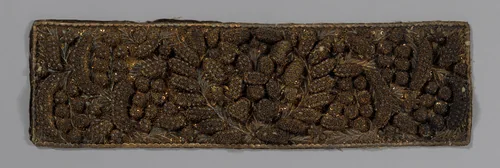
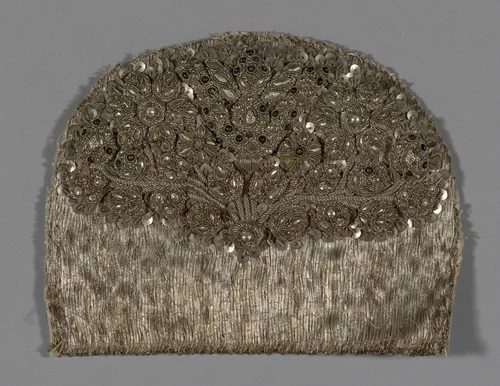
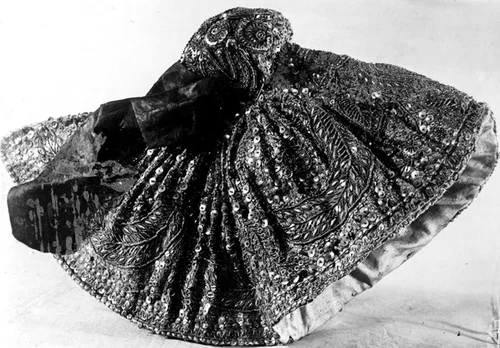
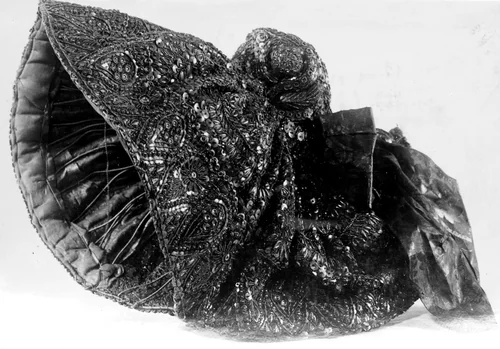
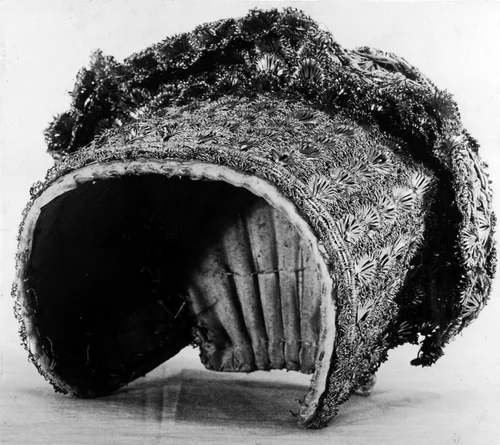
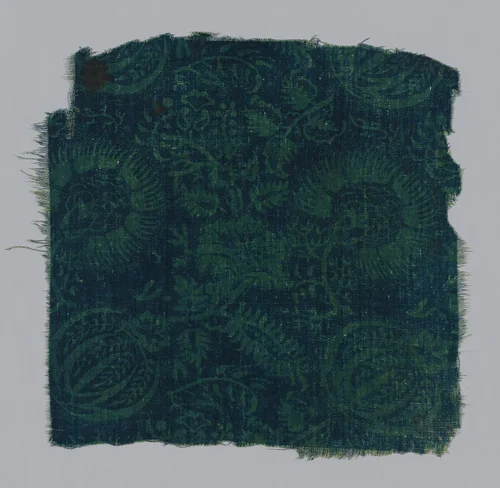
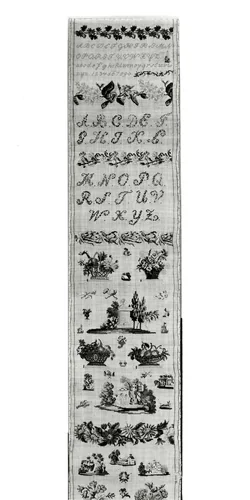
The body of work generated during this crucial period consists of eight documented textiles, focused almost exclusively on intricate adornments for the head and neck. These artifacts are rooted in sophisticated craft traditions necessary for ceremonial and regional dress during the twilight of the monarchical era. Key pieces include Band (From Headdress), Cap Back, and multiple distinct examples titled Headdress, all requiring precise execution in weaving and embroidery. The current availability of high-quality prints derived from these textiles offers valuable insight into the complexity of 19th-century Austrian fiber arts.
The political structure of the entity, comprising a federation of nine states centered around the capital and most populous city, Vienna, ensured that regional variations in textile production remained highly localized. The country’s substantial physical presence, occupying an area of 83,879 square kilometers and supporting a population of approximately 9 million, provided the demographic foundation necessary for sustaining these demanding craft guilds. It is telling that an entity so strategically surrounded by neighbors produced art focused almost exclusively on highly centralized, defining pieces of wear like the headdress; an insistence on visual identity forged despite intense geopolitical pressures.
The Art Institute of Chicago holds key examples from this period, validating the museum-quality craftsmanship of these utilitarian objects. While its geopolitical significance historically centered on geographic demarcation, the lasting artistic legacy of Austria resides in its skilled contribution to European textile history. These works, often entering the public domain today, continue to inform scholars regarding the precision and aesthetic demands placed upon master weavers and embroiderers operating at the very heart of the continent.
Source: Wikipedia · CC BY-SA 4.0