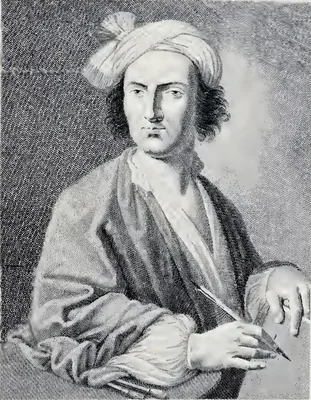
Aureliano Milani
Aureliano Milani was an Italian artist pivotal to the shift occurring in the late-Baroque period, working extensively across the cultural powerhouses of Bologna and Rome while both cities were under the administration of the Papal States. Although the full body of Aureliano Milani paintings remains difficult to trace, his significance is confirmed by a limited but exceptionally consistent corpus of surviving drawings, eight of which are known to exist and reside in major collections such as the Metropolitan Museum of Art and the National Gallery of Art.
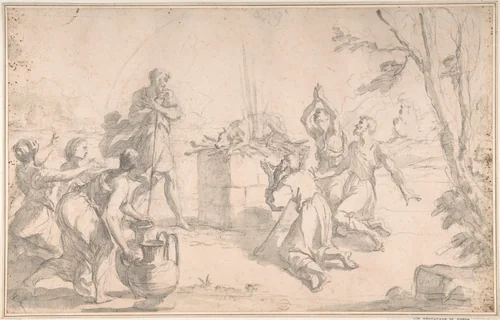
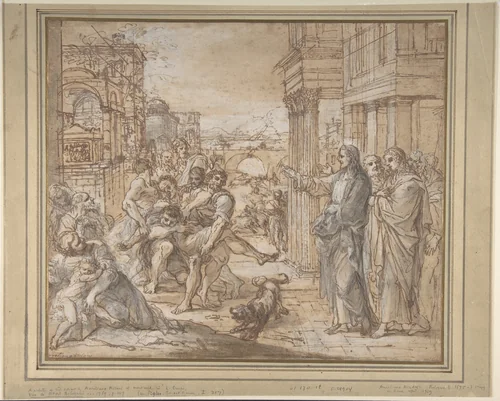
Milani’s primary achievement lay in his sophisticated draftsmanship, which often captured the expressive energy and narrative complexity characteristic of the 17th century. His work demonstrates an academic rigor likely derived from the tradition established by the Carracci academy in Bologna, emphasizing anatomical studies and complex compositional arrangements. Scenes such as the powerful The Sacrifice of Noah showcase his capacity for dramatic storytelling, while Christ Healing a Possessed Man highlights his mastery of emotive figure groups, depicting intense psychological states through rapid, assured lines.
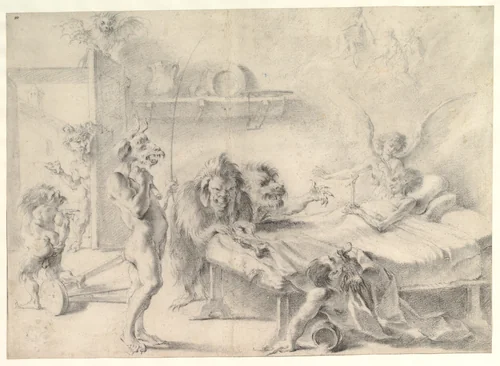
Interestingly, Milani’s economical use of paper provides a small insight into the practicalities of his studio; works such as the harrowing An Old Man on His Deathbed Tempted by Demons on the recto are complemented by rapid figure studies, such as the Back View of a Male Nude, on the verso, suggesting an artist constantly utilizing every surface for academic practice.
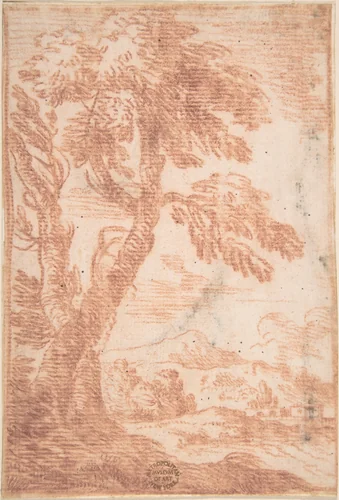
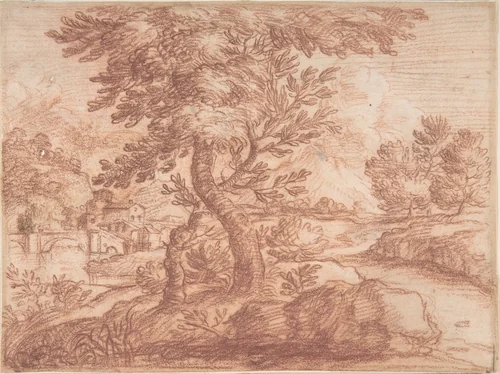
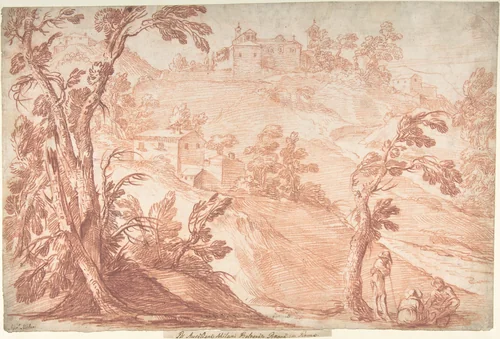
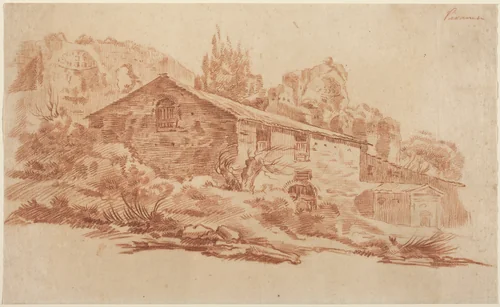
His contributions extended beyond religious and narrative subjects. Landscapes like Distant Landscape with Tree in Foreground reveal an emerging interest in structured, atmospheric settings, anticipating the more restrained classicism that followed the High Baroque era. Today, the enduring high-quality prints derived from these studies offer museum-quality insight into his intellectual process. For researchers, the fact that this valuable material is often held in the public domain ensures that Milani’s precise and dynamic hand continues to inform the study of 17th-century Italian drawing.
Source: Wikipedia · CC BY-SA 4.0