Augustus Charles Pugin
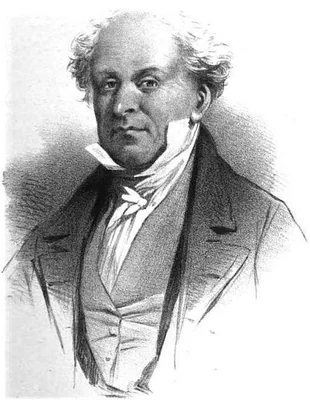
Augustus Charles Pugin (1782-1807) was a pivotal figure in early nineteenth-century architectural documentation, whose intricate draftsmanship provided invaluable visual records of Britain's urban and ecclesiastical structures. French by birth, Pugin migrated to England, where his career flourished, establishing him as a pre-eminent illustrator and architectural writer working primarily for publishers of illustrated books.
Born in Paris to a Swiss father, Pugin’s relocation to England around 1798, amidst the turmoil of the French Revolutionary Wars, marked a decisive pivot point in his professional development. The precise catalyst for his departure remains undocumented, suggesting a practical necessity rather than a grand philosophical break. Following his arrival, he entered the prestigious Royal Academy Schools in London to refine his technical skills. This training quickly led to a critical early appointment as an architectural draughtsman under the celebrated architect John Nash.
Although Pugin briefly contemplated a career in architecture, he ultimately recognized his strength lay in depiction rather than design. He married and settled into a focused practice as a commercial artist. Pugin was notable for his dual proficiency, demonstrating both the technical precision required of an accomplished draftsman, evident in detailed preparatory studies like Study for Walbrook Church, and the delicate expressive capacity of a skilful watercolourist. His specialized output was often commissioned for major topographical works, including plates for Rudolph Ackermann’s Microcosm of London, a project demanding high accuracy in its documentation of institutional interiors like the Court of Chancery, Westminster Hall.
His working method frequently involved the rapid production of dual-purpose sheets, exemplified by sketches such as the Rejected Study, possibly for an illustration of the Custom House, which utilized the verso for practical details like "Sketches of Workers with Barrels." This economy offers a rare, granular glimpse into the working process of commercial art production during the Georgian era. The visual legacy captured through Augustus Charles Pugin prints, such as St. James's with the Village of Charing as It Appeared in ye Reign of Henry VIII, provides essential historical context for urban development. Today, these historically rich documents, housed in collections such as the Art Institute of Chicago, are often available as high-quality prints. His commitment to exactitude ensures that his substantial body of work, much of which has since entered the public domain, remains a foundational resource for architectural historians and enthusiasts alike.
Source: Wikipedia · CC BY-SA 4.0